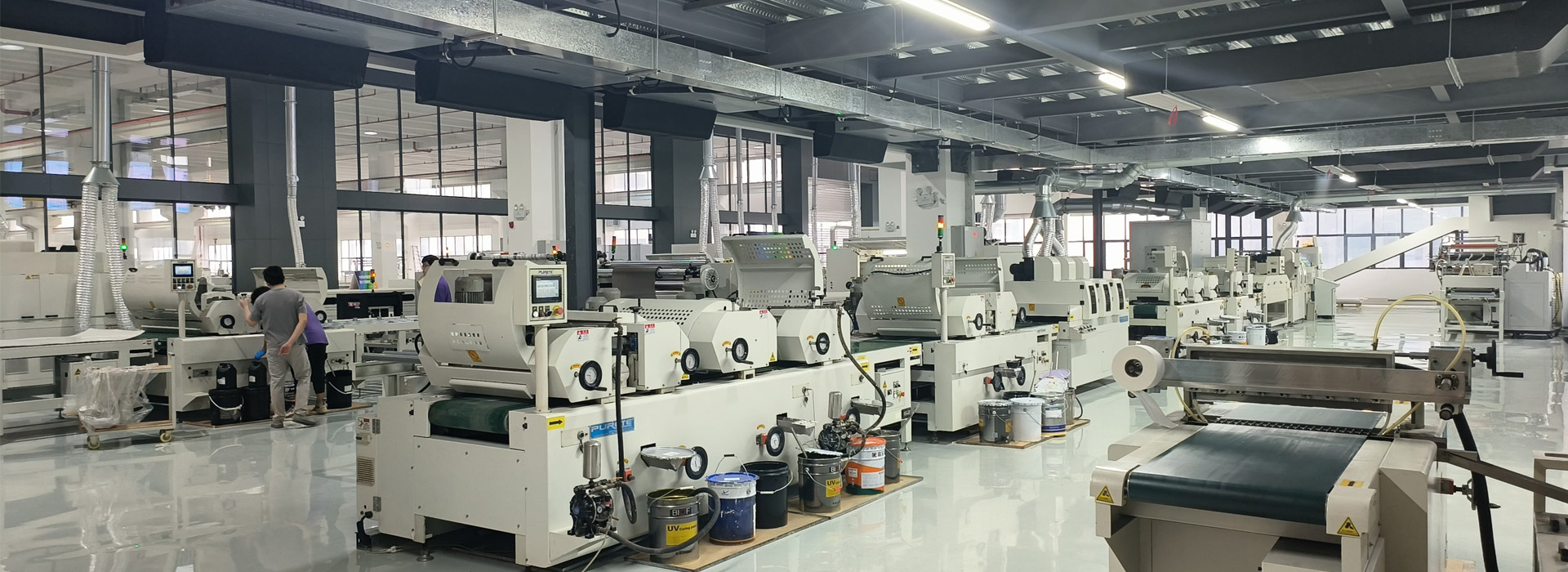
South Korea Glass Manufacturer: Custom 2550mm Ultra-Wide UV Roller Coating Line for Glass Back-Coating
Industry: Glass Manufacturing & High-Tech MaterialsLocation: South KoreaCoating Application: Custom 60m closed-loop UV roller coating line for back-coating bathroom glass, decorative glass, architectural glass, energy-saving glass, photovoltaic glass, and electronic glass Max Line Width: 2550mm ultra-wide formatCompatible Coatings: UV paint, water-based UV, water-based paint, EB coatings, PU coatings
Client & Market Overview
As a leading glass manufacturer in South Korea, this enterprise serves the rapidly growing global glass market, with a focus on high-growth segments:
- Energy-saving glass: Driven by rising environmental awareness and building energy efficiency regulations
- Photovoltaic glass: Supporting the expansion of renewable energy infrastructure
- Electronic glass: Including ultra-thin flexible glass (UTG) for smartphones, foldable devices, and new energy vehicle batteries, where glass thicknesses now reach below 0.1mm while maintaining high strength, toughness, and light transmission
To meet surging demand for consistent, high-performance back-coated glass products, the company partnered with PURETE to deploy a custom ultra-wide UV roller coating line tailored to large-format glass substrates.
Project Challenges & Goals
The client faced critical production bottlenecks before implementing the new line:
- Limited format capacity: Existing lines could not handle 2550mm ultra-wide glass panels, restricting production of large architectural and energy-saving glass
- Back-coating quality issues: Manual or semi-automated processes led to uneven coating, defects, and inconsistent adhesion on glass surfaces
- Scalability for high-tech applications: The rise of UTG and electronic glass required a stable, high-precision coating system capable of supporting advanced materials
Operational efficiency gaps: Older equipment lacked smart controls, remote monitoring, and modular maintenance capabilities, increasing downtime and labor costs
The core project objectives were:
1.Deploy a custom 60m closed-loop UV roller coating line optimized for 2550mm ultra-wide glass substrates
2.Achieve consistent, defect-free back-coating for bathroom, decorative, architectural, energy-saving, photovoltaic, and electronic glass
3.Integrate smart, AI-assisted controls for high-precision coating and reduced operational labor
4.Ensure long-term stability, low maintenance costs, and global compliance with CE, ISO, and AEO certifications
Custom PURETE Ultra-Wide Glass Coating Solution
PURETE delivered a fully customized 60m closed-loop UV roller coating line engineered exclusively for the client’s glass production needs, with key features including:
- 2550mm ultra-wide format capability: Widened processing stations to accommodate large-format glass panels, unlocking new architectural and energy-saving glass product lines
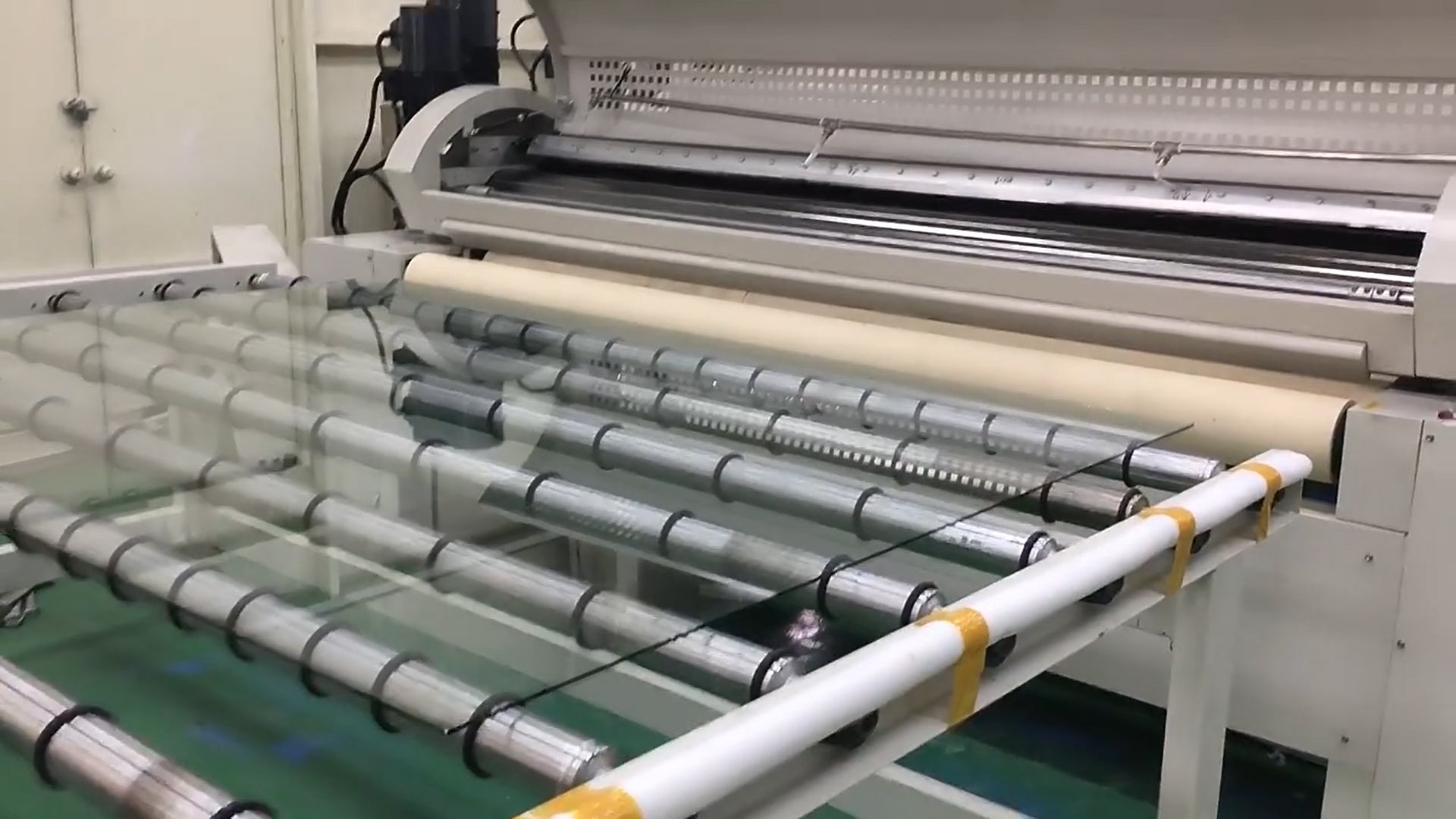
- Glass-specific back-coating design: Optimized for uniform UV, water-based UV, and EB coating application on glass surfaces, ensuring strong adhesion and consistent finish quality
- Heavy-duty structural stability: Built with 8mm thick steel plate welding, cast iron integral bases, and 2.5T load-bearing lifting seats to eliminate vibration and ensure precision at full line speeds
- Premium drive system: Siemens high-efficiency motors paired with RV/hypoid gear reducers for consistent power output and reliable performance in high-volume production
- Smart, multi-functional controls: CNC touchscreen interface with remote monitoring, full line linkage, and AI-assisted operation, customizable with Korean-language support
- Cross-material versatility: Adaptable to process MDF, OSB, gypsum board, calcium silicate board, magnesium oxide board, honeycomb panels, and metal panels for future product expansion
End-to-end global support: On-site installation, commissioning, and training by PURETE’s overseas engineers, backed by CE, ISO, and customs AEO certifications for seamless cross-border operations
PURETE G-Series Roller Coating Line Comparison
| Specification | G1 Line | G2 Line | G3 Line | Korean Glass Custom Solution |
|---|
| Core Application | Wall panels, cabinet components, furniture parts | Export bathroom cabinets, white furniture, crafts | Office furniture, mass-produced panels, door components | Ultra-wide glass back-coating (bathroom, decorative, architectural, energy-saving, photovoltaic, electronic glass) |
| Max Processing Width | Standard format | Standard format | Standard format | 2550mm ultra-wide glass panels |
| Compatible Substrates | MDF, particleboard, melamine boards | Same as G1 + specialty furniture substrates | Same as G2 + heavy-duty industrial panels | Glass, MDF, OSB, gypsum, calcium silicate, magnesium oxide, honeycomb, metal panels |
| Compatible Coatings | UV, water-based UV, water-based paint, EB, PU | UV, water-based UV, water-based paint, EB, PU | UV, water-based UV, water-based paint, EB, PU | UV, water-based UV, water-based paint, EB, PU (optimized for glass back-coating) |
| Total Power | 57 kW | 92 kW | 160 kW | Custom-tuned for 60m closed-loop glass production line |
| Air Consumption | 700 L/h | 1200 L/h | 1800 L/h | Optimized for glass coating utility requirements |
| Installation Footprint | 6×14 m | 6×18 m | 6×37 m | Custom 60m closed-loop layout |
| Production Cycle | 15 days | 15 days | 25 days | Custom lead time aligned with client’s production launch timeline |
| Labor Requirement | 3–5 operators | 3–5 operators | 3–5 operators | 3–5 operators (automated controls reduce manual tasks) |
| Line Speed | 5–20 m/min | 5–20 m/min | 5–20 m/min | 5–20 m/min (optimized for glass coating precision) |
| Daily Production Capacity | 1200 m²/8h | 3000 m²/8h | 4900 m²/8h | High-volume production for large-format glass substrates |
| Coating Cost | 3–5 RMB/m² | 3–5 RMB/m² | 3–5 RMB/m² | Reduced material waste lowers per-unit glass coating costs |
| Control System | Standard touchscreen | Advanced touchscreen | Smart touchscreen | Korean-language localized interface with remote, linkage, and AI-assisted operation |
PURETE vs. Competitor Roller Coating Lines for Glass Production
| Feature | PURETE Roller Coating Line | Competitor Roller Coating Lines |
|---|
| Structural Design | 8mm thick steel plate welding, cast iron integral bases, and 2.5T load-bearing lifting seats for vibration-free, high-precision operation | Thin steel frames, bolted connections, and lightweight bases prone to warping and vibration, causing uneven glass coating |
| Drive & Power System | Siemens premium motors paired with RV/hypoid gear reducers for consistent, low-maintenance power output | Generic motors and reducers with inconsistent performance, leading to coating defects and frequent breakdowns |
| Glass Coating Precision | Ultra-wide processing stations optimized for glass back-coating, with controlled coating thickness and uniform adhesion | Limited width capacity, no glass-specific process optimization, and high rates of defects on large-format panels |
| Control & Operation | Smart CNC touchscreen with remote monitoring, full line linkage, AI-assisted operation, and customizable multi-language support | Basic manual controls or outdated software, no remote monitoring, and limited automation for glass-specific workflows |
| Maintenance & Service | Modular, easy-to-service design; dedicated overseas after-sales support with on-site engineer deployment | Complex, hard-to-repair components; limited local support and long lead times for critical repairs |
| Certifications | CE, ISO, and customs AEO certified for global regulatory compliance | Often lack key international certifications, creating barriers for export-focused glass manufacturers |
Results & Business Impact
Since deploying the custom PURETE ultra-wide glass coating line, the Korean manufacturer has achieved transformative improvements:
1.Expanded product portfolio: The 2550mm ultra-wide format capability unlocked new lines of large-format architectural, energy-saving, and photovoltaic glass, meeting growing market demand
2.Superior coating quality: Stable, vibration-free operation ensures uniform back-coating adhesion and finish quality, even on high-precision electronic and UTG glass substrates
3.Increased production efficiency: The 60m closed-loop line and high-speed 5–20 m/min operation doubled output while reducing material waste and labor costs
4.Operational flexibility: The multi-substrate design allows the client to process glass, wood-based panels, and metal substrates on the same line, supporting future product expansion
5.Strong ROI & compliance: On-schedule commissioning, low maintenance costs, and global certifications have enabled the client to meet export standards and capitalize on the growing global glass market
Looking Forward
This partnership demonstrates how custom roller coating solutions can address the unique challenges of the rapidly evolving glass industry. PURETE remains committed to supporting South Korean and global glass manufacturers with tailored, high-performance coating lines, smart manufacturing technology, and dedicated after-sales support to drive innovation in energy-saving, photovoltaic, and electronic glass applications.
Why Choose PURETE for Your Glass Coating Needs?
- Custom engineering: Tailored line lengths, widths, and features (like 2550mm ultra-wide processing) to match your glass products and factory requirements
- Unmatched stability: Heavy-duty structural design, premium Siemens motors, and robust lifting systems for consistent, high-precision glass coating
- Smart manufacturing: Advanced touchscreen controls, remote monitoring, and AI-assisted operation for efficient, low-labor production
- Global compliance & support: CE, ISO, and AEO certifications, plus dedicated on-site installation and commissioning by PURETE engineers worldwide