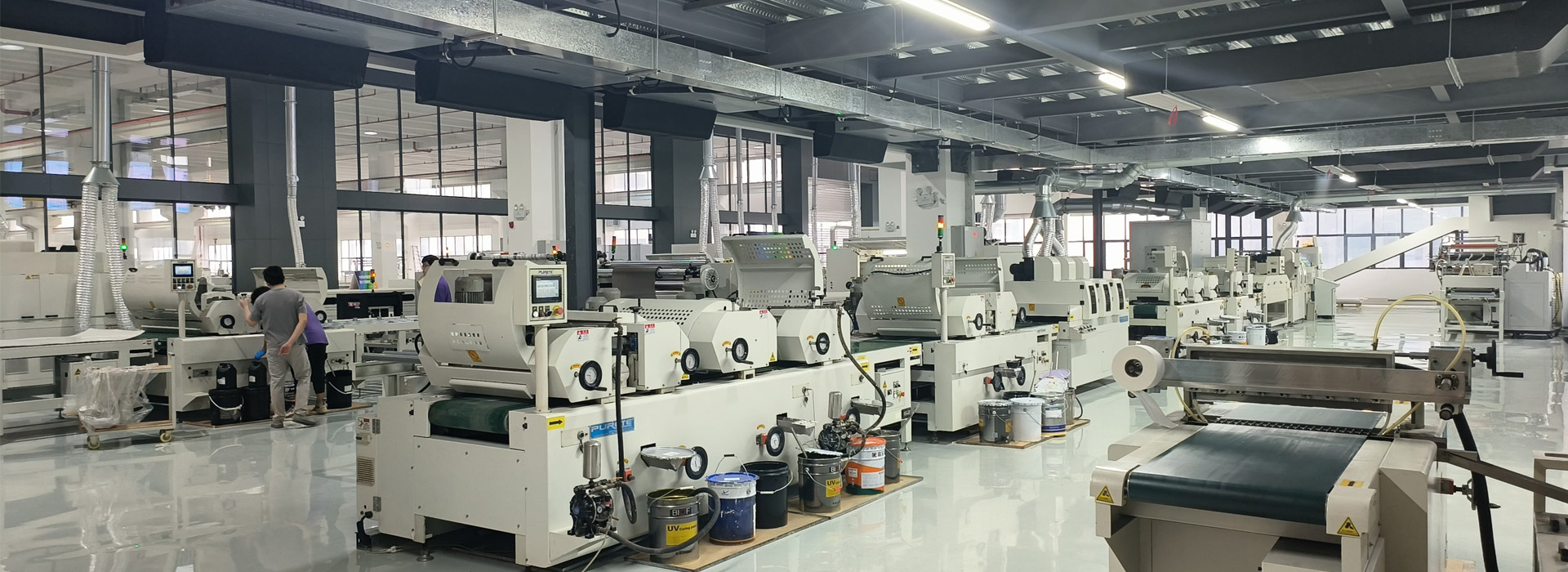
How is AR coating applied to photovoltaic glass using a roll-coating line?
1. Why does PV glass need AR coating?
The glass on the surface of a PV module is not just there to "keep out wind and rain." Before sunlight passes through the glass and reaches the solar cells, a portion of it gets reflected off the glass surface — this loss may not seem significant, but at the scale of a GW-level power plant, every fraction of a percentage point in transmittance translates directly into real, bankable electricity output.
AR coating (anti-reflective coating) works by reducing the reflectance of the glass surface, allowing more light to "get through." According to industry data, AR-coated PV glass delivers a transmittance gain of 2.2–2.5 percentage points. For example: glass with a raw transmittance of 92% can be improved to 94.2–94.5% after coating. (Source: Sysmyk PV glass coating product literature, June 2026)
Don't underestimate that two percentage points. For a 100 MW PV power plant, every 1% increase in transmittance raises annual power generation by roughly 0.8–1%. A 2.5% gain means hundreds of thousands of extra kilowatt-hours of electricity produced every year.
Today, around 90% of PV modules in the industry already use AR-coated PV glass. This is no longer a bonus — it has become the industry standard
2. Why is the roller-coating process well suited to AR coating for PV glass?
There are two main methods for applying AR coating to PV glass: roller coating and vacuum coating. The roller-coating approach has become the mainstream in industrial production for three core reasons: low cost, high speed, and compatibility with existing production lines.
Roller coating is an in-line coating process carried out before tempering. The nano-coating material is uniformly applied to the glass surface by a precision roller system, then enters the tempering furnace for high-temperature curing after pre-drying. At high temperatures, the organic components in the coating decompose, leaving an inorganic porous SiO₂ film sintered onto the glass surface to form a stable AR layer.
The first key factor is coating uniformity — PV glass is large (common sizes of 1600 × 1000 mm or even larger), and coating thickness variation must be controlled within ±3 nm (for an 80 nm AR layer); otherwise, transmittance fluctuation will exceed ±0.8%. The second is cleanliness — the coating environment must meet a Class 1000 cleanroom standard, because dust particles landing on the wet film will create pinhole defects that directly affect coating yield.
From a cost perspective, roller coating costs far less per square meter than vacuum coating, and it can be directly integrated into the existing PV glass production flow without requiring additional vacuum chamber equipment. For already-established glass production lines, this translates into the lowest retrofit cost.
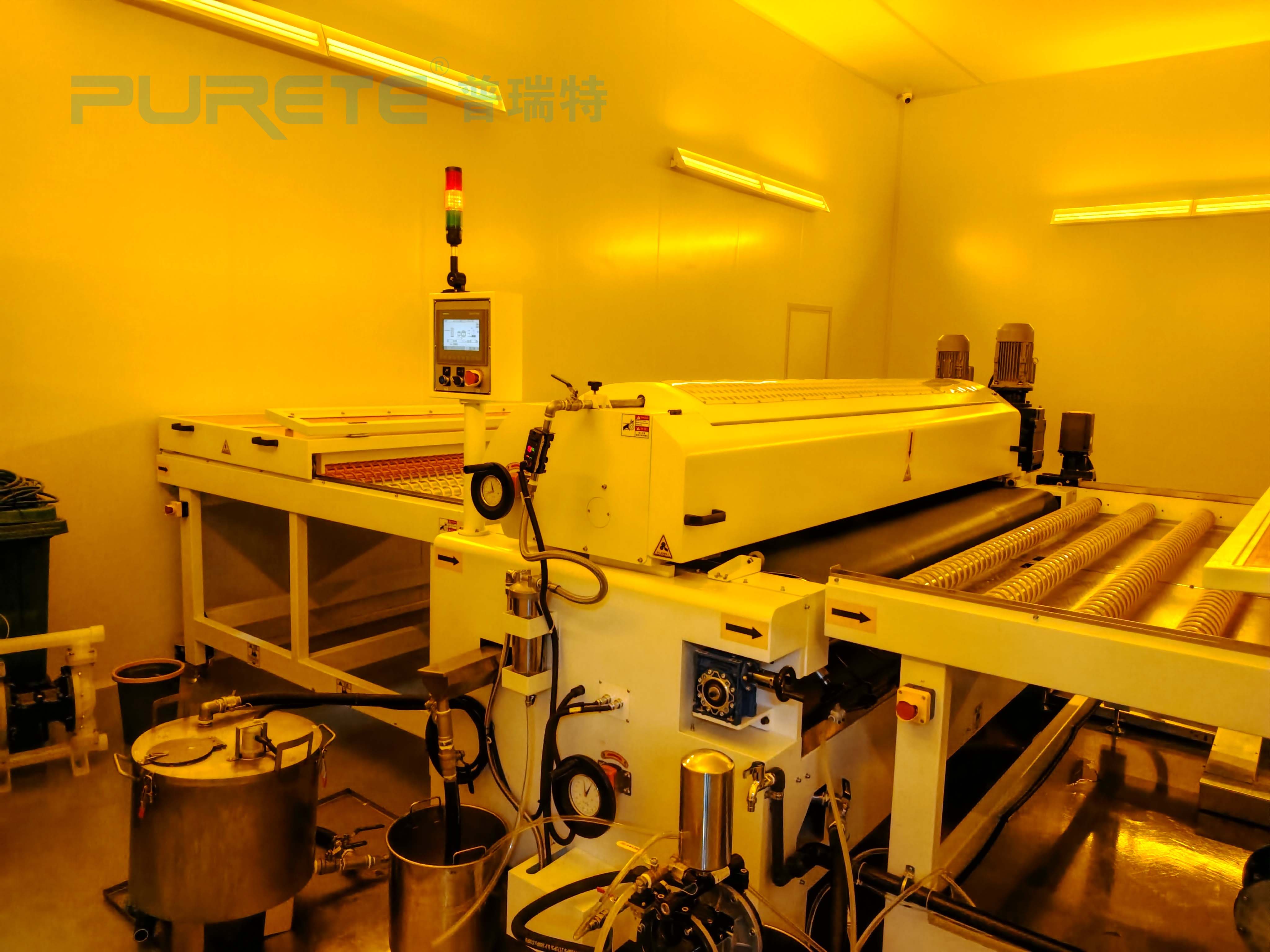
3. How is film thickness controlled in roller-applied AR coating?
Film thickness is the most critical quality indicator of AR coating. If it is too thin, the anti-reflective effect is insufficient; if it is too thick, transmittance and film adhesion are compromised. Film thickness control in roller coating relies on the interplay of four adjustable parameters:
Center distance between the rubber roller and the steel roller (the "D value"). The D value determines the volume of coating liquid retained in the coating bath — the larger D is, the more liquid the rubber roller carries at the same rotation speed, and the thicker the wet film. This parameter is typically set during commissioning and is rarely adjusted during production.
Rubber roller line count. The line count determines the amount of coating liquid "picked up" — the higher the line count, the finer and smoother the coated surface, but the lower the coating volume applied. The specific choice depends on the coating's solid content and the target film thickness.
Linear speed of the rubber/steel rollers. The faster the linear speed, the more coating solution is applied to the glass surface per unit of time, and the thicker the wet film. This parameter is usually adjusted in tandem with the conveyor speed.
Conveyor speed. The slower the conveyor, the thicker the film for the same amount of applied coating. In actual production, the conveyor speed is determined by balancing throughput targets against film thickness requirements.
Of the four parameters, the rubber roller line count is a "hardware parameter" — once selected, it is rarely changed; the other three are "process parameters" that can be flexibly adjusted for different product specifications. Mature production lines establish a standard process card for each product, recording the optimal parameter combination.
4. Photoresist Roller Coating Production Line — Equipment List
The customer in this case purchased a roller coating production line from PURETE. The following is a reference for the production line equipment configuration, intended to serve as a useful reference for companies in need.
| No. | Equipment | Power / Parameters | Function |
|---|
| 1 | Roller Conveyor | 0.75 kW | Glass infeed / feed-in transport |
| 2 | Precision Single-Roller Coater | 4.9 kW | Core coating, with light-shielding cover |
| 3 | Roller Conveyor | 0.75 kW | Inter-process transfer |
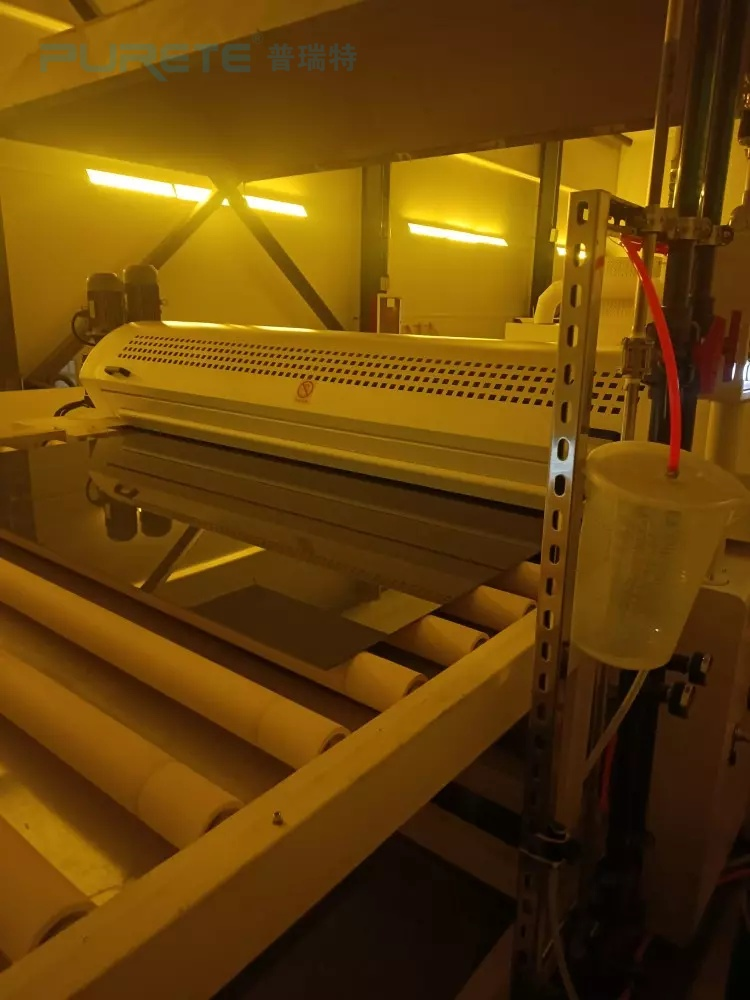
| 4 | 5 m Jet Dryer | 8.9 kW | Pre-drying, solvent evaporation |
| 5 | 5 m Jet Air Cooler | 93.3 kW | Rapid cooling |
| 6 | Dual Back UV Lamps | 52.44 kW | UV pre-curing |
| 7–8 | Roller Conveyor | 0.75 kW each | Outfeed / discharge transport |
| Total | — | approx. 162 kW | — |
5. Production Line Reliability Test Data
| No. | Metric | Value |
|---|
| 1 | Mean Time Between Failures (MTBF) | > 720 h |
| 2 | Mean Time To Repair (MTTR) | < 1 h |
| 3 | Equipment uptime (operating rate) | > 98% |
| 4 | Scheduled preventive maintenance (PM) time | < 1% |
| 5 | Glass breakage rate | < 0.3% |
6. Equipment Innovation
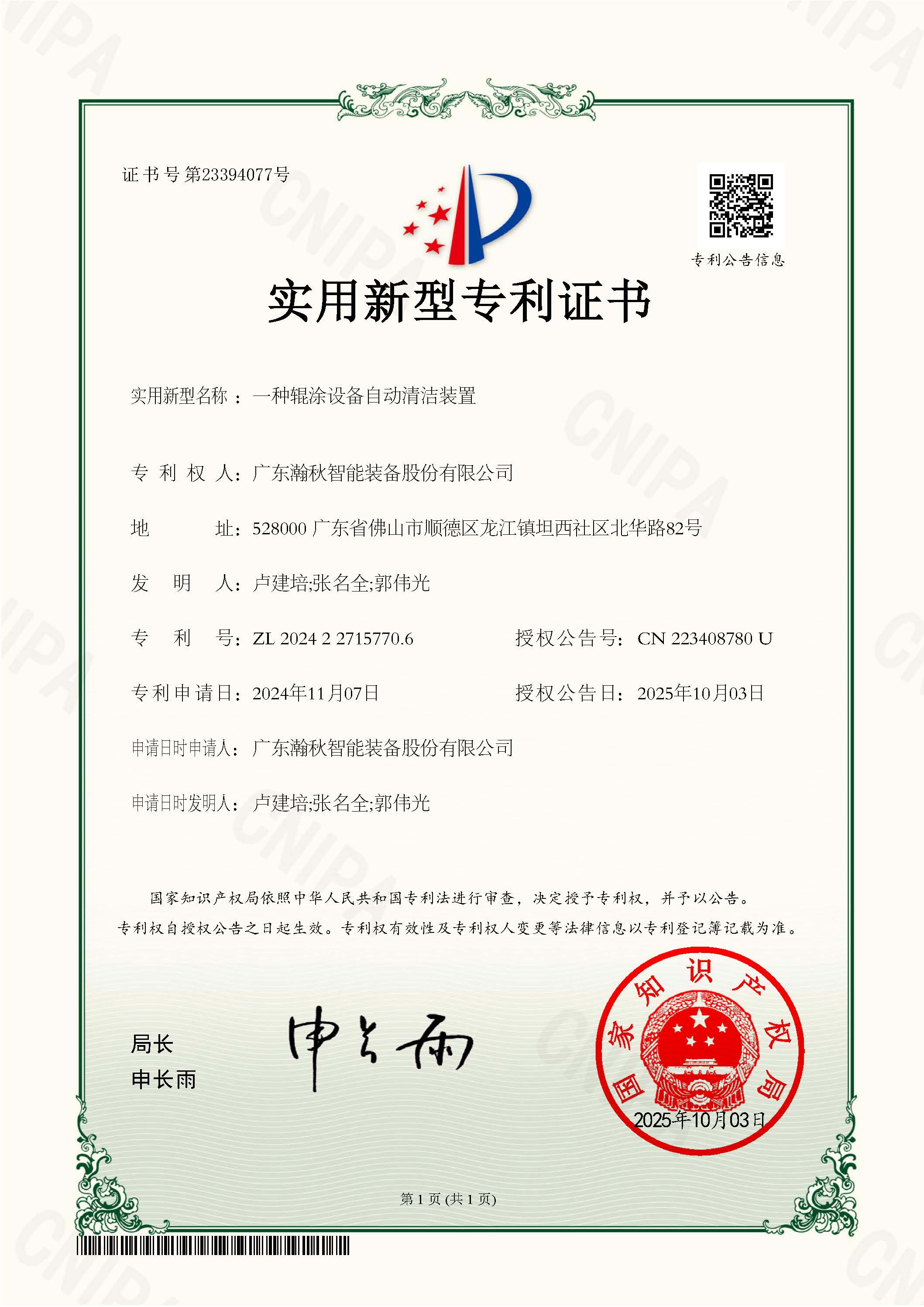
During equipment development, in order to resolve the low efficiency of manually removing and cleaning the conveyor belt, the PURETE R&D team integrated an automatic cleaning structure into the equipment. This ensures the conveyor belt remains clean while eliminating the efficiency bottleneck of manual belt disassembly and washing.
FAQ
Q: Do PV glass panels coated via roller coating and via vacuum coating differ in final performance?
A: In terms of transmittance gain, there is little difference between the two — both can achieve a 2–2.5% improvement. The main differences lie in cost and process compatibility. Roller coating is low-cost, can be applied in-line, and is well suited to large-scale mass production; vacuum coating produces a more uniform film and suits high-end products, but requires higher equipment investment and has limited throughput. Currently, around 90% of the market share is held by roller coating.
Q: What is the typical coating thickness for AR coating on PV glass?
A: The dry film thickness of AR coating is typically in the 80–150 nm range. The exact value depends on the designed optical performance targets. During production, the dry film thickness is indirectly controlled by controlling the wet film thickness, which is generally in the 1–5 μm range.
Q: What special requirements does roller-applied AR coating place on the coating material?
A: AR coating materials for PV glass must meet several key requirements. First, tempering compatibility — the coating must withstand tempering temperatures of 600–700°C. Second, optical performance — the refractive index must be precisely controlled within 1.22–1.38. Third, viscosity stability — the roller coating process requires the coating's viscosity to remain stable within a certain range.