PURETE

How a Leading US Furniture Factory Boosted Daily Output & Finishing Quality with PURETE 60m Automated Roller Coating Line


A well-known furniture manufacturing factory in the United States was facing a series of critical challenges in its finishing workshop, limiting its growth in the premium cabinet and custom furniture market:

Key Pain Points of the Factory:

  1. Inconsistent Finishing Quality: Manual coating processes led to uneven gloss, poor adhesion, and frequent rework on solid wood, MDF, particleboard, and decorative panels.

  2. Low Daily Production Output: Disconnected manual steps (loading, coating, drying, sanding) created bottlenecks, limiting the factory’s daily capacity to meet rising order demands.

  3. High Labor & Rework Costs: The manual workflow required a large team of skilled workers, while rework due to quality defects further increased production costs.

  4. Environmental & Safety Pressures: High-emission coating processes struggled to meet North American environmental regulations, while manual handling exposed workers to safety risks.

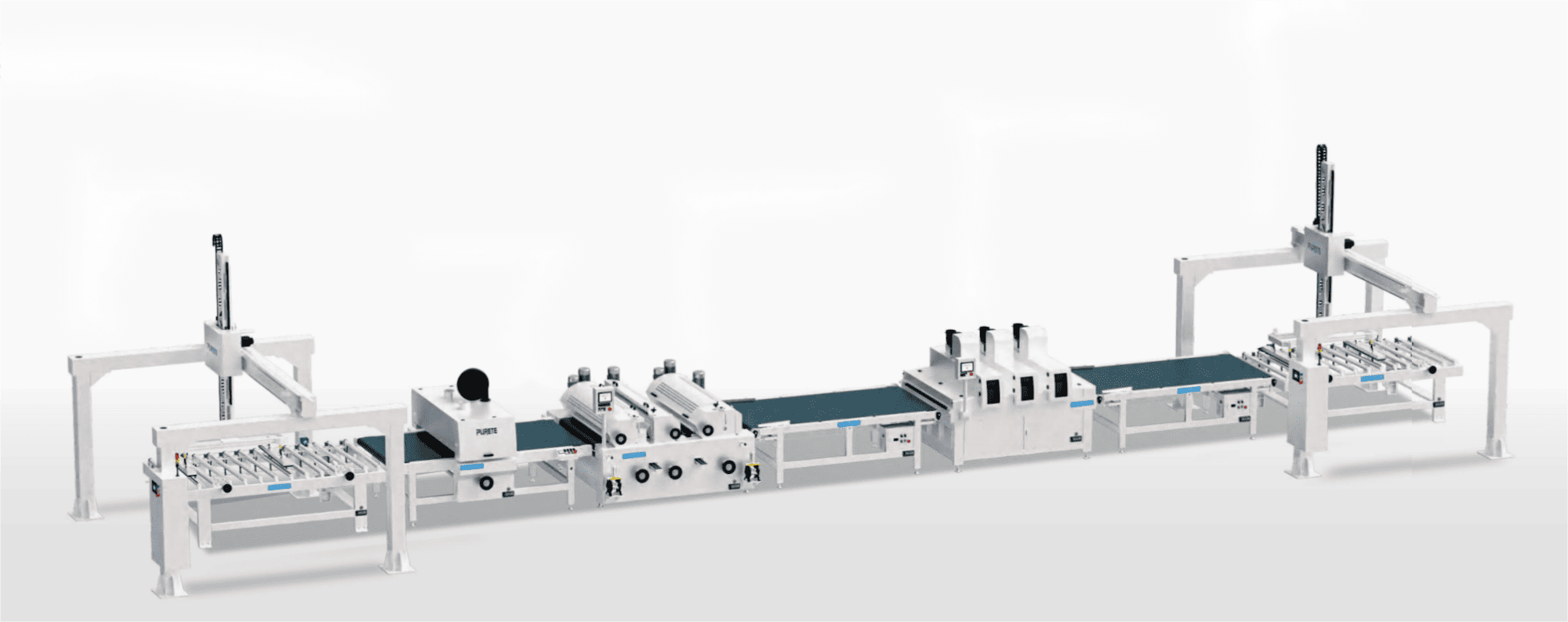
To solve these issues and scale its high-quality production, the factory decided to invest in a 60-meter PURETE fully automated roller coating line.


How the PURETE Line Transformed the Factory’s Finishing Process

Stable, Repeatable Finishing Quality

The integrated line combines automated loading/unloading, precision multi-roller coating, infrared pre-drying, UV curing, and automatic sanding modules. It supports seamless multi-coat processes for primers and topcoats, delivering uniform gloss and strong adhesion on every substrate.

Significant Increase in Daily Production Capacity

The continuous, fully automated workflow eliminated bottlenecks. After installation, the factory’s daily production output increased by over 30%, from 450 panels/day to more than 1500 panels/day. The 60-meter line enables non-stop processing of large batches, drastically shortening lead times.

Reduced Labor Costs & Rework Rates

The system cut manual intervention by 80%, significantly lowering labor costs. At the same time, the defect rate dropped by over 90%, eliminating most rework caused by human error.

Eco-Friendly & Compliant Production

The line supports low-VOC and water-based coatings, helping the factory meet strict North American environmental standards while creating a safer workplace for employees.

Final Results for the US Factory

With the PURETE automated roller coating line, the factory now delivers consistent, high-quality finishes at scale. The combination of higher daily output, lower costs, and better quality has greatly enhanced its competitiveness in the premium North American home furnishing market.

PURETE remains committed to providing reliable finishing equipment, proven coating technology, and comprehensive support to help furniture manufacturers worldwide build efficient, sustainable, and fully automated production lines.


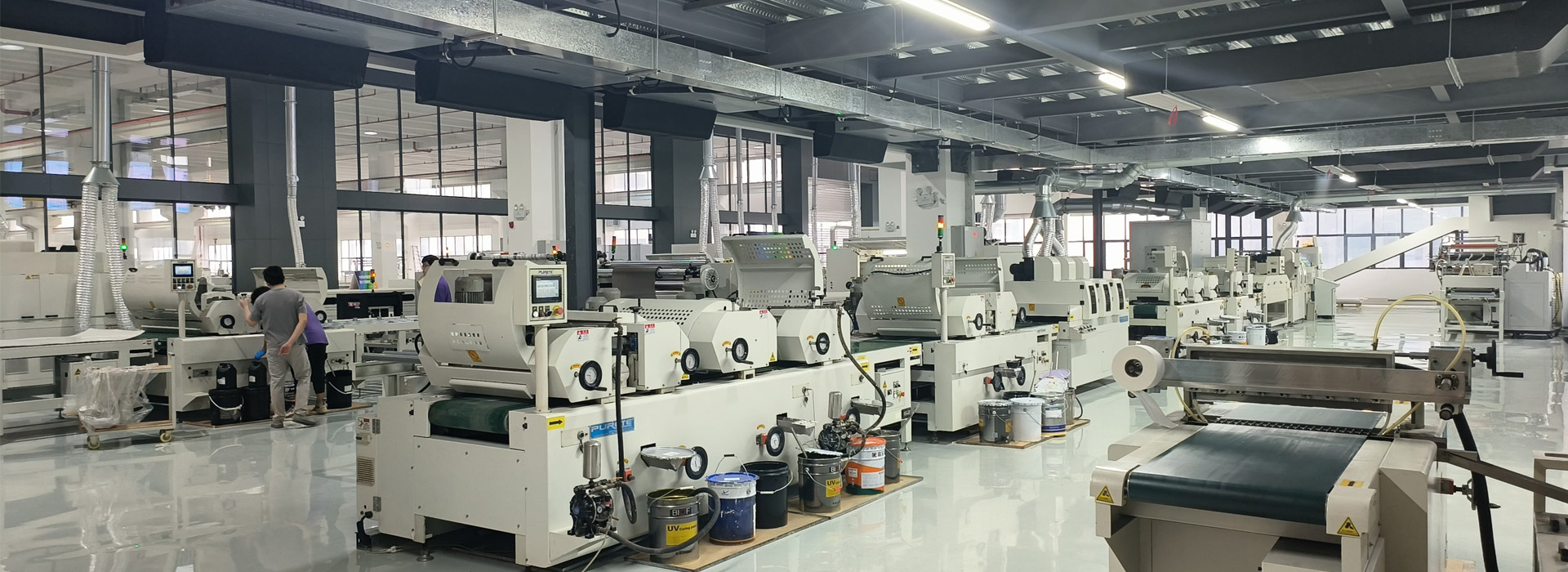

美国某工厂橱柜家具辊涂线

FAQ

Q1: How Does a Roller Coating Machine Work?

roller coating machine operates by transferring liquid paint or coating material evenly onto the surface of a workpiece through a controlled roller coating process.

During operation, the paint is poured between the feed roller and the coating roller. As the rollers rotate, the coating material is evenly distributed across the roller surfaces. The workpiece is then conveyed through the roller coating conveyor system, where the coating roller presses the paint onto the panel surface. This controlled pressure ensures uniform paint transfer, completing the panel surface coating process with consistent thickness and finish.

This working principle makes roller coating machines ideal for flat panel coatingdecorative board finishing, and high-efficiency industrial coating applications.

Q2: How Many Types of Rollers Are Used in a Roller Coating Machine?

roller coating machine typically consists of several types of rollers, each serving a specific function in the roll coating production line. These rollers can be categorized as follows:

Coating Rollers

Coating rollers are responsible for transferring paint or coating material onto the panel surface. Common types include:

  • Rubber rollers

  • Silicone rollers

  • Sponge rollers

  • Laser-engraved rollers

  • PU rollers

  • Soft rollers (extra-soft silicone rollers)

Different coating rollers are selected based on paint typecoating thickness, and surface finish requirements.

Q3: What Is the Minimum Thickness Achievable with a Roller Coating Machine?

The recommended minimum workpiece thickness for a roller coating machine is 5 mm.

While thinner materials may technically pass through the machine, doing so increases the risk of the coating roller pressing against the conveyor belt. This can cause paint contamination, uneven coating, and compromised surface aesthetics, ultimately affecting overall product quality and equipment cleanliness.

Q4: What Is the Maximum Width of a Roll Coating Production Line?

The standard working width range of a roll coating production line is:

  • Minimum width: 630 mm

  • Maximum width: 2550 mm

Custom coating widths can also be designed to meet specific panel size requirementsfurniture production standards, or industrial coating needs.

Q5: Can Roller Coating Machines Be Used on Metal Substrates?

Yes, roller coating machines can be applied to certain metal substrates, such as:

  • Aluminum ceilings

  • Metal drums

For metal surface coating, proper surface pretreatmentpaint selection, and roller configuration are essential to ensure optimal adhesion and coating performance.

Q6: Where Can Roller Coating Be Applied?

Roller coating technology is widely used across multiple industries for flat or semi-flat surface finishing, including:

  • Wood flooring

  • Cabinets and wardrobes

  • Wooden doors

  • Glass panels

  • Leather products

  • Picture frames

  • Coat hangers

  • Decorative grilles

  • Game console casings

These applications benefit from high coating efficiencyuniform surface finish, and reduced material waste.

Q7: What Is the Maximum Height for Roller Coating on Workpieces with Uneven Surfaces?

Under normal circumstances, roller coating is not recommended for workpieces with uneven or complex surface structures.

Uneven surfaces can:

  • Damage coating rollers

  • Prevent complete paint coverage

  • Result in inconsistent coating thickness

For workpieces with pronounced surface irregularities or complex 3D profiles, spray coating is typically the preferred solution, as it provides better coverage and protects the roller coating equipment from premature wear.

Q8:Does the roller coating machine have requirements for the flatness of the substrate?

A8:Certain requirements apply.The substrate surface must be essentially flat, free from significant undulations or warping, as these would compromise coating uniformity.Should the substrate exhibit minor irregularities, the effect may be optimised by adding an additional primer coat or adjusting the pressure settings.

Q9:Is the daily maintenance of roller coating machines complicated?

A9:Ensure timely cleaning of the rubber rollers, conduct regular inspections of the bearings and transmission system, and maintain the cleanliness of the coating system.

Contact Us

fill in our contact form.

We will get in touch with you as soon as possible.

×
Leave a message