

Coating Machine Buyer Guide: How to Choose the Right Industrial Coating Equipment for Your Production Line
 May 20, 2026
 Hits:99second
A coating machine is industrial equipment used to apply a controlled layer of coating, adhesive, paint, lacquer, primer, or functional material onto a product surface. In furniture, decorative panels, doors, flooring, wall panels, and industrial materials, the right coating machine determines surface quality, production efficiency, material cost, and long-term factory competitiveness.
For overseas buyers, the biggest mistake is treating all coating machines as the same category. A roller coating machine, spray coating system, curtain coater, PUR laminating line, UV coating line, and wrapping line solve different production problems. The right choice depends on the product geometry, coating material, finish requirement, output target, and factory automation level.
What Does a Coating Machine Do?
A coating machine applies material to a substrate in a repeatable way. Depending on the process, the coating may be liquid paint, UV coating, water-based lacquer, hot-melt adhesive, PUR adhesive, decorative film, protective layer, or functional surface material.
In a complete production line, the coating machine is usually only one part of the system. The full line may include sanding, dust removal, feeding, coating, leveling, drying, UV curing, trimming, cooling, stacking, and unloading. This is why professional buyers should evaluate the entire process flow, not only the coating unit.
Main Types of Industrial Coating Machines
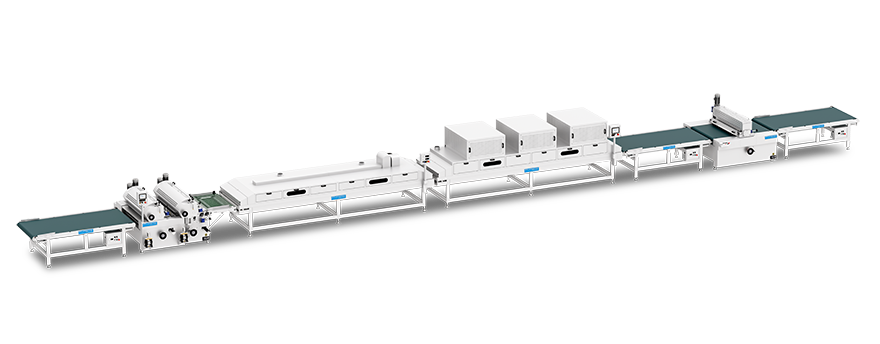
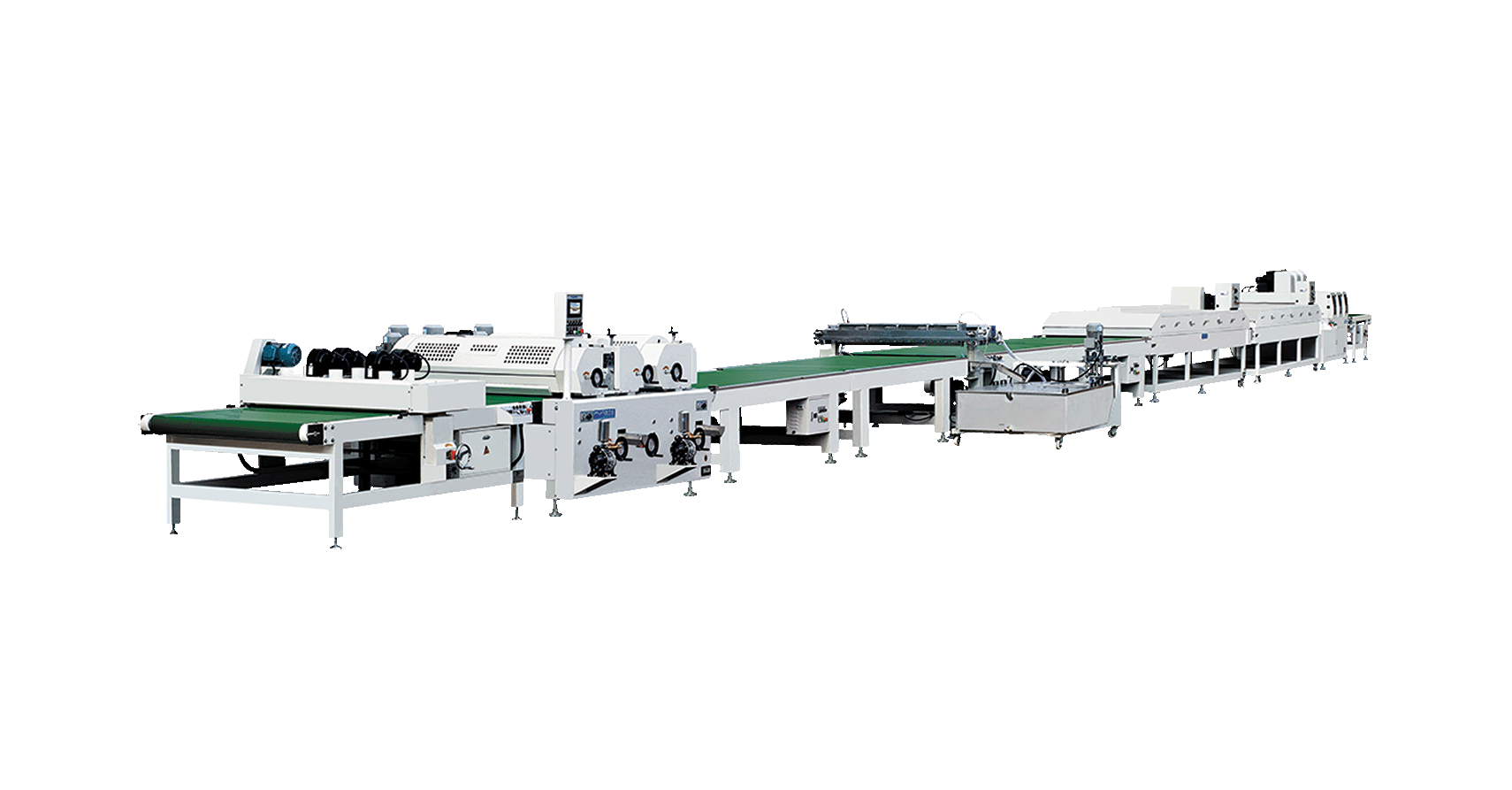
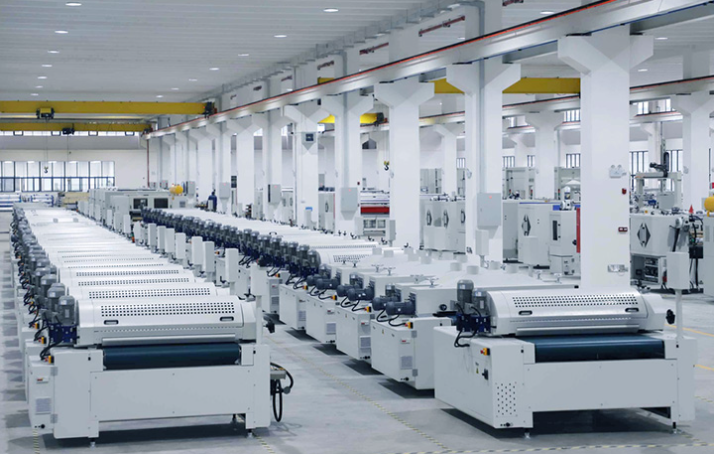
Roller coating machines are used for flat substrates such as MDF, plywood, particleboard, cabinet panels, wall panels, flooring, and decorative boards. They offer strong coating utilization and stable film thickness.
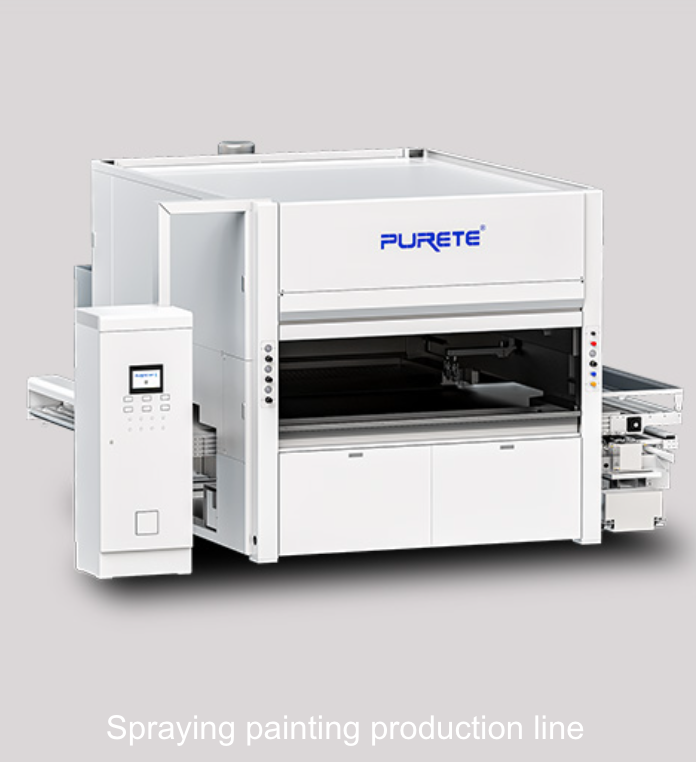
Spray coating systems are used for shaped workpieces, doors, cabinet fronts, profiled panels, and multi-sided components. They are more flexible for complex surfaces than roller coating.
Curtain coaters create a continuous curtain of coating material that falls onto the moving workpiece. They are useful when high coating volume and smooth surface coverage are required.
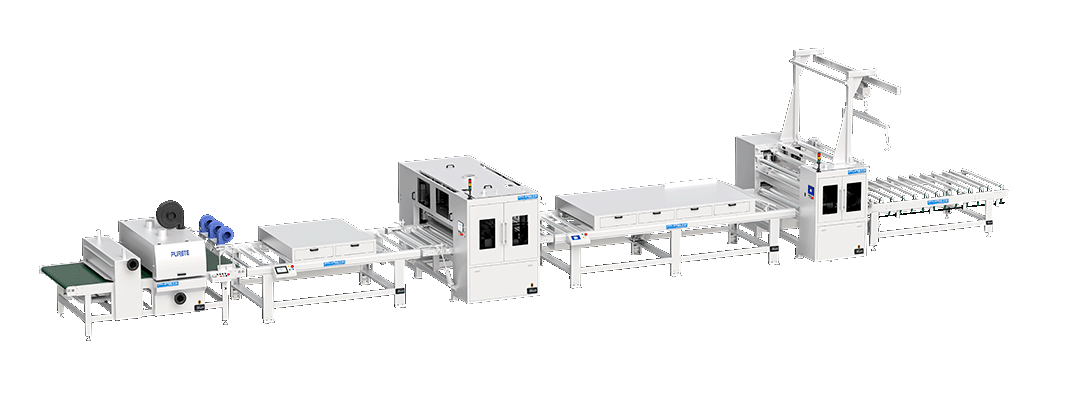
PUR laminating lines apply adhesive and bond decorative materials such as PET, PVC, CPL, HPL, acrylic, aluminum foil, or veneer-like films to boards.
UV coating lines combine coating application with ultraviolet curing. They are widely used where fast curing, high productivity, and stable finish quality are required.
Wrapping machines are used to wrap profiles, frames, skirting, door jambs, and narrow components with film or veneer.
How to Choose the Right Coating Machine
Start with the product. Flat panels usually need roller coating, curtain coating, PUR lamination, or UV coating. Three-dimensional parts usually need spray coating or robotic spraying. Long profiles usually need wrapping.
Define the finish. A high-gloss panel, a matte panel, a soft-touch panel, a wood-effect surface, a primer-coated board, and a film-laminated board require different process logic.
Confirm the coating material. UV coating, water-based coating, solvent-based paint, PUR adhesive, hot-melt adhesive, lacquer, and functional coatings behave differently in application, leveling, drying, and curing.
Calculate production capacity by square meters or pieces per shift. Line speed alone is not enough. Real capacity depends on feeding, changeover, drying, curing, unloading, and defect rate.
Evaluate automation level. A low-cost standalone machine may appear attractive, but manual feeding, poor dust control, and unstable curing can create hidden costs. For export-oriented factories, a complete production line usually delivers better consistency.
Buyer Checklist
Before requesting a quotation, prepare:
· Product photos and drawings
· Substrate material
· Board or workpiece size range
· Required coating or surface material
· Target finish effect
· Daily output target
· Current finishing problems
· Factory layout
· Voltage and utility conditions
· Preferred automation level
Strategic Recommendation
If your factory produces flat panels at scale, begin with roller coating or UV coating. If your products are doors or shaped components, evaluate automatic spray coating. If your market requires decorative film surfaces, evaluate PUR lamination. If your product requires high coating volume and smooth coverage, evaluate curtain coating. If you are targeting premium ultra-matte panels, consider excimer or inert coating technology.
The best coating machine is not the most generic machine. It is the machine that matches the buyer's product, production economics, and sales strategy.
FAQ
What is a coating machine?
A coating machine is industrial equipment that applies coatings, paints, adhesives, lacquers, or functional surface materials to a substrate as part of a controlled production process.
Which coating machine is best for furniture panels?
For flat furniture panels, a roller coating machine or UV coating line is usually suitable. For shaped doors and profiled parts, an automatic spray-coating system is often preferable.
What information should I provide to a coating machine supplier?
Provide the product size, substrate, coating material, target finish, target output, factory layout, and current quality problems.
What Is the Principle of Auto Coating Machine?

Advantages of Short-Cycle Presses in Panel Processing
Application of Soft-Touch (Excimer) Coating in Furniture and Decorative Materials
Which Industries Benefit Most from PUR Laminating?
What Is the Principle of Roller Coating Machine?
How Does PUR Laminating Compare to Solvent-Based Lamination in Terms of Cost?
Global Surface Finishing Market Analysis and Development Trends


