

PUR Lamination Machine and PUR Laminating Line: Complete Guide for Decorative Panel Manufacturers
 June 07, 2026
 Hits:378second
A PUR lamination machine bonds decorative film, sheet, or surface material to a panel using polyurethane reactive adhesive. It is widely used in high-end decorative panels, cabinet panels, wall panels, doors, furniture boards, and building material panels.
For manufacturers working with MDF, plywood, particleboard, calcium silicate board, gypsum board, metal plate, PET, PVC, CPL, HPL, acrylic, and aluminum foil, PUR lamination can create a premium surface with strong bonding and consistent appearance.
What Is PUR Lamination?
PUR stands for polyurethane reactive adhesive. Unlike simple hot-melt adhesives, PUR adhesive reacts with moisture to form a strong chemical bond upon curing. This makes it valuable for surfaces that require durability, flatness, moisture resistance, and long-term adhesion.
In a PUR laminating line, adhesive is applied to the substrate or decorative material, and the surface layer is pressed onto the board under controlled temperature, pressure, and feeding conditions.
What Materials Can Be Laminated?
PUR lamination can be used with:
· PET and PETG film
· PVC film
· PP film
· CPL and HPL
· Acrylic sheet
· Aluminum foil
· Decorative paper
· Veneer-like film
· Functional decorative film
Common substrates include MDF, plywood, particleboard, gypsum board, calcium silicate board, composite boards, and metal plates.
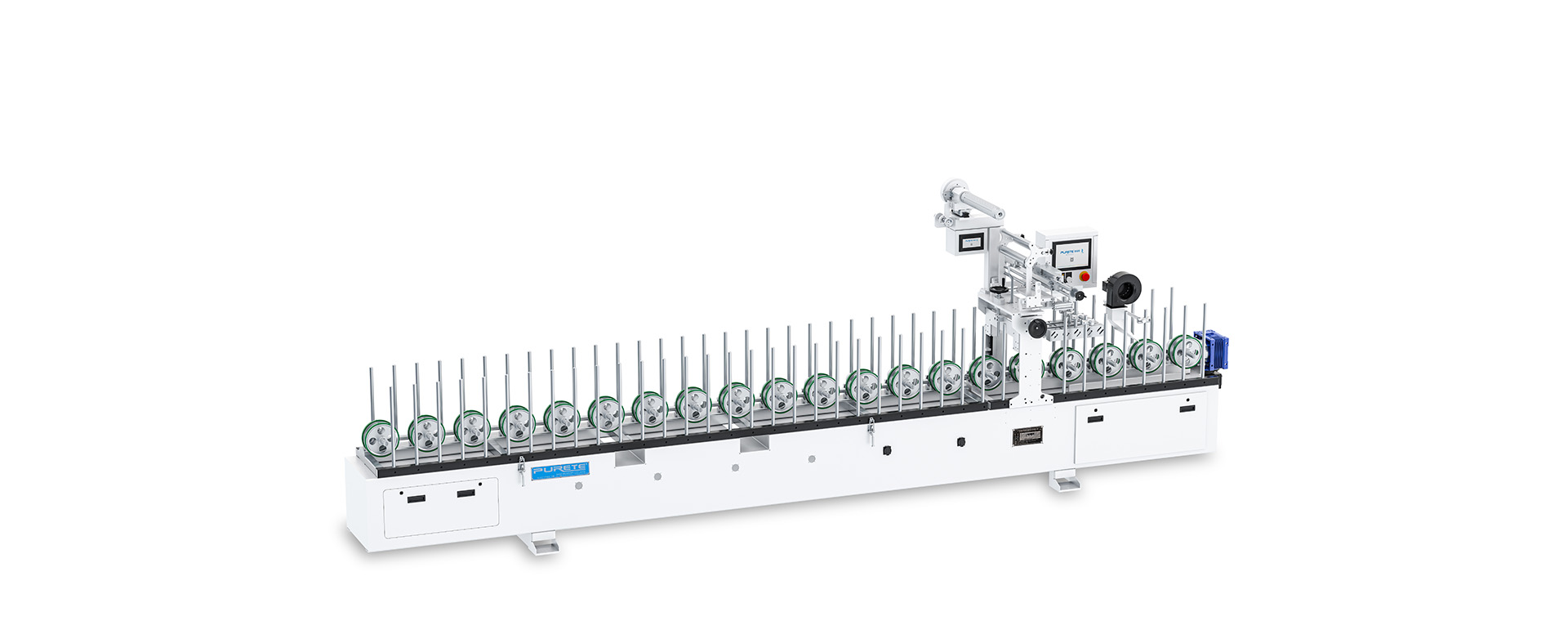
Key Components of a PUR Laminating Line
A complete line may include board feeding, dust cleaning, preheating, adhesive application, film feeding, laminating, pressing, trimming, film cutting, cooling, and unloading.
Each module matters. Dust cleaning prevents particles from under the film. Adhesive application controls bonding strength and cost. Temperature and pressure determine surface flatness and adhesion. Trimming and film cutting affect finished quality and material yield.
Common PUR Lamination Problems
Bubbles are usually caused by dust, moisture, trapped air, poor pressure, or unstable feeding.
Weak bonding can result from insufficient adhesive, wrong temperature, incompatible materials, or inadequate curing.
Wrinkles can appear when film tension is unstable or when feeding is misaligned.
Surface particles are common when the substrate is not cleaned properly before lamination.
Edge defects may come from inaccurate trimming, poor pressure near the edge, or material mismatch.
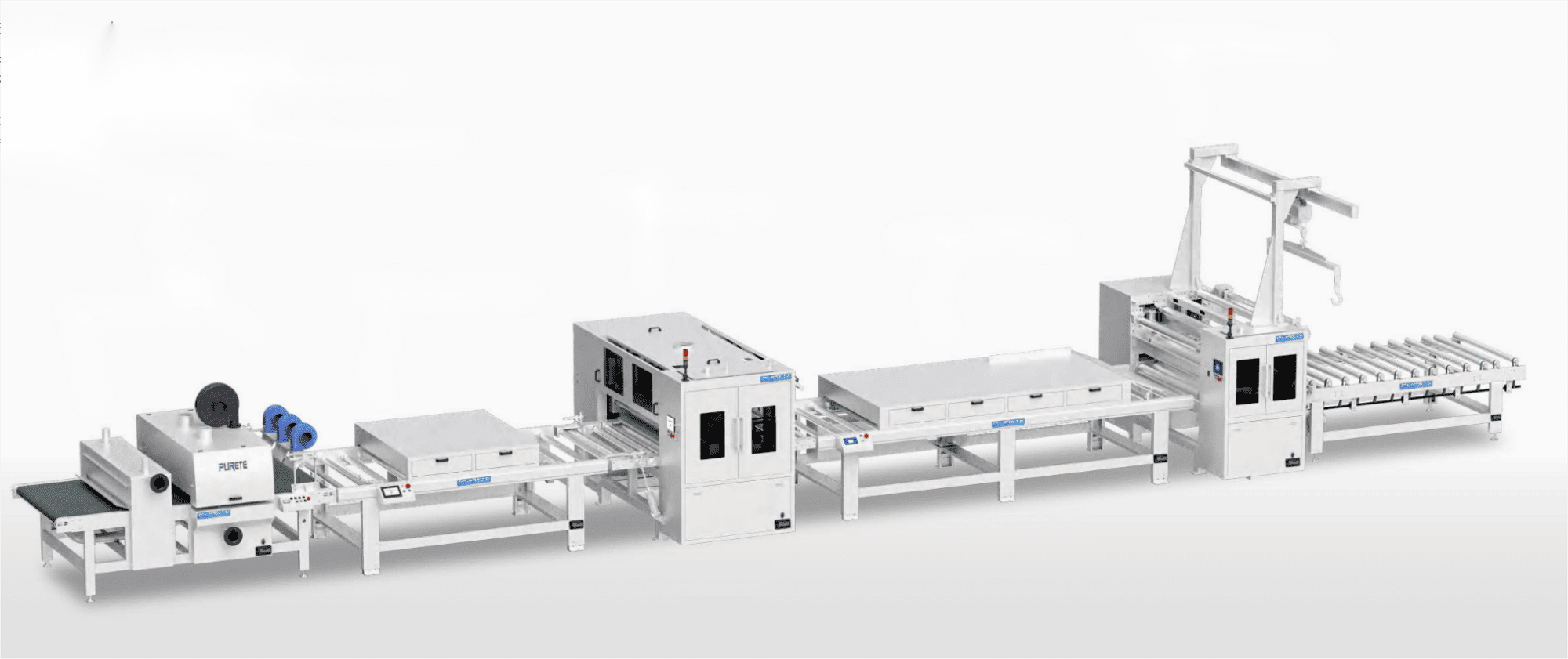
How to Choose a PUR Lamination Machine
Do not select a machine only by width. The supplier must understand your substrate, decorative material, adhesive, finish requirements, board size, production output, and quality tolerance.
For high-gloss PET panels, dust control and pressure stability are critical. For HPL or CPL, feeding and adhesive control may be more important. For wall panels, board size and line handling become major factors.
Buyer Checklist
Ask your supplier:
· Can the line handle our substrate and decorative material?
· What adhesive system is recommended?
· How is dust controlled before lamination?
· What line speed is realistic for our material?
· How many operators are required?
· How are film cutting and trimming handled?
· Can you test our real material before order confirmation?
Strategic Recommendation
PUR lamination is one of PURETE's strongest existing search opportunities. The content should not stop at product descriptions. It should answer buyer questions about adhesive, bonding, defects, material compatibility, and production economics.
FAQ
What is the difference between PUR lamination and ordinary lamination?
PUR lamination uses a polyurethane reactive adhesive that forms a stronger bond after curing than many ordinary hot-melt adhesive systems.
Is PUR lamination suitable for PET cabinet panels?
Yes. PET cabinet panels are a common application, but the film, board, adhesive, pressure, and temperature should be tested together.
What causes bubbles in PUR lamination?
Common causes include dust, moisture, trapped air, poor pressure, unstable feeding, or unsuitable adhesive settings.
What Is the Principle of Auto Coating Machine?

Advantages of Short-Cycle Presses in Panel Processing
Application of Soft-Touch (Excimer) Coating in Furniture and Decorative Materials
Which Industries Benefit Most from PUR Laminating?
What Is the Principle of Roller Coating Machine?
How Does PUR Laminating Compare to Solvent-Based Lamination in Terms of Cost?
Global Surface Finishing Market Analysis and Development Trends


