
 March 26, 2026
 Hits:729second
What Is a Continuous Coating Line? Process, Benefits, and Applications
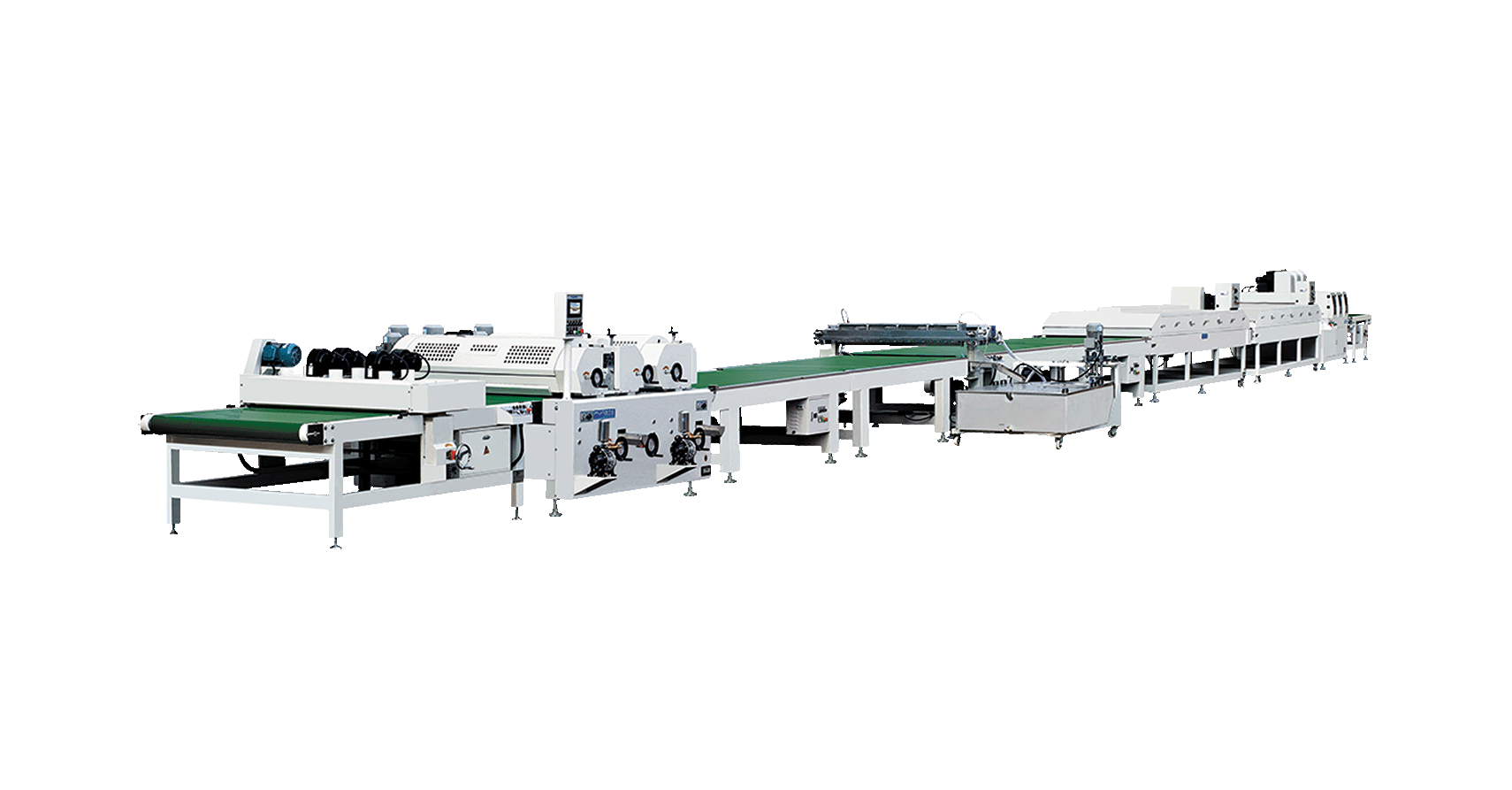
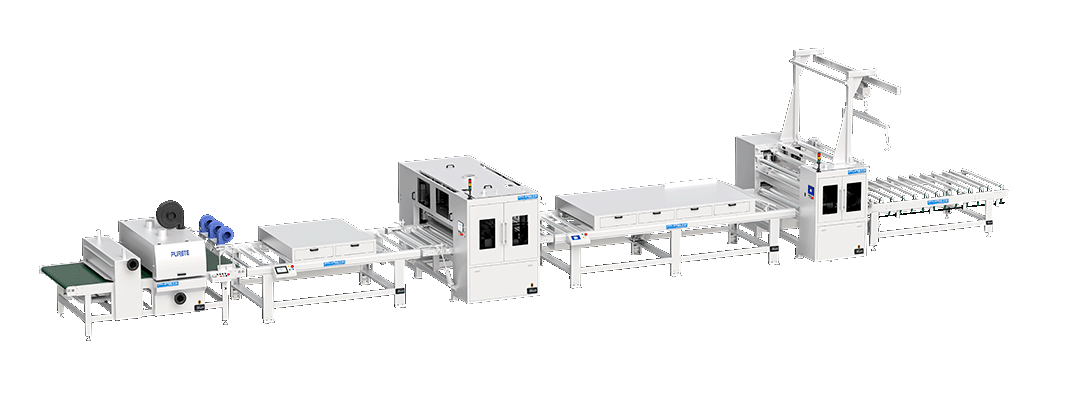
In the context of decorative panel and board surface finishing, a continuous coating line usually refers to a production system in which flat substrates move through coating-related processes in a coordinated, continuous flow. Rather than treating coating as a single standalone machine function, this type of line is designed to connect multiple production stages so that throughput, coating quality, and process stability can be managed together.
For manufacturers producing decorative panels, MDF boards, furniture boards, and flat wall panel products, the decision is often not simply whether to buy a coating machine. The real question is whether production requirements justify moving from isolated equipment to a more integrated line-based setup. That decision affects capacity, finish consistency, labor organization, line layout, and future automation potential.
This article explains what a continuous coating line means in practical terms, how it typically works, where it is most suitable, and when another production format may be more appropriate.

What Is a Continuous Coating Line in Decorative Panel Production?
A continuous coating line is a production system in which boards or panels pass through coating-related stages in sequence at a controlled speed, with each section of the line designed to work in coordination with the next.
What does continuous production mean?
In this setting, “continuous” does not necessarily mean 24-hour uninterrupted production in every factory. It means that during operation, the substrate moves through the process as part of a linked production flow, rather than being processed one batch at a time with repeated stop-start handling.
Compared with batch-style processing, this approach is generally better suited to manufacturing environments where:
- Product dimensions are relatively standardized
- Output targets are stable or growing
- Surface quality consistency is important
- Manual transfer between stages needs to be reduced
- Upstream and downstream equipment need to be connected
How is it different from a standalone machine or batch-type setup?
A standalone coating machine usually performs one core function, such as roller coating or spray coating. A batch-type setup processes items in separate cycles and may require more manual intervention between stages.
A continuous coating line differs in that it is built around:
- Linked process flow
Materials move through connected sections in sequence. - Coordinated process rhythm
Coating speed, drying capacity, transfer speed, and downstream handling need to be matched. - Line-level production logic
The focus is not only on applying coating, but also on maintaining stable throughput and finish quality across the full process.
For buyers, this distinction matters because a continuous coating line is not simply “a bigger machine.” It is a different way of organizing production.
What Is the Typical Process of a Continuous Coating Line?
The exact configuration depends on the substrate, coating method, finish target, and project scope. In decorative panel and board applications, a continuous coating line often includes several of the following stages.
1. Feeding and Material Transfer
Production begins with feeding the substrate into the line. This may be manual, semi-automatic, or fully automatic depending on the line design and expected output.
At this stage, buyers should pay attention to:
- Panel size consistency
- Surface protection during transfer
- Positioning accuracy
- Whether automatic feeding is necessary for target throughput
In real projects, stable feeding is important because upstream inconsistency often creates downstream coating problems.
2. Surface Preparation
Before coating is applied, the substrate may require surface preparation. Depending on the material and product objective, this may include:
- Dust removal
- Cleaning
- Sanding
- Surface pretreatment
- Static control
This stage is especially important in decorative board production because coating performance depends not only on the coating unit itself, but also on substrate condition. Poor preparation can affect adhesion, appearance, and consistency.
3. Coating Application
This is the central process section. In flat panel and board finishing, the coating unit may use methods such as:
- Roller coating
- Curtain coating
- Spray coating
- Other application methods depending on the process goal
For many flat decorative panel applications, roller coating is often preferred because of its efficiency and consistency. However, the best method still depends on factors such as:
- Substrate flatness
- Coating type
- Required film thickness
- Surface effect target
- Line speed
- Downstream drying compatibility
So while some methods are more common in board production, no coating method should be treated as universally ideal for every project.
4. Drying or Curing
After coating, the substrate usually passes through a drying or curing section. This may involve:
- Hot air drying
- Infrared drying
- UV curing
- Other curing technologies depending on the coating system
This section must be matched carefully to:
- Coating speed
- Coating type
- Film build
- Surface quality target
In practice, drying and curing capacity is one of the most important factors in line design. A coating section may perform well on its own, but if the curing section cannot keep pace, the line will not run as intended.
5. Optional Downstream Modules Such as Laminating, Finishing, Inspection, and Stacking
Not every continuous coating line includes laminating or additional finishing as part of the same integrated system. In some projects, these are separate linked sections. In others, they are built into the overall line scope.
Depending on the application, downstream modules may include:
- Laminating
- Additional topcoat or finishing steps
- Cooling
- Surface inspection
- Automatic stacking or unloading
For this reason, buyers should not assume that every continuous coating line includes exactly the same downstream configuration. The actual setup depends on the production objective and project boundary.
What Are the Main Benefits of a Continuous Coating Line?
A continuous coating line can offer significant benefits, but those benefits are strongest when the production model fits the line concept.
1. Better Suited to Higher-Volume Production
Compared with batch-style production, continuous lines are generally better suited to higher output requirements, especially when products are relatively standardized.
This can help manufacturers improve:
- Throughput per shift
- Workflow continuity
- Material handling efficiency
That said, “higher capacity” should always be understood in relation to the specific substrate, line speed, drying match, and changeover frequency. A continuous line is not automatically high-output under all conditions; it performs best when line design and production planning are aligned.
2. Improved Process Stability in Repetitive Production
When panel specifications and operating parameters remain relatively stable, a continuous line can improve:
- Coating consistency
- Surface repeatability
- Process rhythm
- Output stability
This is one of the main reasons continuous systems are attractive in decorative panel manufacturing, where appearance uniformity often matters as much as raw capacity.
3. More Suitable for Standardized Manufacturing Environments
Continuous lines usually perform best when the factory produces products with relatively stable:
- Dimensions
- Surface specifications
- Coating systems
- Production plans
Where standardization is high, the value of the line tends to increase. Where product variation is high, the practical advantage may be reduced by cleaning, changeover, and process adjustment time.
4. Easier Integration with Automation Planning
A continuous coating line can often be connected with upstream and downstream sections such as:
- Sanding
- Feeding systems
- Drying or curing
- Laminating
- Inspection
- Stacking
This makes it easier to plan for broader automation. For growing factories, that integration potential may be one of the strongest long-term reasons to invest.
5. Reduced Manual Handling in the Right Production Model
In repetitive production environments, a continuous line can reduce manual transfer between stages and lower dependence on repeated operator intervention.
However, this does not automatically mean lower total labor cost in every case. Actual labor cost benefits depend on:
- Production scale
- Operator skill requirements
- Automation level
- Maintenance demands
- Local labor conditions
This is an important distinction for buyers evaluating ROI.
Which Products and Industries Are Best Suited to a Continuous Coating Line?
Within Purete’s business context, continuous coating lines are most relevant where flat substrates and repeatable finishing requirements are involved.
Decorative Panels
Decorative panel production is one of the most suitable applications because manufacturers often need:
- Consistent surface appearance
- Stable throughput
- Repeatable finish quality
- Integration with drying and finishing processes
MDF and Engineered Boards
MDF and similar board materials are common in line-based finishing projects because they are often produced in stable sizes and require controlled surface treatment before final use.

Furniture Boards
Furniture board manufacturers may benefit from continuous lines when they need to balance:
- Surface quality
- Production efficiency
- Repetitive output
- Integration with other finishing steps
Flat Decorative Wall Panel Applications
This type of line may also be suitable for certain flat decorative wall panel products, especially where continuous surface finishing and standardized panel flow are required.
It is worth noting that “wall panel production” is a broad category. Not every wall panel product uses the same equipment logic. The suitability depends on substrate structure, surface requirements, and whether the product fits a continuous flat-panel process.
When Is a Continuous Coating Line Not the Right Choice?
A continuous coating line is not the best solution for every factory or every product type.
Small Batches and High Product Variety
If production involves many short runs with different specifications, the value of continuous flow may be reduced. Frequent changes in size, color, coating type, or finish requirement can limit line efficiency.
Frequent Changeovers
Where process settings need constant adjustment, the theoretical productivity advantage of a continuous line may be offset by:
- Cleaning time
- Setup changes
- Parameter tuning
- Output interruptions
Laboratory, Testing, or Prototyping Work
A continuous coating line is generally not ideal for:
- Laboratory trials
- Product development work
- Prototype manufacturing
- Very low-volume testing
These applications usually require flexibility rather than line-scale throughput.
Limited Space, Infrastructure, or Project Readiness
A continuous line requires suitable factory conditions, including:
- Installation space
- Power and utility support
- Material handling flow
- Reasonable process planning
If these conditions are not in place, a phased approach may be more realistic than immediate full-line investment.
Continuous Coating Line vs Batch Coating Setup
The table below provides a quick comparison to help buyers understand which production format may better match their manufacturing model.
In practice, the better choice depends on substrate type, required finish, target output, and the frequency of product changeovers.
| Item | Continuous Coating Line | Batch Coating Setup |
| Production mode | Flow-based and linked | Cycle-based or separate-stage processing |
| Best suited for | Standardized and repetitive production | Flexible production and shorter runs |
| Changeover frequency | Lower changeover preferred | Higher changeover generally more manageable |
| Automation potential | Higher integration potential | Usually lower or more limited |
| Manual handling | Can be lower in repetitive production | Often higher between stages |
| Project complexity | Higher planning and coordination requirements | Usually simpler initial setup |
What Is the Difference Between a Continuous Coating Line and a Complete Finishing Line?
This is one of the most common sources of confusion in equipment discussions.
A Continuous Coating Line Is Usually the Coating-Centered Production Section
A continuous coating line generally refers to the part of the production system built around continuous coating flow and its directly related stages.
A Complete Finishing Line May Include More Than the Coating Section
A complete finishing line may include the continuous coating line plus additional upstream and downstream modules such as:
- Surface preparation
- Intermediate handling
- Cooling
- Inspection
- Packing
- Other finishing operations
In some projects, the continuous coating line is the core centerpiece of the full finishing line. In others, it is one part of a broader integrated system.
For buyers, this distinction matters because the actual requirement may be very different from the original inquiry wording. A customer may ask for “a coating machine,” but the real production need may involve a full line solution with multiple linked modules.
That is why responsible suppliers ask detailed questions before recommending a configuration or preparing a quotation.
How Should Buyers Evaluate a Continuous Coating Line for a Real Project?
For procurement teams, the key issue is not whether a continuous coating line sounds advanced. The key issue is whether it fits the production model.
Questions Buyers Should Ask
- What substrate will be processed?
- Are the products flat and standardized enough for continuous flow?
- What surface finish is required?
- What throughput is needed per shift or per day?
- How often will changeovers happen?
- What drying or curing method is required?
- Is future automation expansion part of the plan?
- Does the plant have the layout and utilities for an integrated line?
Information to Provide Before Requesting a Solution
To receive a meaningful recommendation, buyers should usually prepare:
- Product type
- Substrate type
- Material dimensions
- Required finish effect
- Target output
- Preferred process steps
- Available plant space
- Installation country or environment
This helps determine whether the best option is:
- A standalone coating machine
- A linked process section
- A continuous coating line
- A complete finishing line
Is a Continuous Coating Line Right for Your Factory?
Before moving forward with a project discussion, buyers can use the checklist below as a practical screening tool.
- Your product dimensions are relatively stable
- Your factory needs repeatable finish quality at scale
- Your production plan favors continuous flow over frequent short runs
- Your coating, drying, and downstream handling can be matched as one system
- Your factory layout can support integrated installation
- You are evaluating medium- to long-term automation development
If most of these points apply, a continuous coating line may be worth serious evaluation. If not, a standalone machine or more flexible batch-style setup may be more practical.
Is a Continuous Coating Line the Right Investment?
A continuous coating line can be an excellent solution for manufacturers producing decorative panels, MDF boards, furniture boards, and other flat board-based products where consistent finish quality and stable throughput are important.
Its value is strongest when:
- Product specifications are relatively stable
- Production volume justifies flow-based operation
- Coating, drying, and downstream handling can be matched properly
- The factory is ready for integrated production planning
At the same time, it is not a universal answer. For highly variable production, small-batch work, or early-stage product development, other equipment formats may be more practical.
For serious buyers, the most useful question is not simply:
“What is a continuous coating line?”
It is:
“Does a continuous coating line match my substrate, output target, finish requirement, and factory conditions?”
That is the question that leads to more accurate equipment planning and better long-term investment decisions.
FAQ
1. What is the difference between a continuous coating line and a batch coater?
A continuous coating line processes materials through linked stages in a coordinated flow, while a batch coater processes separate groups or cycles of products. Continuous systems are generally more suitable for standardized, higher-volume production, while batch systems may be more flexible for short runs and frequent changes.
2. Is a continuous coating line suitable for decorative panel production?
Yes, in many decorative panel applications it is highly suitable, especially when panel sizes, finish requirements, and production flow are relatively stable. It is commonly considered where finish consistency and throughput both matter.
3. Can drying and laminating be integrated into a continuous coating line?
Yes, they can be integrated in some projects. However, not every continuous coating line includes laminating or the same downstream modules. Actual configuration depends on project scope and production needs.
4. Does a continuous coating line always reduce labor cost?
Not always. It can reduce manual handling and repeated operator intervention in the right production model, but total labor cost depends on scale, staffing, automation level, and maintenance requirements.
5. What information should a buyer prepare before requesting a quotation or solution proposal?
Buyers should usually prepare information on substrate type, product dimensions, surface finish requirements, target output, preferred process steps, plant layout, and installation environment. These details are important for defining the right configuration.