

How Automated Spray Painting Systems Reduce Costs
 June 30, 2026
 Hits:509second
Introduction
In industrial coating production, labor cost, paint waste, and rework often come from unstable manual control. As production volume increases, factories need more consistent spray distance, coating thickness, airflow, and curing coordination. An automatic spray painting process helps reduce these variables by turning coating application into a controlled production system. For furniture, panels, metal parts, and plastic components, integrated solutions from companies such as PURETE can support more stable production flow, better material usage, and more consistent finish quality across shifts.
Quick Answer
Automated spray painting systems reduce costs by making the coating process more stable and less dependent on manual operation. In industrial spray painting, cost savings usually come from three areas: fewer operators on the line, lower paint loss from uncontrolled overspray, and fewer defects that require rework. When automated paint spray systems work together with conveyors, spray booths, and curing units, factories can maintain steadier output, use coating materials more predictably, and evaluate ROI through actual production efficiency rather than equipment cost alone.
Why Labor Costs Are Rising in Manufacturing
Labor costs in coating operations have historically remained high, and in many manufacturing environments they continue to face upward pressure due to growing production scale, stricter quality requirements, and higher compliance standards. As factories expand output and move toward multi-shift production, more skilled operators are needed to maintain consistent spraying and inspection.
At the same time, manual spraying becomes less stable under higher workloads, resulting in greater variation, defects, and rework. Safety and environmental requirements also increase indirect labor demand as production capacity expands.
As a result, labor costs tend to rise with both production scale and quality pressure, which accelerates the adoption of industrial spray painting automation.
What Are Automated Spray Painting Systems?
An automated spray painting system is an integrated production setup that controls coating application through coordinated mechanical movement, programmable spray settings, and conveyor synchronization.
It is usually part of a coating production line that includes loading, spraying, curing, and unloading stages, allowing products to move continuously without manual handling.
Key spray parameters such as gun angle, distance, and flow rate are managed by system logic rather than operator control, helping maintain consistent coating results across batches.
From an engineering perspective, system stability depends on the coordination between conveyor timing, spray booth airflow, and curing temperature.
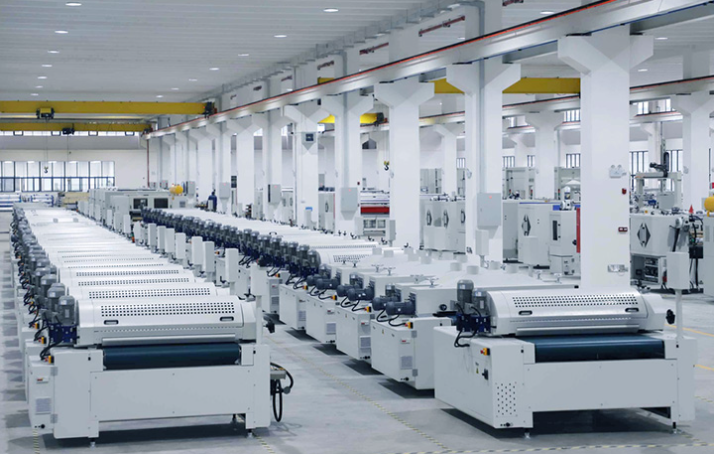
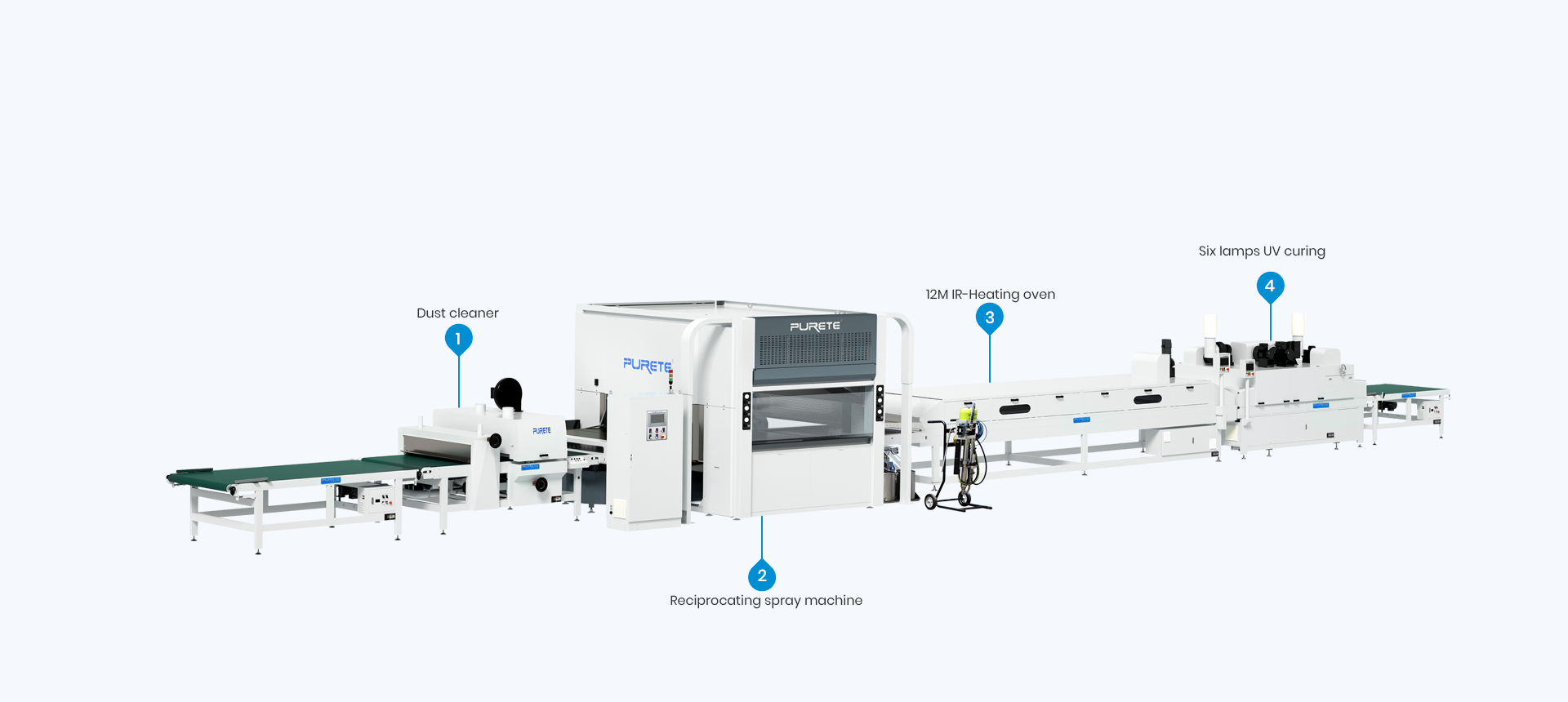 PURETE spraying painting production line
This is why automatic spray painting systems are widely used in high-volume manufacturing where consistency matters more than individual operator skill.
Reducing Direct Labor Costs
Labor reduction comes from replacing manual spraying with automated process control.
In traditional systems, multiple operators are required for spraying, handling, and inspection. In automated systems, spraying is fully controlled by equipment while operators shift to monitoring and material preparation.
This reduces dependency on skilled workers and improves production stability across multiple shifts.
Automation does not eliminate labor but restructures it from manual execution to system supervision and maintenance.
Reducing Paint Consumption
Material efficiency is one of the most important cost factors in coating production.
In manual spraying, overspray and inconsistent distance control lead to significant material loss. In an automated spray painting system, spray distance, pressure, and trajectory are precisely controlled to improve transfer efficiency.
When synchronized with conveyor speed, coating thickness becomes more stable and material usage becomes predictable.
In a full industrial coating production line, these improvements are achieved through system-level coordination rather than individual machine adjustments.
Increasing Throughput and Productivity
Production throughput depends on process stability across all production stages.
Manual systems create variability in spraying time and handling delays, which reduces overall efficiency.
An automatic spray painting system ensures continuous flow by synchronizing spray operation with conveyor movement and curing stages.
When integrated with drying and curing systems, production becomes a continuous process with reduced idle time between stages, allowing factories to operate closer to designed capacity.
Reducing Rework and Defects
Coating defects are often caused by inconsistent spray parameters or unstable environmental conditions.
Automated spray painting reduces defects by standardizing key variables such as spray angle, flow rate, and application distance.
Controlled spray booth environments also maintain stable airflow, temperature, and humidity, reducing surface variation.
Because process parameters are repeatable, defect sources become easier to control, which reduces rework and improves production efficiency.
Calculating ROI of Spray Painting Automation
ROI is determined by three factors: labor savings, material savings, and productivity improvement.
Labor savings come from reduced operator requirements. Material savings come from improved transfer efficiency. Productivity gains come from continuous production flow.
In most industrial cases, ROI comes from combined system improvements rather than a single factor.
Proper system design ensures that conveyors, spray booths, and curing units operate in balance for stable output.
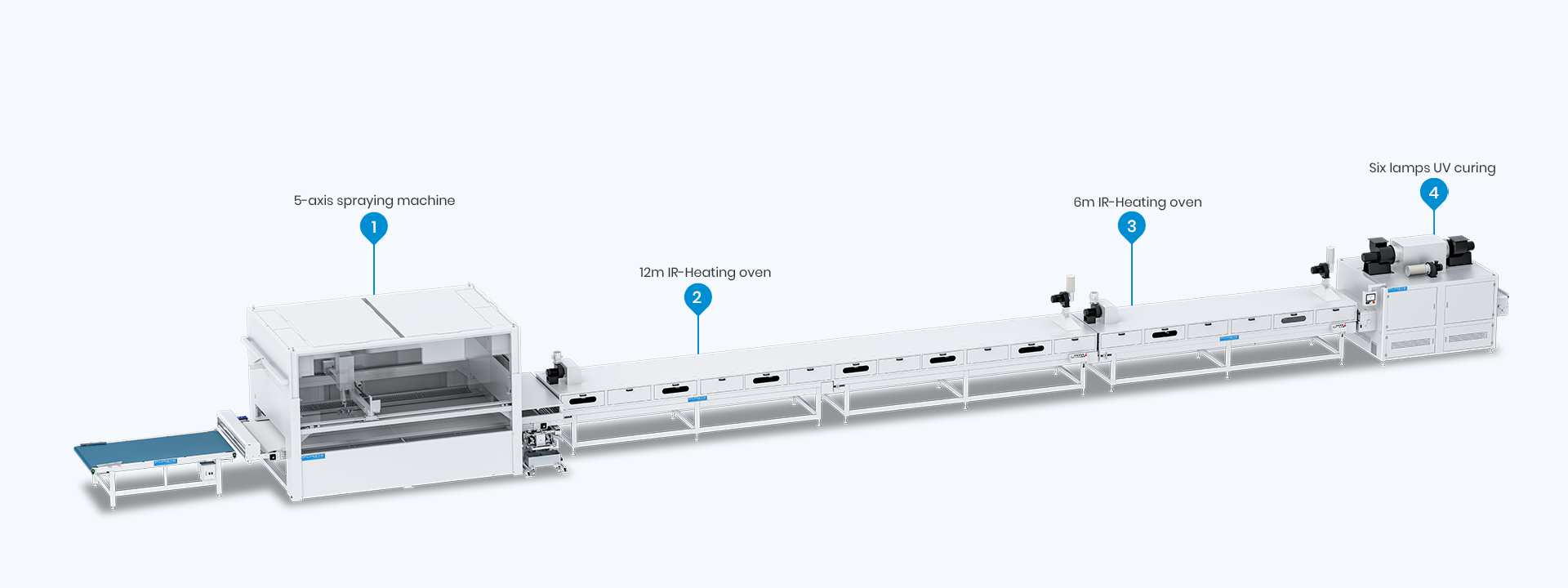
PURETE Belt-Type Numerical Control Intelligent Spray Coating Line
In practical factory evaluation, ROI is also influenced by production stability indicators such as reduced downtime, lower defect fluctuation between shifts, and improved line utilization. Even small improvements in transfer efficiency or defect rate can significantly impact annual operating cost in high-volume production environments.
Real-World Cost Saving Opportunities
The highest savings occur when spray automation is integrated into a full production line.
When spray booths are connected with loading and curing systems, handling time is eliminated and production flow becomes continuous.
In systems developed by PURETE, integration is designed at system level to improve overall factory efficiency.
Modular design also allows future capacity expansion without rebuilding the entire system, reducing long-term investment pressure.
Conclusion
Automatic spray painting systems represent a shift from manual coating to structured industrial production systems. Instead of relying on operator skill, modern coating lines are defined by process stability, where spray parameters, motion control, and curing conditions are managed in a coordinated system.
For manufacturers, the value of automation is not only improved finish quality, but also more stable output across shifts, reduced labor dependency, lower material waste, and better production predictability.
For manufacturers, automation improves not only finish quality, but also production stability across shifts, labor efficiency, material usage, and overall process predictability.
FAQ
How quickly can automation pay for itself?
Payback time varies by production conditions. In most cases, it depends on how much labor is required in spraying, how much material is wasted, and how stable the production process is. When these costs are high, automation usually recovers investment faster because improvements appear continuously during production rather than as a one-time saving.
What is the biggest source of cost savings?
Cost savings usually come from multiple factors working together rather than a single point. Labor reduction is often the most visible saving because fewer operators are needed for spraying and handling. At the same time, better spray control reduces overspray and material waste. In many cases, reduced rework also contributes significantly because coating quality becomes more stable.
Can small manufacturers benefit from automation?
Yes, but the value depends on production characteristics rather than company size. If production is repetitive and coating requirements are consistent, automation can improve quality stability and reduce reliance on skilled labor.
How much paint waste can be reduced?
It depends on system design and how well spray parameters are controlled. Automated systems improve transfer efficiency by maintaining consistent spray distance, angle, and flow rate, which reduces overspray. In stable production environments, this also reduces rework caused by uneven coating, which indirectly lowers overall material consumption.
What production volume justifies automation?
There is no fixed volume. Automation is justified when labor cost, material waste, and rework make manual production inefficient, especially in stable and repetitive production. For high-volume or multi-shift production, automation is usually justified earlier.
What Is the Principle of Auto Coating Machine?

Advantages of Short-Cycle Presses in Panel Processing
Application of Soft-Touch (Excimer) Coating in Furniture and Decorative Materials
Which Industries Benefit Most from PUR Laminating?
What Is the Principle of Roller Coating Machine?
How Does PUR Laminating Compare to Solvent-Based Lamination in Terms of Cost?
Global Surface Finishing Market Analysis and Development Trends


