

How to Choose Industrial Coating Equipment: A Practical Guide for Manufacturers
 March 30, 2026
 Hits:738second
Choosing industrial coating equipment is not just a purchasing task. For most manufacturers, it is a production decision that affects surface quality, operating efficiency, labor use, maintenance workload, and future expansion. A machine that performs well in one factory may be unsuitable in another if the material, product geometry, coating target, or production rhythm is different.
That is why experienced buyers do not start with a simple question like “Which coating machine is best?” A more practical question is: Which coating solution best matches our products, process targets, factory conditions, and growth plan? This shift matters because industrial coating equipment is not selected by name alone. It must be matched to the real production scenario.
PURETE positions itself as a manufacturer of automated assembly line equipment specializing in surface coating and decoration. For buyers comparing options, the key issue is not only what type of machine is available, but what configuration can deliver stable results under actual manufacturing conditions. This guide explains how to make that decision more reliably.
Why You Shouldn’t Choose Industrial Coating Equipment Based Only on the Machine Name
Machine names are useful, but they are only labels. In practice, they do not provide enough information to determine whether a system will fit your factory. The same equipment category can perform very differently depending on substrate type, surface shape, coating chemistry, drying method, finish requirement, and line integration level.
For example, a roller coating machine may work very well for flat products with stable dimensions and controlled coating transfer conditions. The same machine may be a poor fit for irregular surfaces, narrow profiles, or products that require flexible edge coverage. Likewise, a spray system may offer better adaptability for certain shapes, but that does not automatically make it the better choice for every decorative or protective coating task.
The point is not that machine categories are unimportant. They are important because they define the basic process route. But they should never be used as the only selection standard. Buyers should begin with the production requirement and then evaluate which equipment type is technically and commercially appropriate.
What Production Objects Need to Be Defined Before Choosing Coating Equipment?
Before comparing machine models, manufacturers should define exactly what they plan to coat. This is the first real step in equipment matching, because the production object determines the process window.
The first variable is the material. Different substrates respond differently to coating transfer, wetting, drying, curing, and handling. Decorative boards, wood-based panels, films, metal sheets, and composite materials can all require different process considerations. Surface absorption, flatness, heat sensitivity, and dimensional stability may directly affect machine selection.
The second variable is surface shape. Flat products are often easier to process with methods such as roller coating or curtain coating when the formulation and finish target are suitable. If the product has edges, grooves, profiles, or other irregular surfaces, a different application method may be more practical. This is one reason why buyers should describe the product geometry clearly when discussing a project with a supplier.
The third variable is product type and mix. A factory producing one standardized product family often benefits from a different solution than a factory handling many sizes, finishes, or order changes each week. This difference can influence whether a dedicated machine, a flexible workstation, or a more integrated line is the better investment.
In short, coating equipment should be selected around the real production object, not around a general equipment label.
How Should Manufacturers Define Production Capacity Goals?
Capacity should be defined in terms of real factory output, not just catalog speed. This is where many equipment discussions become misleading. A machine may have a high rated speed, but effective output depends on how it operates over a full production shift.
The first number to define is daily or monthly output. Buyers should estimate how many panels, sheets, meters, or square meters must be completed in actual production. This gives the supplier a more practical basis for recommending machine width, transfer method, drying capacity, and automation level.
The second factor is line speed, but it needs context. Theoretical speed is useful for comparison, yet it does not include changeovers, loading, unloading, cleaning, inspection pauses, or startup adjustments. In many factories, those losses are what separate nominal capacity from effective capacity.
The third factor is shift arrangement. One shift, two shifts, and continuous operation create very different equipment economics. A machine that is adequate in a single-shift operation may become a bottleneck in a multi-shift plant. At the same time, a highly automated line may be difficult to justify if production demand is still inconsistent.
A realistic capacity discussion helps prevent two costly mistakes: buying equipment that is too small for stable output goals, or overinvesting in a line whose real utilization will remain too low.
What Process Goals Should Guide Coating Equipment Selection?
Industrial coating equipment should be chosen according to the result the finished surface must achieve. That result usually includes both appearance goals and performance goals, and the distinction matters.
In some projects, the main priority is protective performance. The coating may need to improve wear resistance, moisture resistance, chemical resistance, or general durability. In these cases, equipment selection must support consistent transfer, suitable film build, and stable curing conditions.
In other projects, the main priority is decorative appearance. The customer may care most about visual smoothness, gloss level, matte effect, texture, or color consistency. Here, the coating method needs to support surface uniformity and repeatable finish quality under production conditions.
Some factories need both. A decorative panel, for example, may require a premium appearance while also meeting durability expectations in end use. That is why buyers should not simply say they need a coating machine. They should explain what the finished surface must look like and what it must withstand.
This approach leads to better recommendations because equipment should be chosen for the target result, not just for the application step.
How to Match Coating Equipment Types to Your Manufacturing Needs
Once the product and process goals are defined, the next step is to evaluate which coating method fits those requirements under realistic factory conditions.
Roller Coating Equipment
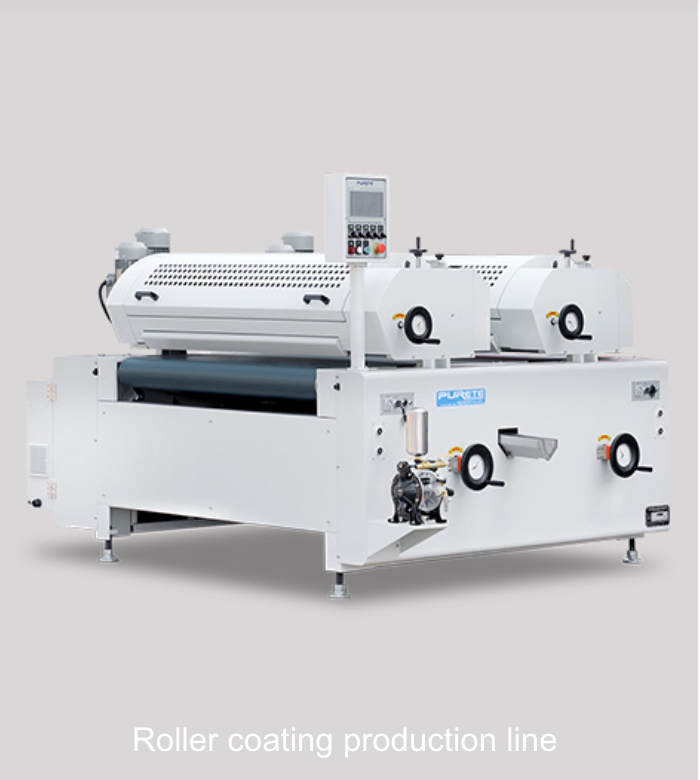
Roller coating is often suitable for flat products where coating transfer can be controlled consistently and where the target finish does not require deep penetration into complex surface geometry. In many panel and board applications, it can provide good efficiency, stable coating weight, and repeatable surface quality. However, it is not automatically the best choice for every flat material. Suitability still depends on substrate behavior, coating formulation, and finish specification.
Spray Coating Equipment
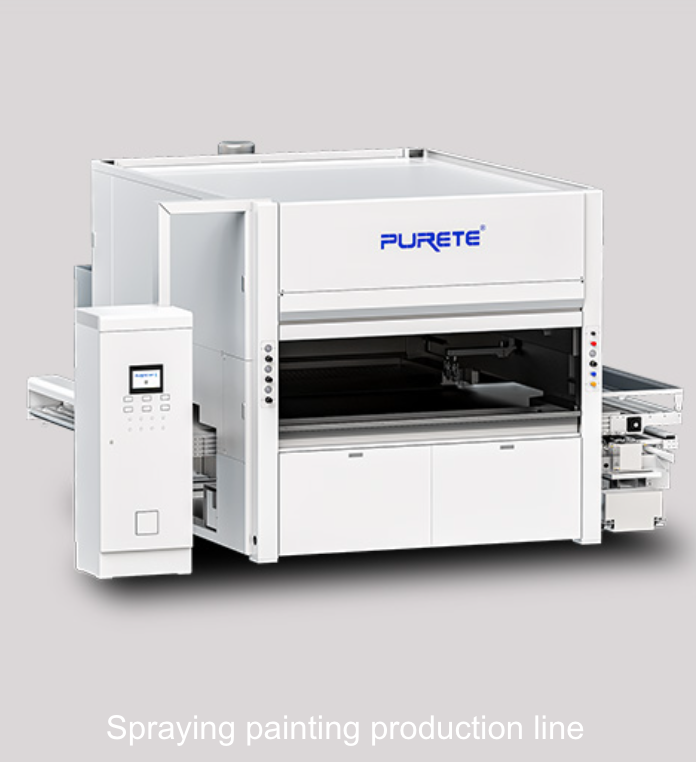
Spray coating is often selected when the product shape is more complex or when the process requires broader application flexibility. It can be a practical solution for certain profiles, edges, and variable surface designs. At the same time, spray systems usually involve more process variables, such as atomization control, overspray management, and environmental conditions. For this reason, spray coating should be evaluated not just for flexibility, but also for its operating complexity and finish consistency.
Curtain Coating Equipment
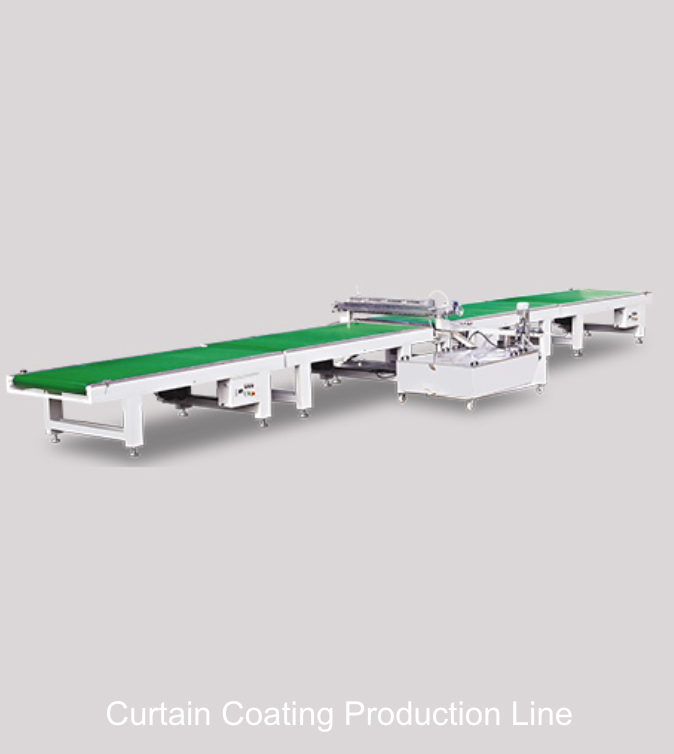
Curtain coating is often used where flat substrates, stable formulation behavior, and high surface quality requirements make continuous liquid curtain application practical. Under the right process conditions, it can support smooth and efficient finishing. However, it is more dependent on good material flatness, suitable coating rheology, and controlled operating conditions than many buyers initially expect.
Laminating Equipment
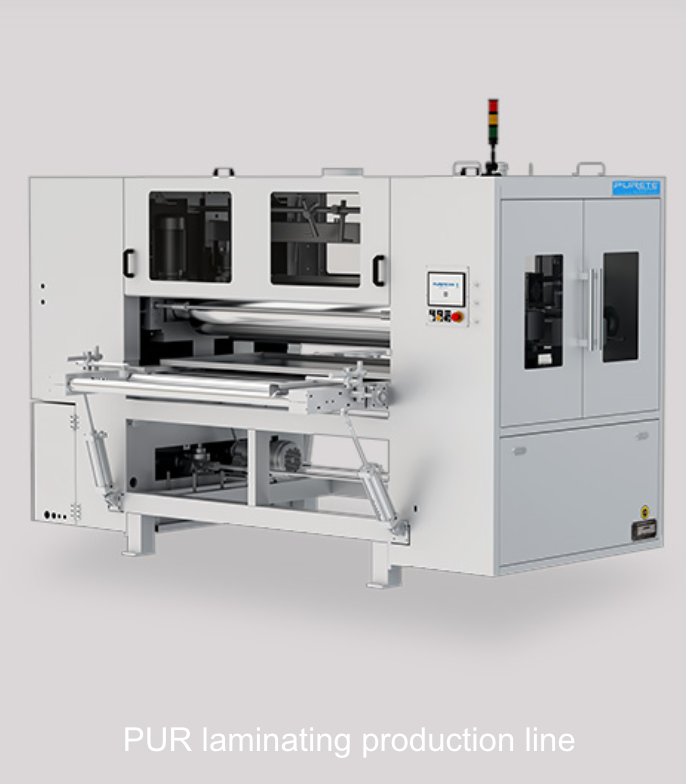
Laminating belongs to a different but closely related category of surface finishing. It is generally chosen when the final surface is created through bonding a decorative or functional layer onto the substrate rather than only through liquid coating transfer. In many decorative surface applications, laminating is not an add-on process but a core production method.
Integrated Coating and Finishing Lines
Some factories do not need a single machine. They need a coordinated production solution that links feeding, coating, drying, laminating, curing, conveying, and stacking into one process flow. This type of integration is often more valuable when output consistency, labor efficiency, and line balance matter as much as the coating station itself.
The right match depends not on which method sounds more advanced, but on which one can achieve the required result in a stable and economical way.
What Level of Automation Is Right for Your Coating Equipment?
Automation should be matched to production logic. More automation can improve consistency and reduce manual handling, but only when the product mix, output demand, and factory management level are ready to support it.
A standalone machine is often a suitable choice when production volume is moderate, process flexibility is important, or the buyer wants to solve one specific coating step without building a complete line. This is common in smaller factories, pilot applications, or staged investment plans.
A semi-automatic system is often appropriate when the manufacturer wants better efficiency and process control but still needs some flexibility in operation. It can be a practical middle stage for factories moving beyond manual production without committing to full integration immediately.
A fully automatic line usually makes most sense when output demand is stable, product variation is controlled, labor efficiency is a strategic concern, and the factory has the technical capability to manage a more integrated system. High automation is not defined by prestige. It is justified when standardized production can benefit from it consistently.
The right automation level is therefore the level the factory can use effectively, not the highest level available in the market.
What Other Practical Factors Should Be Considered Before Buying?
Even when a coating method looks technically suitable, practical operating factors can change the real value of the investment.
The first is space requirement. Equipment layout is not only about machine footprint. It may also include drying sections, loading zones, maintenance access, ventilation space, and material flow paths. A system that fits the process on paper may still be difficult to install efficiently in the actual workshop.
The second is energy consumption. Heating, drying, curing, air handling, and conveying all affect long-term operating cost. Buyers should compare not only initial machine price, but also the cost of keeping the line running.
The third is maintenance demand. More complex equipment may offer stronger output or automation benefits, but those advantages depend on whether the factory can maintain the system properly and minimize downtime.
The fourth is operator skill requirement. Some machines are easier to run but more dependent on stable process settings. Others require experienced operators to maintain finish quality. This affects staffing, training, and operating consistency.
The fifth is future expansion potential. If the factory expects product growth, more SKUs, or higher output over time, the selected equipment should be evaluated for upgrade paths and integration potential.
These factors are not secondary. In many projects, they determine whether a technically correct choice becomes a commercially successful one.
What Information Should You Prepare Before Requesting a Quote?
The quality of the supplier’s recommendation depends heavily on the quality of the buyer’s input. A vague inquiry usually produces a vague proposal.
Before requesting a quote, manufacturers should prepare the material dimensions, including width, length, thickness, and any relevant surface characteristics. They should define the target production capacity in practical terms, such as daily or monthly output. They should also describe the desired surface effect, including whether the main goal is protective, decorative, high gloss, matte, wear-resistant, or a combination of these.
It is also useful to share a realistic budget range, not because budget should decide the process by itself, but because it helps the supplier recommend options at the right investment level. If there are workshop restrictions, utility limits, or future expansion plans, those should also be mentioned early.
The clearer the project input, the more accurately the supplier can recommend a suitable machine or line configuration.
Conclusion: How Manufacturers Can Choose Industrial Coating Equipment More Reliably
The best way to choose industrial coating equipment is to begin with production reality. Manufacturers should first define the substrate, surface shape, product type, output requirement, finish target, and factory conditions. Only after those factors are clear does it make sense to compare roller coating, spray coating, curtain coating, laminating, or integrated line solutions.
This approach reduces risk because it replaces assumption with process matching. It also leads to more useful supplier discussions, especially when the goal is not only to buy a machine, but to build a stable and efficient production solution.
For manufacturers evaluating surface coating and decoration equipment, the right system is not simply the fastest or the most automated one. It is the one that can deliver the required finish, at the required output, under the real operating conditions of the factory.
FAQ
Q: What information should I prepare before requesting a quote?
A: You should prepare substrate type, product dimensions, surface shape, target capacity, desired finish effect, and any known workshop or utility constraints. The more specific the information, the more accurate the equipment recommendation will be.
Q: How do I know whether I need a standalone machine or a full production line?
A: That depends on whether coating is one separate process step or part of a larger connected workflow. If multiple stages such as feeding, coating, drying, and stacking need to run in coordination, an integrated line is often more suitable.
Q: Is customized equipment necessary?
A: Not always. Standard equipment may be sufficient for common production conditions. Customization is more likely to be necessary when the material, dimensions, surface effect, layout limits, or process targets fall outside standard machine configurations.
Q: Is a fully automatic coating line always the best choice?
A: No. A fully automatic line is often the best option only when production demand is stable, product variation is manageable, and the factory has the technical capability to support integrated operation and maintenance.
Q: What is the most common mistake in coating equipment selection?
A: One of the most common mistakes is choosing equipment too early based only on machine type or headline speed, without first defining the actual product, finish requirement, production rhythm, and operating constraints.
What Is the Principle of Auto Coating Machine?

Advantages of Short-Cycle Presses in Panel Processing
Application of Soft-Touch (Excimer) Coating in Furniture and Decorative Materials
Which Industries Benefit Most from PUR Laminating?
What Is the Principle of Roller Coating Machine?
How Does PUR Laminating Compare to Solvent-Based Lamination in Terms of Cost?
Global Surface Finishing Market Analysis and Development Trends


