

How to Improve Finish Quality in Industrial Spray Coating
 June 30, 2026
 Hits:459second
Introduction
In industrial spray painting production, finish quality issues such as coating defects, uneven gloss, and thickness variation often appear due to unstable process control rather than a single equipment problem. These variations can accumulate across surface preparation, spraying, and drying stages, leading to inconsistent output.
In integrated production setups, manufacturers such as PURETE design spray finishing as part of a continuous production architecture that includes conveyor transport, curing sections, and automated loading and unloading systems. Within this structure, the spray coating system becomes the central control point that connects process parameters with final surface quality outcomes.
This article explains how industrial spray coating quality can be improved through process control, defect analysis, and system-level optimization.
Quick Answer
Finish quality improves when coating thickness, surface preparation, environmental conditions, and spray behavior are controlled as a unified system rather than independent steps. Automation reduces variation and improves repeatability in industrial spray painting.
What Defines High-Quality Spray Finishing?
High-quality finish in industrial spray painting is defined by uniform film formation, stable adhesion, and consistent surface appearance across production batches.
These outcomes depend on how well the spray coating system maintains:
Stable atomization energy
Controlled material transfer
Repeatable spray geometry
In integrated production environments, systems such as an Automatic Spray Painting Machine reduce operator variation and improve process stability.
Common Finish Defects and Their Causes
Most industrial spray painting defects are process-driven rather than operator errors.
Dry spray defect
Most industrial spray painting defects are process-driven rather than operator errors.
Dry spray defect
Occurs when coating particles partially dry before reaching the surface due to excessive airflow, long spray distance, or low material wetting capacity. This typically results in a rough, powder-like surface texture and poor film formation.
Orange peel texture
Caused by unstable leveling behavior, incorrect viscosity control, or improper solvent evaporation rate. The coating fails to self-level before partial curing begins, leading to uneven surface morphology.
Gloss inconsistency
Results from uneven coating thickness distribution, unstable spray overlap, or inconsistent curing temperature across the production line.
Runs and sags (excess coating flow)
Occurs when coating application is too heavy or viscosity is too low, causing gravity-driven downward flow before curing stabilizes the film.
Pinholes and micro-bubbles
Caused by trapped air, substrate contamination, or rapid solvent evaporation during application, resulting in voids within the coating layer.
Adhesion failure (delamination)
Typically linked to poor surface preparation, oil contamination, or insufficient surface energy, leading to coating separation during curing or post-processing.
Edge thinning / coverage loss
Occurs when spray geometry does not adequately cover sharp edges or complex geometries, often due to poor atomization control or incorrect spray angle.
Surface Preparation and Adhesion
Surface preparation is the first control point in any industrial spray painting process. Contaminants such as dust, oil residues, or uneven surface energy distribution can weaken adhesion and create localized coating failure.
A properly designed spray coating process includes cleaning, surface activation, or dust removal before entering the coating zone. In production systems like a spray coating line, this preparation stage is synchronized with conveyor speed to ensure consistent timing between surface treatment and coating application.
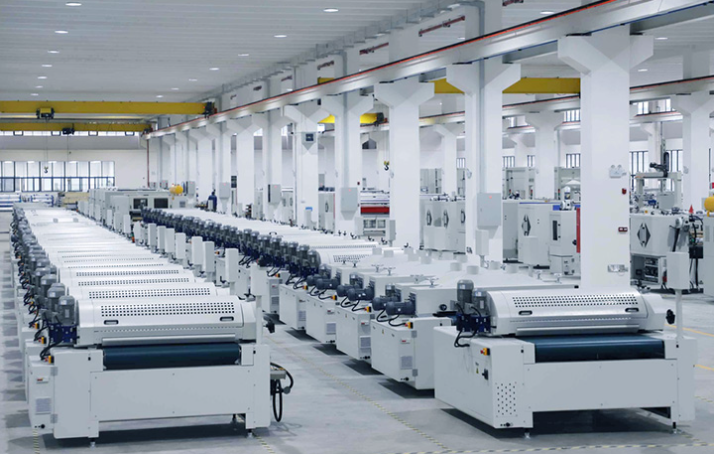
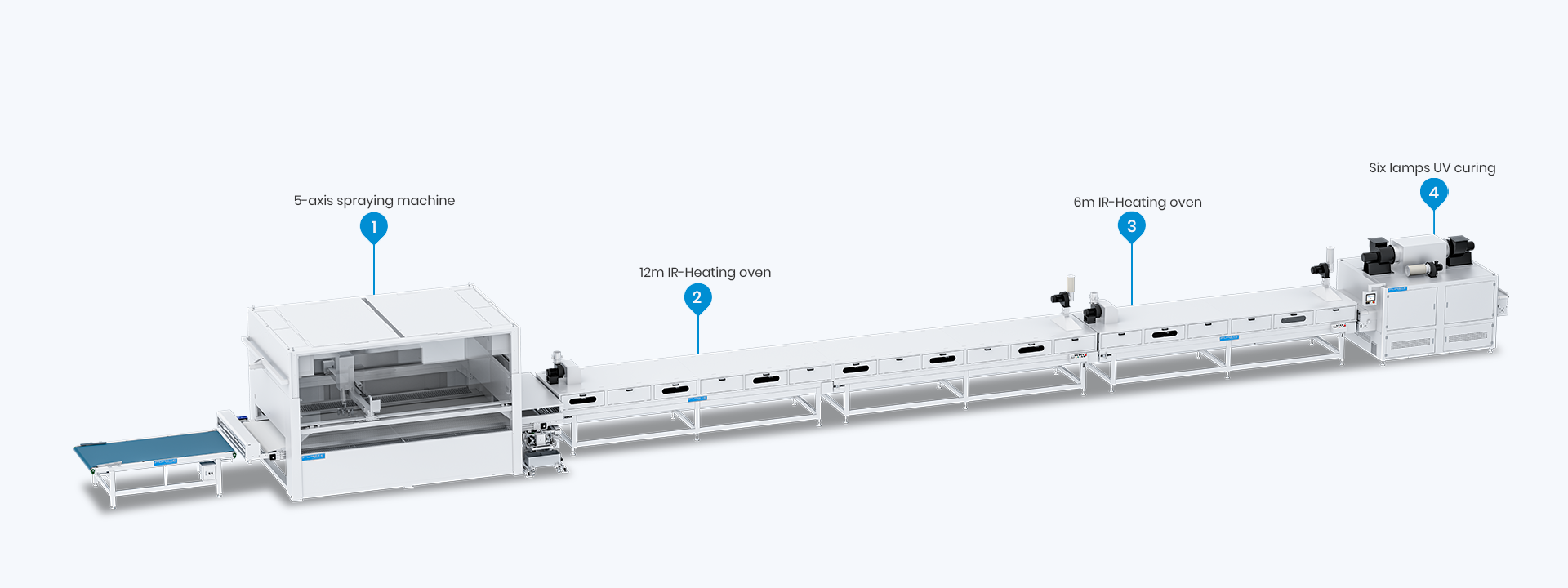 Belt-Type Numerical Control Intelligent Spray Coating Line
Adhesion performance is also influenced by substrate temperature and coating material rheology. If these variables are unstable, bonding strength becomes inconsistent even when spray parameters are controlled correctly.
Controlling Coating Thickness
Coating thickness directly affects both functional performance and visual finish quality. Excess thickness can lead to sagging or uneven curing, while insufficient coating may expose the substrate or reduce protective performance.
A stable spray coating system must maintain consistent atomization pressure, spray distance, and material flow rate. In automated environments, thickness variation is often reduced by controlling conveyor speed and spray overlap geometry.
An Automatic Spray Painting Line integrates these controls into a synchronized system where coating application, movement, and curing preparation operate as a continuous flow. This reduces dependency on manual adjustment and improves batch-to-batch consistency.
Optimizing Flow Leveling
Flow leveling refers to the coating film’s ability to redistribute itself into a uniform layer before curing begins. Poor leveling often results in surface texture inconsistencies such as uneven gloss or visible spray patterns.
In industrial spray painting, leveling behavior is influenced by viscosity, solvent evaporation rate, and airflow conditions. If evaporation is too fast, the coating may partially solidify before leveling is complete, locking in surface irregularities.
A well-calibrated spray coating system balances material delivery and airflow dynamics to ensure that leveling occurs within a controlled time window before entering the curing stage. This balance is critical for achieving uniform surface quality in continuous production environments.
Managing Environmental Conditions
Environmental control is a critical factor in industrial spray painting quality stability. Temperature, humidity, and airflow turbulence all influence atomization efficiency and drying behavior.
High humidity slows evaporation and can lead to sagging or delayed curing, while overly dry conditions may cause rapid surface skin formation and trap solvents beneath the coating layer. Both conditions result in surface instability.
Industrial spray paint booth systems are designed to stabilize airflow and filtration conditions. By controlling particle distribution and reducing airborne contamination, the system ensures that coating deposition occurs in a controlled environment rather than an open production space.
Best Practices for Consistent Results
Consistent finish quality requires coordinated control across multiple process parameters rather than isolated adjustments. Spray distance, coating viscosity, and conveyor synchronization must remain stable throughout production cycles.
Regular calibration of spray equipment ensures that atomization behavior remains within defined tolerances. In automated production environments, process stability is improved because the spray coating system follows predefined control logic rather than manual operator decisions.
Facilities using integrated systems benefit from reduced variability across shifts and production batches, especially when scaling output or switching between product types.
How Automation Improves Finish Quality
Automation improves industrial spray painting quality by reducing human variability and stabilizing process execution across time. Spray trajectory, material flow, and spray timing can all be controlled more precisely in automated systems.
An Automatic Spray Painting Machine provides consistent spray geometry and reduces variation caused by manual operation. When integrated into a spray coating system, it connects coating control with conveyor movement and curing preparation, forming a continuous production loop.
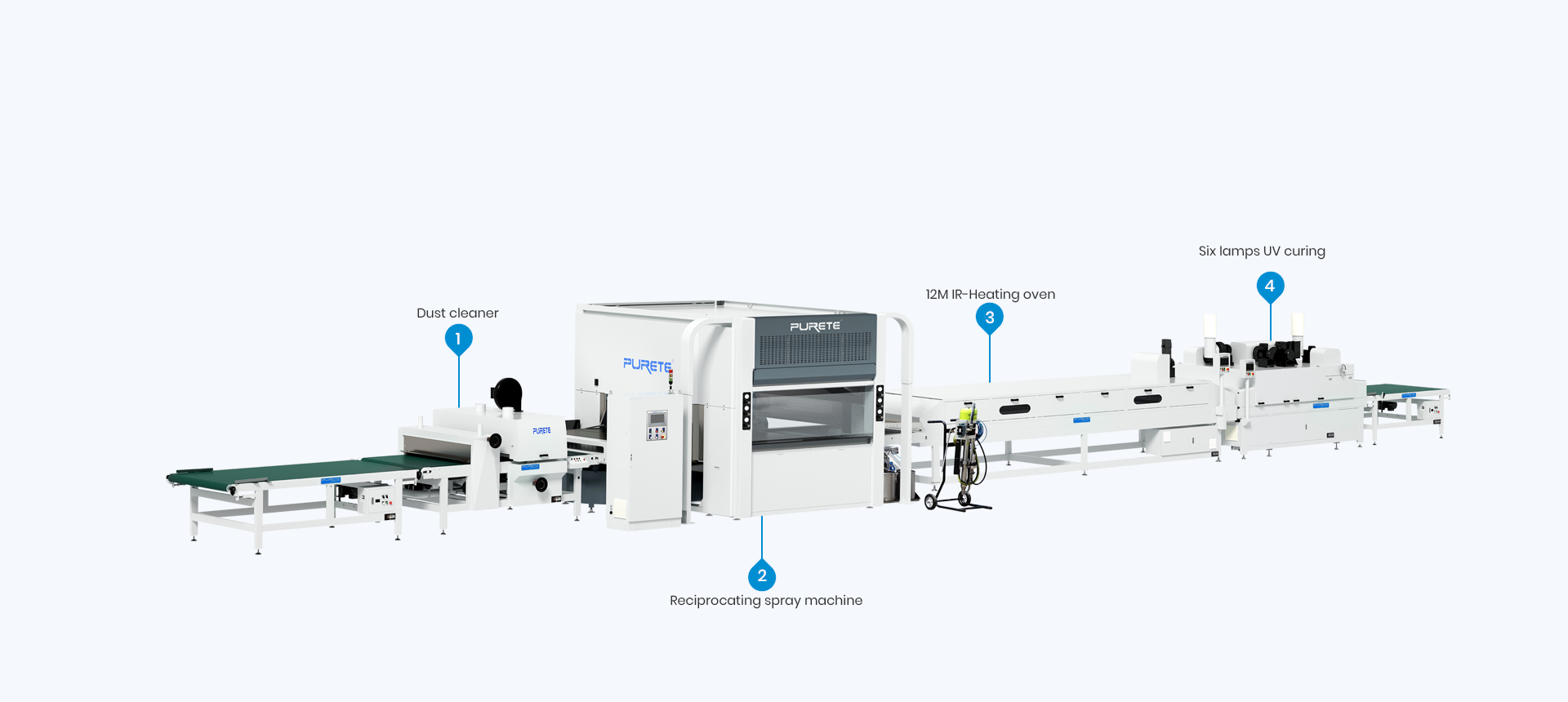 PURETE Spraying Painting Production Line
Automation also enables process monitoring, allowing engineers to track coating thickness trends and adjust parameters based on production data rather than subjective observation. This improves defect prevention and reduces rework rates in industrial environments.
Conclusion
Improving finish quality in industrial spray painting requires system-level control rather than isolated process adjustments. Surface preparation, coating thickness, environmental stability, and flow leveling must be managed as interconnected variables within a spray coating system.
When these elements are integrated into automated production lines, finish quality becomes more stable and predictable. A well-designed system reduces process variability, improves adhesion performance, and ensures consistent surface outcomes across large-scale manufacturing operations.
FAQ
What humidity level is ideal for spray coating?
Industrial spray coating processes generally require controlled humidity levels where evaporation remains stable and condensation does not occur on the substrate surface.
How often should coating thickness be checked?
In automated production systems, coating thickness is checked either at scheduled batch intervals or continuously through inline monitoring depending on system configuration.
Can poor drying affect finish quality?
Yes, improper drying can trap solvents inside the coating layer, leading to surface defects, reduced adhesion, and long-term durability issues.
What causes inconsistent gloss levels?
Inconsistent gloss is usually caused by uneven coating thickness, unstable leveling behavior, or variations in curing conditions.
How can finish quality be measured objectively?
Finish quality can be measured using thickness gauges, gloss meters, adhesion testing, and automated surface inspection systems integrated into industrial production lines.
What Is the Principle of Auto Coating Machine?

Advantages of Short-Cycle Presses in Panel Processing
Application of Soft-Touch (Excimer) Coating in Furniture and Decorative Materials
Which Industries Benefit Most from PUR Laminating?
What Is the Principle of Roller Coating Machine?
How Does PUR Laminating Compare to Solvent-Based Lamination in Terms of Cost?
Global Surface Finishing Market Analysis and Development Trends


