
 March 25, 2026
 Hits:1271second
Upgrading your factory's surface treatment capabilities is one of the most impactful decisions for scaling production and securing high-value orders. For B2B buyers, navigating the shift from manual processes to automated solutions requires a clear understanding of the machinery landscape. This guide breaks down the core technologies, application industries, and procurement strategies to help you build a highly efficient, high-ROI manufacturing floor.
Here is a structured breakdown of everything you need to know about modern coating systems.
What is Industrial Coating Equipment?
Industrial coating equipment represents the backbone of modern surface treatment, transforming raw substrates into premium finished goods through the automated, high-precision application of paints, adhesives, or films.
Definition of Industrial Coating Equipment
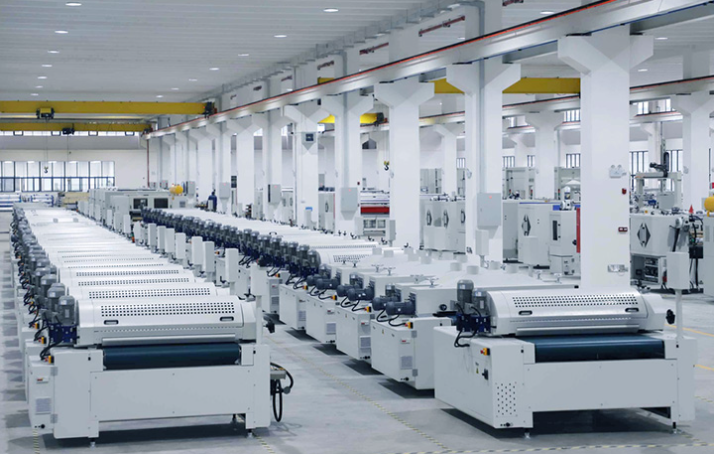
At its core, industrial coating equipment refers to heavy-duty, automated machinery designed for continuous, mass-production environments. Whether applying UV paint, PUR glue, or excimer finishes, these machines are engineered to execute precise surface treatments on materials like wood, metal, glass, and plastics at high speeds (often reaching 15 to 30 meters per minute), minimizing human intervention.
Differences from Ordinary Coating Machines
The gap between commercial tools and industrial-grade machinery lies in precision and scale. Ordinary coating machines or manual spray guns rely heavily on operator skill, leading to inconsistent thickness and high material waste. In contrast, industrial equipment utilizes advanced PLCs (Programmable Logic Controllers), precision-machined rollers, and automated sensors to control coating thickness down to the micron, ensuring a 100% repeatable process with minimal overspray.
Relationship Between Equipment, Production Lines, and Systems
- Equipment refers to the individual standalone unit (e.g., a roller coater).
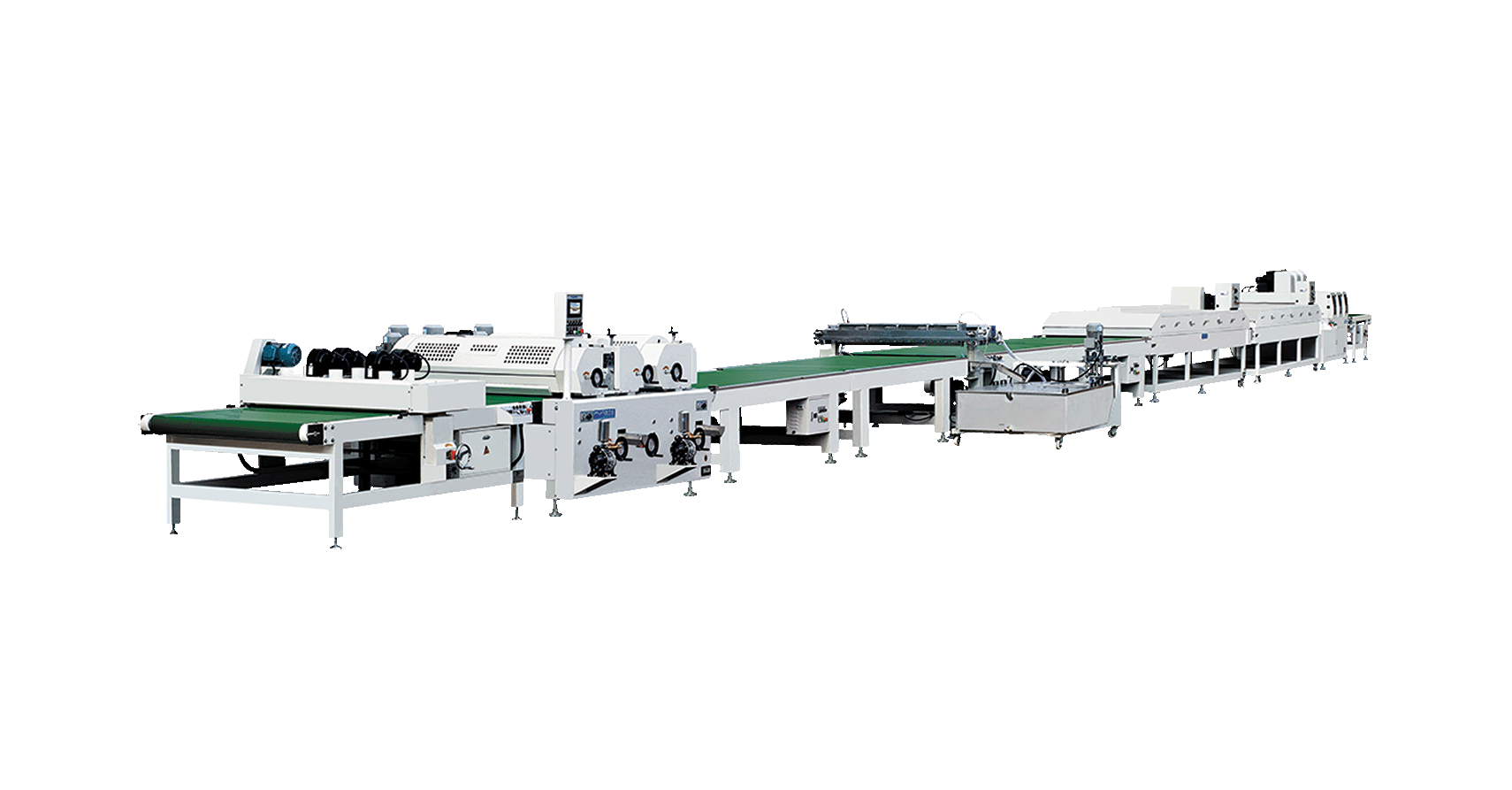
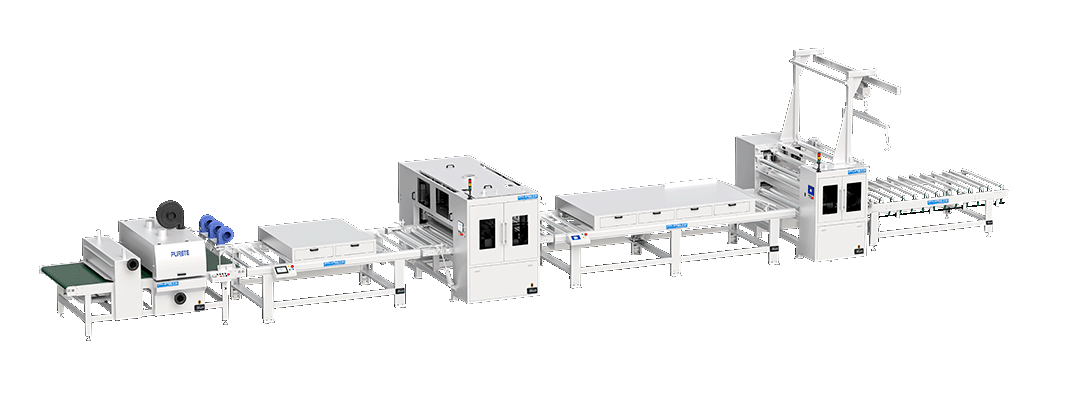
- A Production Line connects multiple pieces of equipment (e.g., dust cleaners, coaters, and UV dryers) via conveyors to create a continuous workflow.
- A System encompasses the entire digital and physical ecosystem, integrating the production line with factory software (ERP/MES) for real-time monitoring, automated feeding, and intelligent quality control.
What Are the Main Functions of Industrial Coating Equipment?
Beyond simply applying liquid to a board, these advanced machines are engineered to add immense commercial value to your products by ensuring long-lasting durability, striking aesthetic appeal, and unmatched manufacturing efficiency.
- Surface Protection: Industrial machines apply robust layers of UV or water-based finishes that protect substrates from moisture, UV radiation, chemical spills, and daily wear-and-tear, significantly extending the lifespan of the final product.
- Decorative Effect: Automated equipment can deliver a flawless, uniform appearance that manual application cannot achieve. From ultra-matte soft-touch finishes to high-gloss mirror effects, the machinery ensures your panels meet premium market standards.
- Functional Coating: Industrial equipment can apply specialized functional layers, such as anti-fingerprint (excimer technology), flame-retardant, anti-bacterial, or high-scratch-resistance (aluminum oxide) coatings, giving your products a distinct competitive edge.
- Improving Production Consistency and Efficiency: By eliminating human error, automated coating systems guarantee that the first board looks exactly like the ten-thousandth board. This strict consistency drastically reduces rework, minimizes paint waste, and accelerates throughput, directly lowering your overall cost per unit.
4 Core Types of Industrial Coating Machinery (& Essential Systems)
Choosing the right application technology dictates your factory's output quality and material efficiency. While there are four primary application methods, drying systems and full line integrations are equally critical to completing the automated process.
1. Roller Coating Equipment
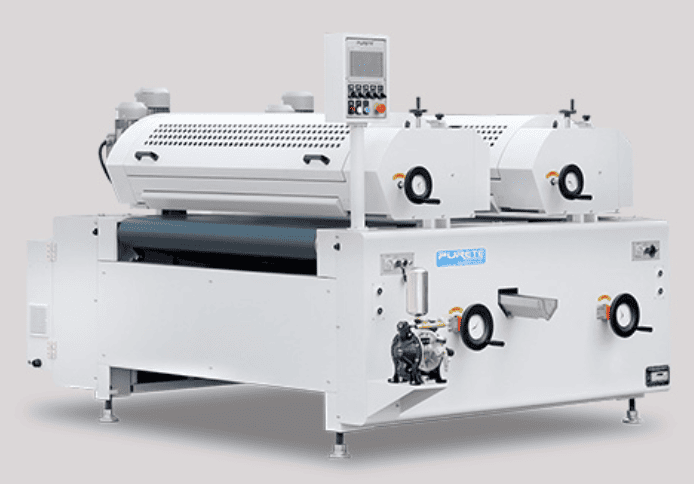
Ideal for perfectly flat surfaces, roller coaters apply paint or varnish via precision rubber or steel rollers. They are highly efficient and boast an up to 98%+ paint transfer rate, making them the absolute standard for flat-panel furniture and flooring production where minimizing paint waste is a priority.
2. Spray Coating Machine
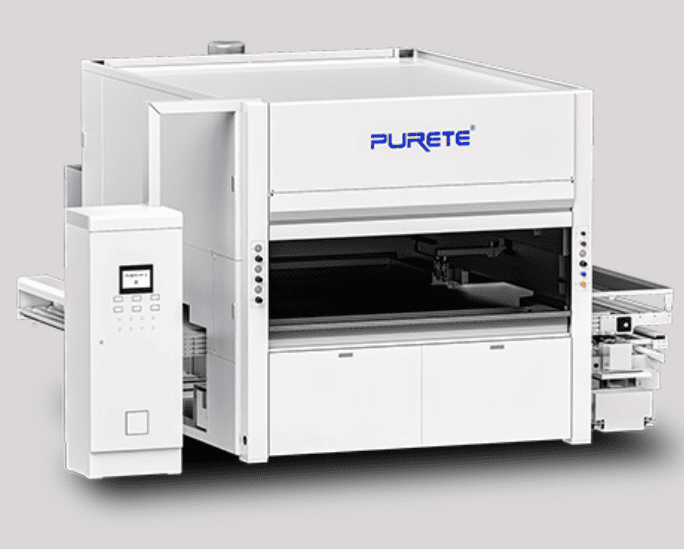
When dealing with profiled edges, 3D shapes, or complex geometries (like routed cabinet doors), automatic spray coating machines are essential. Modern CNC sprayers use robotic arms or reciprocating guns to ensure even coverage across intricate details while recovering excess paint.
3. Curtain Coating Machine & Inert Coating Technology
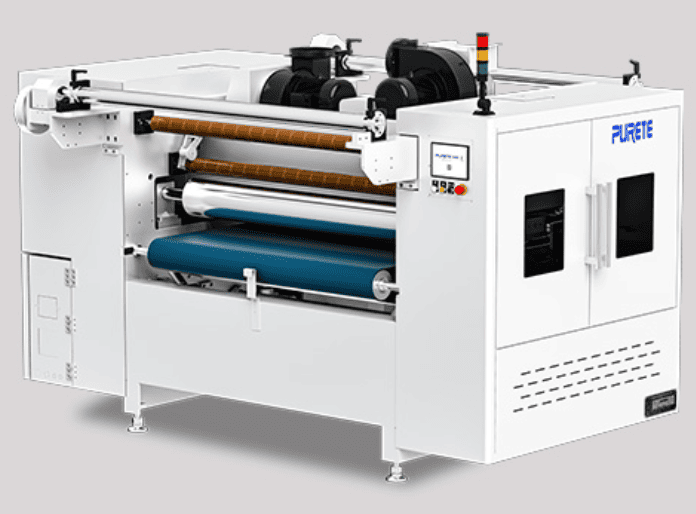
Curtain coaters create a continuous, falling "waterfall" of paint that the substrate passes through, delivering a thick finish. However, for the ultimate ultra-flat, mirror-like high-gloss or soft-touch matte finishes, advanced Inert Coating technology is rapidly replacing traditional curtain coaters due to its superior smoothness, zero-bubble finish, and lower paint consumption.
4. Laminating Equipment
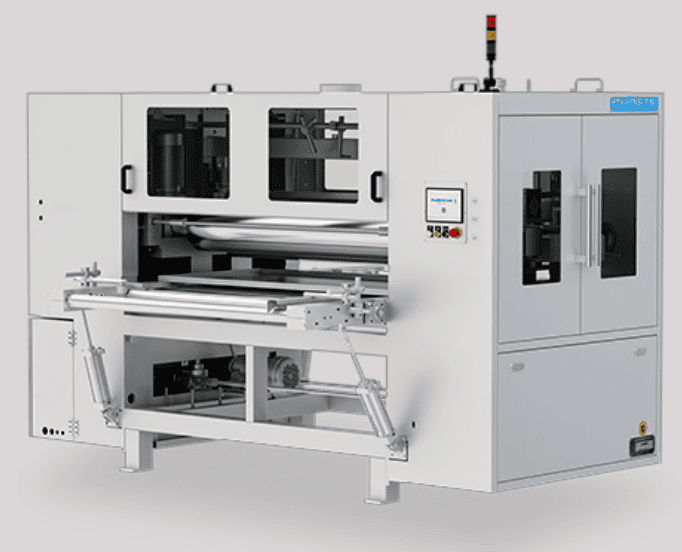
Instead of liquid paint, laminating machines apply decorative films (PVC, PET, acrylic, or veneer) to substrates using high-performance PUR (Polyurethane Reactive) adhesives. This is crucial for producing modern, eco-friendly customized furniture panels with zero VOC emissions.
5. Drying and Curing Systems
No coating process is complete without curing. Industrial lines utilize UV (Ultraviolet), IR (Infrared), or hot air convection tunnels to instantly dry and harden the finish—curing in seconds rather than hours—allowing for immediate stacking and packaging.
6. Full Coating Line Systems
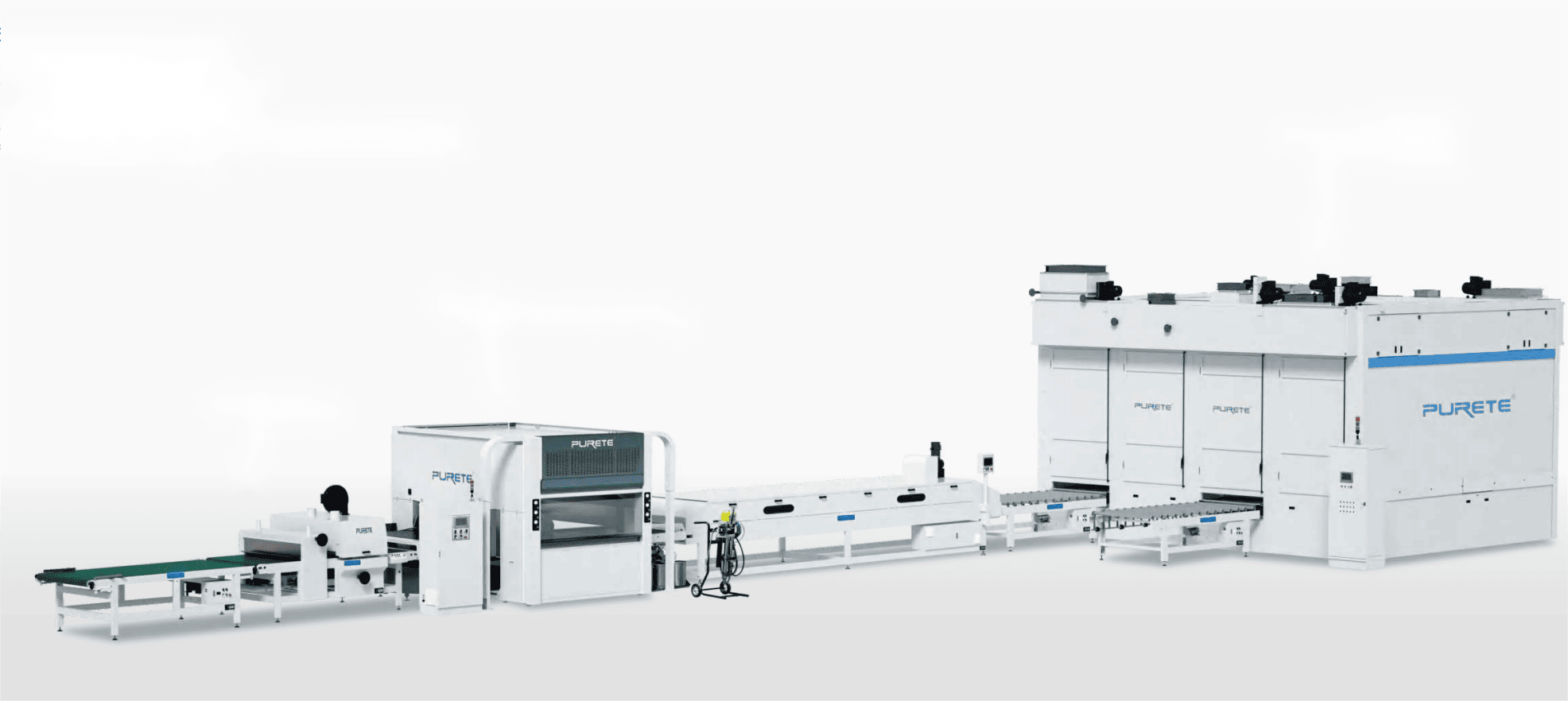
This represents the ultimate integration. A full system combines all the above—dust removal, application (roller/spray/laminating), and rapid curing—into one seamless, automated conveyor loop, maximizing factory output and reducing labor dependency.
Which Common Application Industries Rely on Automated Coating?
From custom cabinetry to commercial flooring, automated surface treatment is a universal requirement across the building materials and furniture manufacturing sectors.
- Decorative Panels: High-gloss, matte, and soft-touch panels used in premium interior design rely heavily on inert coating and excimer curing lines to achieve their flawless, premium look.
- Furniture Boards: Wardrobes, kitchen cabinets, and bathroom vanities require durable, moisture-resistant finishes. PUR laminating and UV roller coating are the go-to technologies for these applications.
- Wood-Based Panels: Upgrading raw MDF, particleboard, or plywood with premium veneers or protective coatings adds massive resale value. Automated lines handle these heavy substrates with ease.
- Flooring: Whether it is SPC, LVT, or engineered wood, flooring requires extreme durability. Roller coating lines apply specialized anti-scratch UV topcoats to meet heavy commercial foot-traffic demands.
- Doors and Wall Panels: Ensuring uniform color and weather resistance for both interior doors and exterior wall cladding requires precise automated spraying or laminating to cover wide surface areas consistently.
What to Consider When Selecting Industrial Coating Equipment?
Procuring the right machinery requires a strategic alignment between your raw materials, desired output, and factory capacity. Evaluating these five factors will prevent costly purchasing mistakes.
- Material Type: Different substrates require specific primer technologies and adhesion methods. Processing porous wood (MDF) requires different equipment configurations compared to non-porous materials like glass, metal, or plastic.
- Surface Shape: The geometry of your product dictates the machine type. Perfectly flat boards are best suited for roller coaters or PUR laminators, while 3D, grooved, or profiled items absolutely require automatic spray coating machines.
- Production Capacity: Your target daily output (sqm/shift) determines the scale of the equipment. High-volume demands dictate wider machines (e.g., 1300mm vs. 600mm), faster conveyor speeds (up to 30m/min), and fully automated feeding systems.
- Finish Requirement: The final look dictates the technology. If your market demands an ultra-flat mirror finish, you need an Inert Coating machine. If buyers want ultra-matte, anti-fingerprint surfaces, an excimer curing system is required.
- Automation Level: Evaluate how much manual labor you want to eliminate. Entry-level setups might require manual loading, while high-end lines feature automated loaders, unloaders, and smart PLC integrations that require only one or two operators for the entire line.
Differences Between Industrial Coating Equipment and a Coating Line
Scaling your production means choosing between upgrading a single bottleneck in your factory or automating the entire workflow from raw board to finished product.
Single Machine vs. Complete Line
- Single Machine: A standalone unit (like a single roller coater) performs one specific task. It is ideal for small workshops, replacing a broken unit, or factories that still handle material transfer manually.
- Complete Line: A full coating line connects multiple machines (cleaners, coaters, dryers) seamlessly. Materials go in raw at one end and come out fully finished, cured, and ready to ship at the other, eliminating intermediate handling and reducing defect rates.
Adaptation to Different Production Scales
| Production Scale | Recommended Setup | Key Benefit |
| Small / Custom Shops | Single standalone machines | Lower initial investment, high flexibility for custom batches. |
| Medium Factories | Partial lines (e.g., Coater + UV Dryer) | Balances cost with a significant boost in curing speed. |
| Large Enterprises | Fully automated coating lines | Maximum ROI, lowest labor cost per unit, massive daily output. |
Frequently Asked Questions (FAQs) About Coating Systems
1. What is the difference between coating equipment and coating machinery?
In the industry, these terms are often used interchangeably. However, "machinery" usually refers to a specific, heavy-duty mechanical unit (like a PUR laminator), while "equipment" is a broader term that can encompass the machine, its auxiliary tools, spare parts, and software controls.
2. Is industrial coating equipment suitable for decorative panels?
Absolutely. In fact, automated coating and laminating lines are the primary methods used to manufacture premium decorative panels, including high-gloss acrylic boards, inert-coated panels, and soft-touch PET panels used in modern cabinetry.
3. What is included in a coating line?
A typical automated coating line includes loading conveyors, dust cleaning machines, pre-heating units, the main application machines (roller, spray, or laminator), curing tunnels (UV/IR ovens), cooling fans, and automated unloading stackers.
4. How does PUR laminating differ from traditional liquid painting?
Instead of applying wet paint, PUR laminating uses a reactive polyurethane adhesive to bond a pre-finished decorative film (like PVC or veneer) directly onto the raw board. It is highly eco-friendly (zero VOC emissions) and offers excellent moisture resistance.
5. Can a roller coating machine handle curved or profiled edges?
No. Roller coating machines are strictly designed for flat surfaces. If your products have routed designs, grooves, or profiled edges (like shaker-style doors), you will need an automatic spray coating machine or a vacuum coating system to ensure even coverage.
Ready to Automate Your Surface Treatment Process?
Discover how PURETE's advanced coating lines can reduce your labor costs and maximize production efficiency.
Get a Custom ROI Calculation Today