

How a Nanophotonic Coating Line Creates an Ultra-Matte Veneer Finish
 July 30, 2026
 Hits:240second
Introduction
Natural wood veneer shows grain, color variation and tactile warmth, but an unfinished surface may not provide enough protection for doors, furniture, wall panels or flooring. A heavy or highly reflective coating can improve durability, yet it may flatten the grain and make the panel look more painted than natural.
PURETE addresses this balance through its Nanophotonic Coating Line, which combines controlled coating application, LED-UV pre-curing, low-oxygen excimer treatment and final UV curing. The process creates an ultra-matte protective surface while preserving the visual depth and natural character of the veneer.
Quick Answer
A Nanophotonic Coating Line creates an ultra-matte veneer finish by applying a compatible topcoat, stabilizing it with LED-UV pre-curing, treating the surface in a controlled low-oxygen environment and completing the film through final UV curing.
Excimer treatment changes the upper coating surface so that it reflects light more diffusely, reducing glare and revealing the wood grain more clearly. The final appearance and performance depend on the veneer, substrate preparation, coating formulation, coating amount, oxygen control and curing conditions working together.
Why Traditional Finishing Can Hide Wood Grain
How Thick Films Affect Wood Texture
A coating changes the way light interacts with the veneer surface.
When the film is thick, highly reflective or visually dominant, light may be reflected from the coating before the viewer can clearly see the material beneath it. The veneer remains visible, but its pores, grain direction and natural color variation may appear flatter.
This does not mean that high-build or high-gloss finishes are unsuitable for wood products. They remain appropriate for many furniture and decorative applications.
The issue arises when the design target is a restrained, low-reflection surface that should retain the appearance of natural wood. In this case, the coating must provide sufficient protection without creating an overly heavy painted effect.
Why Unfinished Veneer Needs Protection
Raw veneer can preserve the direct appearance and tactile character of wood, but many finished products require additional protection during handling and use.
Depending on the application, the surface may be exposed to:
moisture and humidity;
scratches during handling;
abrasion from repeated contact;
stains and spills;
dust and routine cleaning.
Cabinet fronts, wall panels, wooden doors, furniture panels and flooring therefore normally require a suitable finishing system.
The objective is not to make the coating literally invisible. It is to create a protective surface that does not overpower the veneer beneath it.
A suitable way to describe the intended effect is:
a natural wood appearance with an almost invisible protective finish
What Is a Nanophotonic Coating Line?
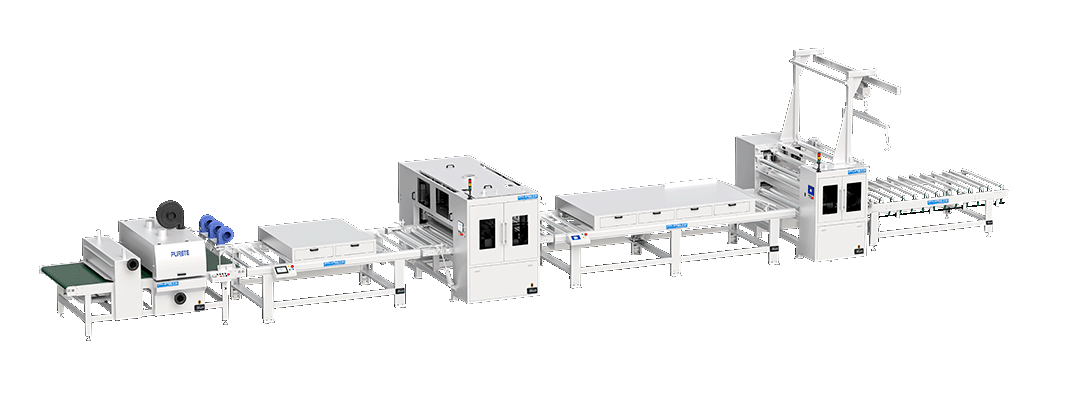
A Nanophotonic Coating Line is a continuous finishing system developed for ultra-matte, low-reflection and soft-touch coated surfaces.
The full production line coordinates coating application, surface treatment and curing. Excimer technology is one stage within this process rather than a complete finishing method on its own.
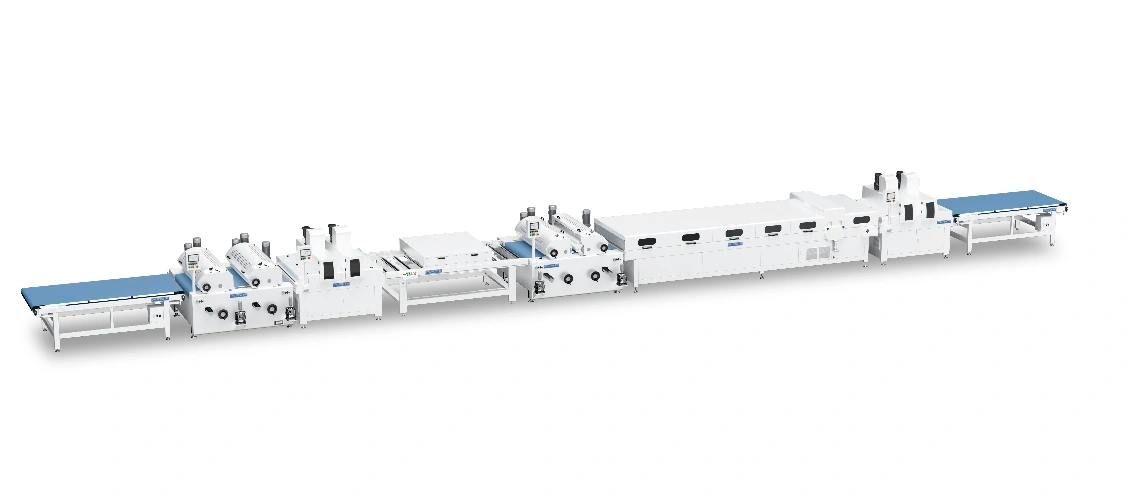
The process normally involves:
preparing the veneer-faced panel;
applying a compatible coating system;
stabilizing the topcoat through LED-UV pre-curing;
controlling oxygen around the treatment area;
modifying the upper coating surface with excimer light;
completing the coating film through final UV curing;
inspecting the finished panel.
The final result depends on how these stages work together. Adding an excimer unit to an unsuitable coating process does not automatically create a stable ultra-matte finish.
How the Nanophotonic Process Works
Substrate Preparation
The panel must first be checked for dust, contamination, surface unevenness and defects from earlier coating stages.
Natural veneer, engineered veneer and veneer-faced panels may require different sanding, sealing or base-coat preparation. The preparation method should be selected according to:
veneer species;
veneer surface condition;
substrate type;
absorption characteristics;
target color and grain appearance.
Poor preparation cannot be corrected by the ultra-matte topcoat alone. Sanding marks, uneven absorption and inconsistent base coats may remain visible after finishing.
Coating Application
A compatible finishing material is applied evenly to the prepared panel.
For flat panels, roller coating equipment can provide continuous and controllable application. Depending on the starting material and required finish, the complete coating process may include sealing, filling, base coating, color adjustment and topcoat application.
The topcoat must form a uniform layer before entering the nanophotonic finishing section. Inconsistent coating amounts can lead to differences in gloss, touch and curing performance across the panel.
LED-UV Pre-Curing
The applied topcoat is partially stabilized before excimer treatment.
Pre-curing prepares the upper coating layer for the following surface modification. It does not fully cure the entire film.
If the topcoat remains too fluid, the surface may not respond consistently during excimer treatment. If it is cured too far, the required surface modification may also be limited.
Pre-curing conditions must therefore be matched to the coating formulation, applied amount and production speed.
Low-Oxygen Processing
The panel then enters a controlled low-oxygen treatment area.
Nitrogen is used to reduce oxygen around the coating surface. Sealing structures and gas-distribution components help limit the entry of surrounding air and maintain a stable processing environment.
Oxygen control is an integral part of the excimer process. It should not be treated as an optional supporting feature.
There is no single nitrogen flow, pressure or oxygen concentration suitable for every production line. These conditions must be determined according to the equipment structure, coating system, panel dimensions and operating speed.
Excimer Surface Treatment
The excimer lamp acts on the upper surface of the partially cured topcoat.
This treatment modifies the coating surface so that incoming light is reflected more diffusely instead of producing strong directional glare. The resulting microstructure creates the visual effect associated with ultra-matte finishes.
The process does not remove the coating or expose the raw veneer. It changes the optical behavior of the coating surface while the transparent film continues to protect the wood beneath it.
Excimer treatment must be coordinated with:
topcoat formulation;
applied coating amount;
LED pre-curing;
lamp energy;
treatment distance;
oxygen conditions;
production speed.
A change in one of these factors may affect the final gloss, touch and surface consistency.
Final UV Curing
After excimer surface treatment, the coating passes through the final UV curing section.
This stage cures the remaining coating layer and establishes the finished film. The required curing configuration depends on the coating material, film thickness, line speed and performance target.
The surface may already appear matte after excimer treatment, but the complete coating system still requires sufficient final curing to achieve a stable finished panel.
Finished-Panel Inspection
Finished panels should be checked for more than a single gloss reading.
Relevant inspection points include:
gloss consistency across the panel;
uniform tactile quality;
visible wood grain;
color consistency;
surface defects;
curing condition;
required scratch, stain and abrasion performance.
Panels should also be viewed under different lighting conditions and from different angles because uneven reflection may be more visible under directional light.
How the Process Preserves Natural Wood Grain
A Clear Protective Surface
For natural veneer applications, the finishing system should remain visually transparent and should not overpower the substrate.
This does not mean applying the smallest possible amount of coating. An insufficient film may leave the surface inadequately protected, emphasize uneven absorption or create inconsistent gloss.
The coating amount must instead be sufficient to form a continuous film while maintaining the required visual clarity.
Primer, sealer and topcoat should be evaluated as one system. A transparent ultra-matte topcoat cannot compensate for excessive color build, poor sanding or an uneven base coat beneath it.
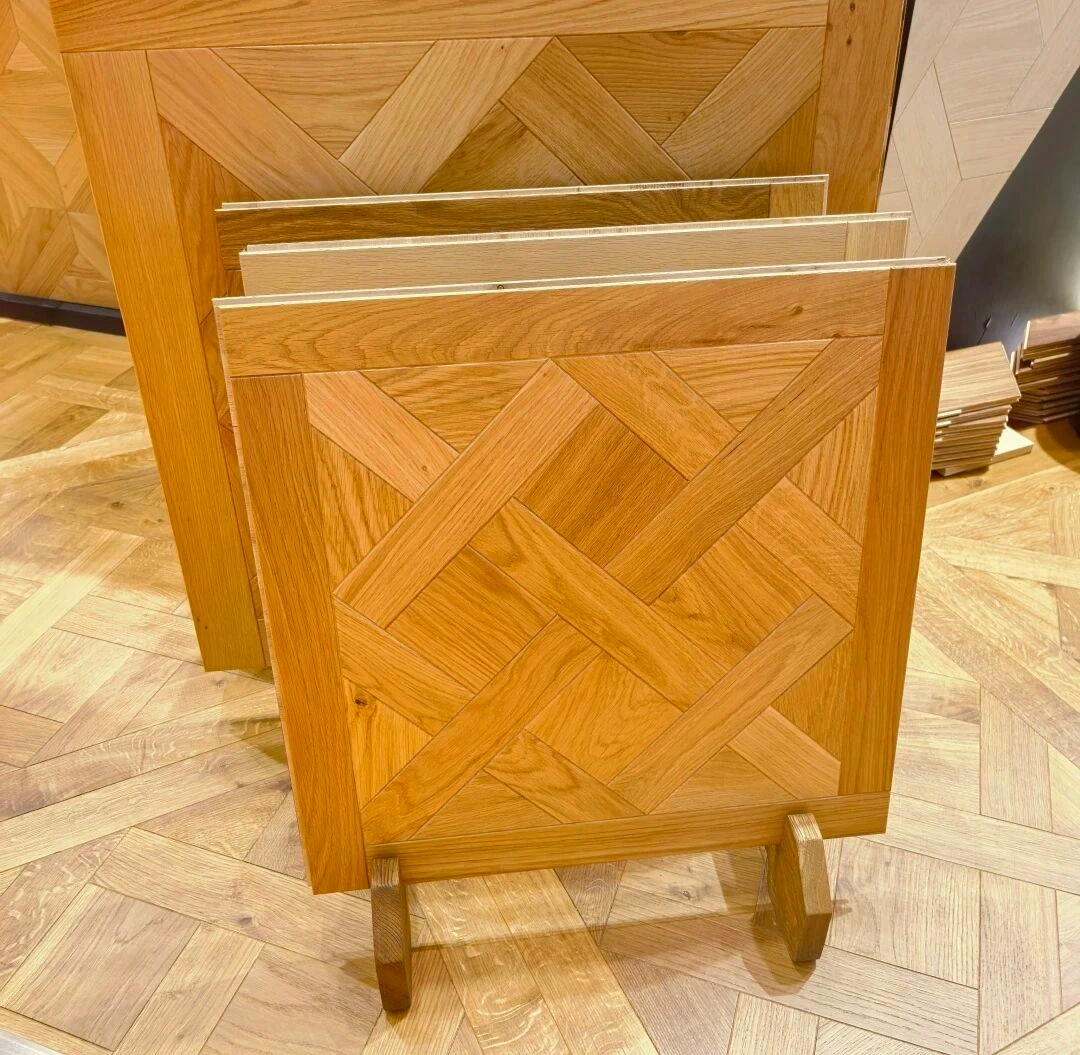
Lower Reflection Reveals the Grain
Strong reflections can interrupt the way natural wood is perceived.
Under direct lighting, a glossy panel may reflect the light source more prominently than the veneer itself. Pores, grain direction and subtle color changes can become difficult to distinguish, especially when the panel is viewed from an angle.
An ultra-matte surface distributes reflected light more diffusely. Reduced glare makes the existing grain easier to see from different viewing positions.
The process does not create new wood texture. It reduces the visual interference caused by surface reflection.
Soft Touch Without a Heavy Paint Look
Low gloss and soft touch are related, but they are not the same characteristic.
Two panels can have similar gloss readings and still feel different because their coating formulations and surface structures are different. The tactile target must therefore be evaluated together with the visual result.
For veneer products, the desired finish is normally smooth or soft to the touch while still appearing visually connected to the wood beneath it.
What Performance Can an Ultra-Matte Finish Provide?
Daily-Use Surface Protection
A correctly matched coating system can be developed around requirements such as:
moisture resistance;
scratch resistance;
abrasion resistance;
stain resistance;
easier cleaning.
However, these properties do not come from the low-gloss appearance alone.
They depend on the complete finishing system, including:
veneer and substrate condition;
primer and sealer selection;
topcoat formulation;
coating amount;
excimer treatment;
final curing;
finished-product environment.
Specific abrasion cycles, scratch ratings, chemical-resistance grades or moisture-test results should only be stated after the actual coating system has been tested according to the required standard.
A coating suitable for a cabinet door should not automatically be assumed to meet the requirements of flooring or another high-wear product.
Appearance and Tactile Quality
The main visual and tactile characteristics may include:
reduced glare;
clear wood grain;
low surface gloss;
a warm, natural appearance;
a smooth or soft-touch feel;
less resemblance to a conventional painted panel.
An ultra-matte surface is often described as being below 10 gloss units. However, the gloss value alone is not sufficient to define the final result.
The measuring angle, instrument, sampling position and acceptance range should be agreed before production. Touch, grain visibility and surface consistency should also form part of the approval process.
Where Is Ultra-Matte Veneer Used?
Wall Panels, Doors and Cabinet Fronts
Ultra-matte veneer is suitable for products where large finished surfaces remain visible under indoor lighting, including:
wall panels;
wooden doors;
wardrobe doors;
cabinet fronts;
decorative furniture panels;
integrated door, wall and cabinet systems.
Reducing glare can help the color and grain remain more consistent across large vertical surfaces.

Wood Flooring and Decorative Panels
The process can also be considered for veneer-faced flooring and decorative panels that require a natural appearance and controlled low-gloss finish.
For flooring applications, abrasion, scratch and maintenance requirements must be verified separately. The coating system should be selected according to the expected traffic level and relevant product standard.
Hotels, Offices and Commercial Interiors
Hotels, offices, clubs, retail spaces and other commercial interiors often use large areas of decorative wood surfaces.
An ultra-matte finish can reduce distracting reflections while retaining the warm appearance of the veneer. The coating system should be matched to:
expected contact;
cleaning frequency;
lighting conditions;
moisture exposure;
required service life.
These are suitable application scenarios rather than claims that one standard coating configuration can meet every project requirement.

Who Benefits from a Nanophotonic Coating Line?
A Nanophotonic Coating Line is particularly relevant to manufacturers that already produce veneer-faced panels but find that their existing finishes appear too glossy or too paint-like.
It may also suit factories that want to:
develop an ultra-matte product range;
reduce reflection on large decorative panels;
combine visible grain with surface protection;
add a soft-touch finish to doors or furniture panels;
differentiate products from conventional gloss and standard matte boards;
upgrade an existing flat-panel coating process to continuous production.
The line should not be selected solely because ultra-matte products are commercially attractive. A stable process requires a defined substrate, coating system, finish target and production requirement.
What to Confirm Before Line Configuration
Veneer and Substrate Types
The materials to be processed should be confirmed first.
Relevant information includes:
natural or engineered veneer;
veneer species and surface condition;
MDF, particleboard or plywood substrate;
raw, sealed or previously coated panels;
panel flatness and dimensional tolerance;
one-sided or two-sided finishing.
Different substrates may respond differently during sanding, coating, curing and handling.
Coating System and Target Finish
The coating information should include:
primer, sealer and topcoat combination;
dedicated excimer-compatible topcoat;
transparent, tinted or colored appearance;
target gloss range;
required tactile effect;
required scratch, stain, moisture and abrasion performance.
A conventional matte coating may become less reflective after treatment but may not provide the intended touch, scratch resistance or process stability. The topcoat must therefore be selected as part of the complete nanophotonic process.
Product Dimensions and Production Needs
Line configuration also depends on:
panel width and length;
panel thickness;
target production speed;
required output;
product variety;
changeover frequency;
upstream sanding and dust removal;
downstream curing and handling;
available factory space and utilities.
When both sides require the same finish, the two surfaces are normally processed separately. The completed side should be protected before the panel is turned over for second-side coating.
Sample Testing Before Final Configuration
Physical samples should be tested before the production line is finalized.
Useful test materials include:
veneer samples;
actual substrate panels;
primer and topcoat materials;
target gloss samples;
reference panels showing the required touch and appearance.
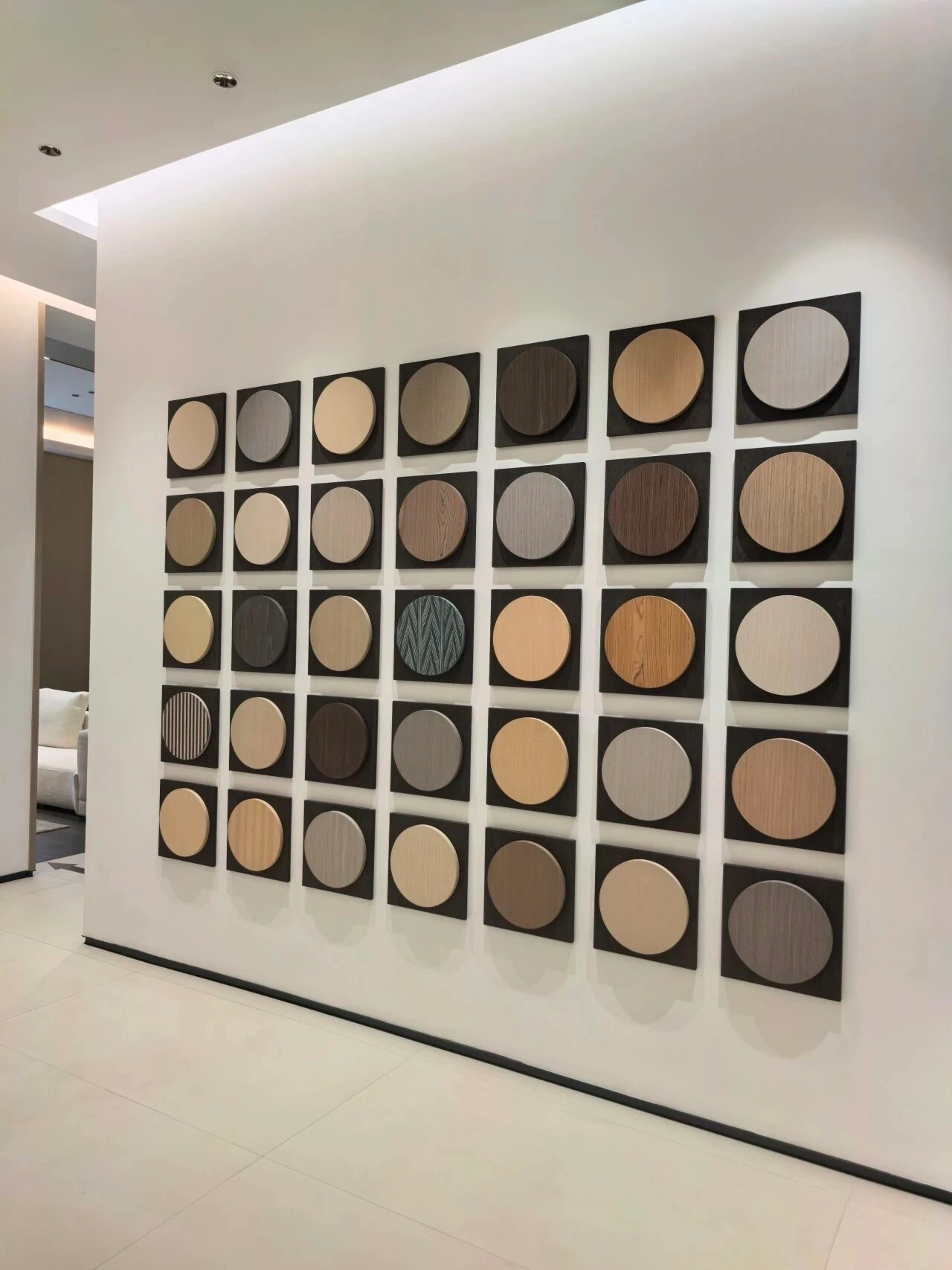
Sample testing helps determine whether the selected system can achieve the required gloss, grain visibility, tactile quality and surface performance under stable production conditions.
Conclusion
A Nanophotonic Coating Line does more than make a veneer panel appear matte.
Its value lies in coordinating coating application, LED-UV pre-curing, low-oxygen control, excimer surface treatment and final UV curing. When these stages are correctly matched, the finished panel can retain visible wood grain and a natural appearance while gaining a smooth, low-reflection protective surface.
Before the line is configured, manufacturers should define the veneer, substrate, coating material, target gloss, tactile requirement and finished-product application. These inputs allow the finishing process to be tested and converted into a repeatable production solution.
FAQ
What Is a Nanophotonic Coating Line Used For?
It is used to produce ultra-matte, low-reflection and soft-touch coated surfaces. In veneer applications, the main objective is to preserve the natural appearance of the grain while adding a continuous protective finish.
Can Excimer Treatment Be Applied to Natural Wood Veneer?
Yes, but the excimer lamp does not finish raw veneer on its own. The veneer must first be prepared and coated with a compatible finishing system. The substrate, primer, topcoat and curing process should be tested together.
What Gloss Level Is Considered Ultra-Matte?
Ultra-matte commonly refers to a very low-gloss surface, often below 10 GU. The measuring angle, instrument and acceptance range should always be stated together with the gloss value.
Does the Process Require a Special Topcoat?
Yes. The topcoat must be compatible with the LED pre-curing, low-oxygen and excimer-treatment stages. A conventional coating may become less glossy but may not achieve the required touch, scratch resistance or process stability.
Can One Line Produce Matte and Ultra-Matte Finishes?
Potentially, but not through one universal setting. Different gloss targets may require changes to the coating, applied amount, pre-curing conditions, excimer treatment and final curing. The available finish range should be verified through sample trials.
What Information Is Needed for Line Design?
The supplier normally needs the veneer and substrate type, panel dimensions, coating system, target gloss, tactile requirement, required surface performance, production speed and upstream and downstream process requirements. Physical samples are preferable because visual and tactile targets are difficult to define from written descriptions alone.
What Is the Principle of Auto Coating Machine?

Advantages of Short-Cycle Presses in Panel Processing
Application of Soft-Touch (Excimer) Coating in Furniture and Decorative Materials
Which Industries Benefit Most from PUR Laminating?
What Is the Principle of Roller Coating Machine?
How Does PUR Laminating Compare to Solvent-Based Lamination in Terms of Cost?
Global Surface Finishing Market Analysis and Development Trends


