

How a Profile Wrapping Line Wraps Fluted Panels and Slats
 July 30, 2026
 Hits:271second
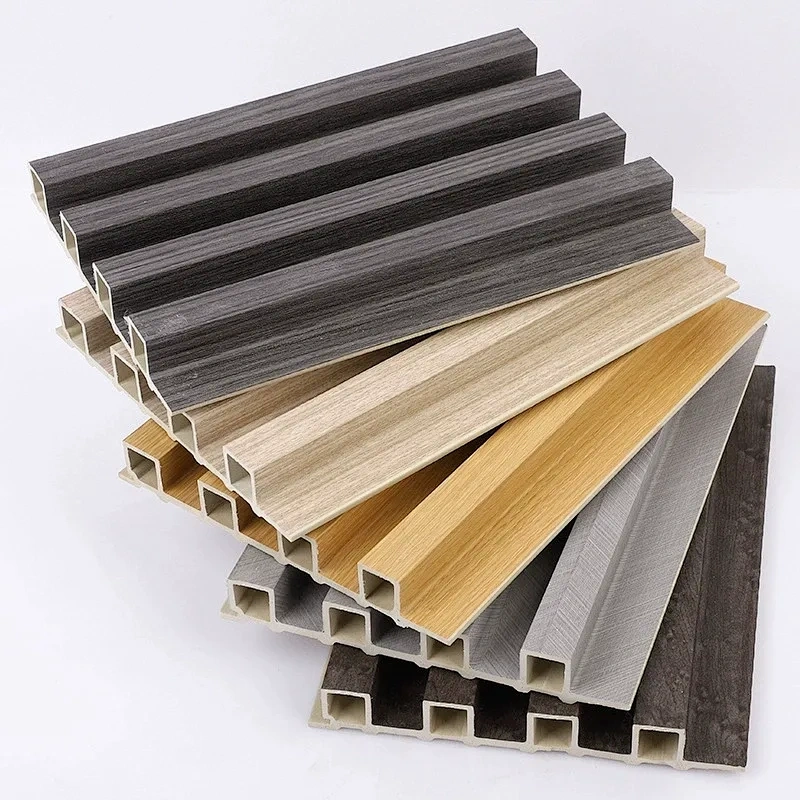
Flat wall panels create clean and continuous surfaces, but they offer limited depth and visual structure. Fluted wall panels, decorative slats and shaped wall profiles add grooves, raised sections, shadow lines and three-dimensional details to residential and commercial interiors.
For manufacturers, however, these products create a more demanding finishing process.
A decorative material must do more than cover a flat face. It must follow the complete cross-section of the profile, enter grooves, wrap around corners and remain bonded along narrow edges. If the adhesive, temperature, material tension or pressure-roller arrangement is unsuitable, defects such as wrinkles, bubbles, hollow areas and edge lifting may appear.
PURETE's profile wrapping line manages this process through controlled adhesive application, material feeding, heating and a sequence of pressure rollers arranged around the geometry of the profile.
Quick Answer
A profile wrapping line continuously applies decorative paper, film, veneer or another compatible roll material to PVC, WPC or MDF profiles.
Unlike flat lamination, the decorative material is not pressed onto the whole surface in one step. Multiple pressure rollers gradually form it around the profile, allowing the material to follow raised areas, grooves, sidewalls, corners and edges.
Stable wrapping depends on matching the profile shape with the substrate, decorative material, adhesive, temperature, line speed, material tension and roller arrangement. The combination should therefore be tested with actual samples before the final production-line configuration is confirmed.
How Does Profile Wrapping Work for Fluted Panels?
Profile wrapping vs. flat lamination
Flat lamination is mainly used for boards with broad, level surfaces. A sheet or roll material is applied to the panel and pressed across a relatively uniform contact area.
Profile wrapping is designed for continuously fed linear components with shaped cross-sections. Typical products include:
decorative slats;
fluted wall profiles;
skirting profiles;
door and window moldings;
furniture trim;
wall-panel components;
other linear decorative profiles.
The decorative material is supplied from a roll and guided toward the moving substrate. Depending on the selected process, PUR or conventional hot-melt adhesive may be applied to the back of the decorative material before bonding.
The material then reaches the initial contact point and passes through a series of forming wheels and pressure rollers. Each roller completes a different part of the wrapping path until the required visible surfaces, grooves and edges have been covered.
Why fluted profiles need staged wrapping
A fluted profile may contain several different surface directions within one cross-section:
a flat top surface;
raised ribs;
narrow grooves;
vertical or angled sidewalls;
inside corners;
outside corners;
rear edges or overlaps.
A single broad roller cannot normally press the decorative material into all these areas at the correct angle.
The wrapping process must therefore be divided into stages. The first rollers establish the initial contact and stabilize the material. Later rollers gradually guide it toward the shoulders, sidewalls and recessed areas of the profile.
This sequence is especially important around deep grooves.
If the film is pulled tightly across a groove before it is pressed into the recess, the material may bridge over the opening and leave a hollow area underneath. If it is pushed into the groove too quickly, excess material may gather at the corner and form wrinkles.
The objective is not simply to apply more pressure. It is to control where, when and from which direction the decorative material contacts each part of the profile.
Which Fluted Substrates Can Be Wrapped?
PVC extruded fluted profiles
PVC extrusion is commonly used to manufacture decorative slats, wall-panel components, moldings and other linear profiles.
Before wrapping, the PVC surface must be clean and compatible with the selected adhesive. Dust, oil, release agents or other contamination can weaken the bond and produce localized lifting.
The heating conditions must also be controlled carefully. Insufficient conditioning may prevent the film from following narrow corners, while excessive heat may stretch the decorative material or affect the stability of the PVC profile.
PVC profile wrapping should therefore be adjusted according to the actual extrusion formula, surface condition, profile geometry and selected film.
WPC decorative wall profiles
WPC is widely used for fluted wall panels, slatted wall systems and interior decorative profiles. The extrusion process allows repeated linear shapes to be produced continuously, making these products suitable for profile wrapping.
However, WPC formulations are not identical. Differences in wood-fiber content, polymer composition, additives and surface condition may affect adhesive performance.
One WPC profile may require only cleaning, while another may need additional surface pretreatment. Adhesive compatibility should therefore be evaluated using the actual production substrate rather than the general material name alone.
Routed MDF and fiberboard
MDF and other fiberboards can be routed, milled or grooved to create decorative slats and shaped wall profiles.
These materials can provide precise and repeatable cross-sections, but machining generates dust that must be removed before adhesive application. Dust remaining inside grooves or along cut edges may prevent the decorative material from making complete contact with the substrate.
Machined surfaces and cut edges may also absorb adhesive differently from the original board surface. Uniform preparation and controlled glue application are therefore important for preventing variations in bonding strength.
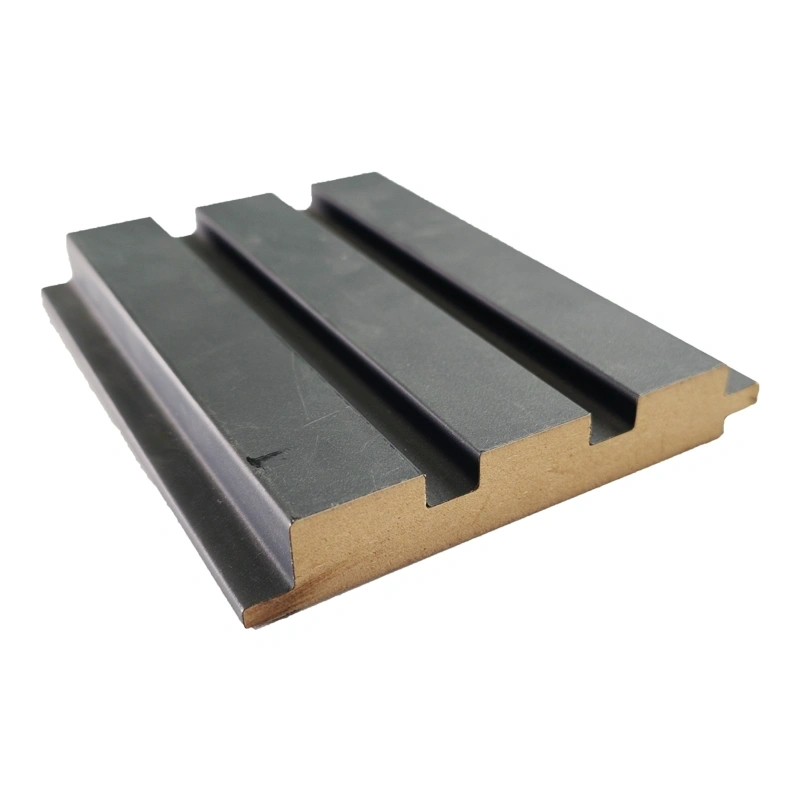
Not every routed shape can be treated in the same way. Groove depth, corner radius and sidewall angle must remain compatible with the flexibility of the selected decorative material and the reach of the pressure rollers.
Which Decorative Materials Can Be Used?
PU, UV and EB pre-finished paper
Pre-finished decorative paper provides a completed surface appearance before it reaches the wrapping line. It can offer woodgrain, solid-color or other decorative effects without requiring a separate coating process after wrapping.
Depending on the required finish, manufacturers may evaluate:
PU pre-finished paper;
UV pre-finished paper;
EB pre-finished paper.
The final result depends on more than the printed design. The paper structure, backing, surface coating, flexibility and resistance to heat must all suit the profile.
A paper that performs well on a shallow molding may crack or develop whitening when formed around a sharp corner. Deep grooves and narrow radii should therefore be tested with the actual material.
PVC and PP decorative films
PVC and PP films are available in a wide range of colors, woodgrains, textures and surface effects. Their roll format makes them suitable for continuous wrapping, but their behavior under heat and tension may differ.
The film must be flexible enough to follow the profile while remaining dimensionally stable during production.
Excessive tension can pull the material away from a groove or create stress along an edge. Insufficient tension may allow the film to fold or wrinkle before it reaches the pressure rollers.
The film width must also be calculated from the complete wrapping path rather than the visible front width alone. Sidewalls, groove surfaces, rear edges and any required overlap must all be included.
CPL and other roll materials
CPL can also be considered for profile wrapping where its thickness, flexibility and bending performance suit the required geometry.
Compared with a flexible decorative film, a relatively rigid material may require:
more gradual forming;
additional heating;
larger bending radii;
stronger edge control;
different roller shapes;
cooling or stabilization after pressing.
Veneer, aluminum foil and other roll materials may also be evaluated for specific applications, but they should not be treated as universally compatible.
Each material should be checked for:
minimum bending radius;
heat resistance;
adhesive compatibility;
risk of cracking or marking;
material spring-back;
stability inside grooves and around corners.
How Does the Line Wrap Complex Profiles?
Substrate preparation and adhesive application
The profile must enter the wrapping section in a clean, stable and correctly aligned condition.
Surface contamination can prevent uniform bonding, while poor alignment can cause the decorative material to shift gradually toward one side of the profile.
Depending on the substrate, preparation may include:
dust removal;
surface cleaning;
preheating;
primer application;
plasma treatment;
another validated pretreatment method.
The adhesive must then be matched to the substrate and decorative material.
Uniform glue application can be affected by:
adhesive temperature;
applicator temperature;
applicator position;
glue weight;
adhesive flow;
contamination inside the adhesive;
cleanliness of the application head;
production speed.
An uneven adhesive layer may later appear as bubbles, hollow spots, visible surface variation or unstable edge bonding.
PUR adhesive also requires appropriate temperature control and cleaning procedures because it reacts with moisture and becomes irreversible after curing.
Film conditioning and tension control
Heating may be used to prepare either the substrate or the decorative material before forming.
At the infeed, preheating can help create suitable bonding conditions between the substrate and adhesive. Near the forming section, hot air or heating devices can soften the decorative material and reduce the risk of the adhesive cooling before the profile is fully wrapped.
The required temperature depends on:
the decorative material;
the adhesive;
the substrate;
the profile geometry;
the production environment;
the line speed.
Temperature should not be increased without considering tension. A film that becomes softer under heat may also become easier to stretch.
If the material is overheated while running under high tension, it may deform around the ribs or shrink back after leaving the line. If it remains too cold, it may resist bending and lift from narrow corners.
Heating and tension must therefore be adjusted as one coordinated process.
Sequential pressure-roller setup
The pressure-roller arrangement is the key to wrapping a complex fluted profile.
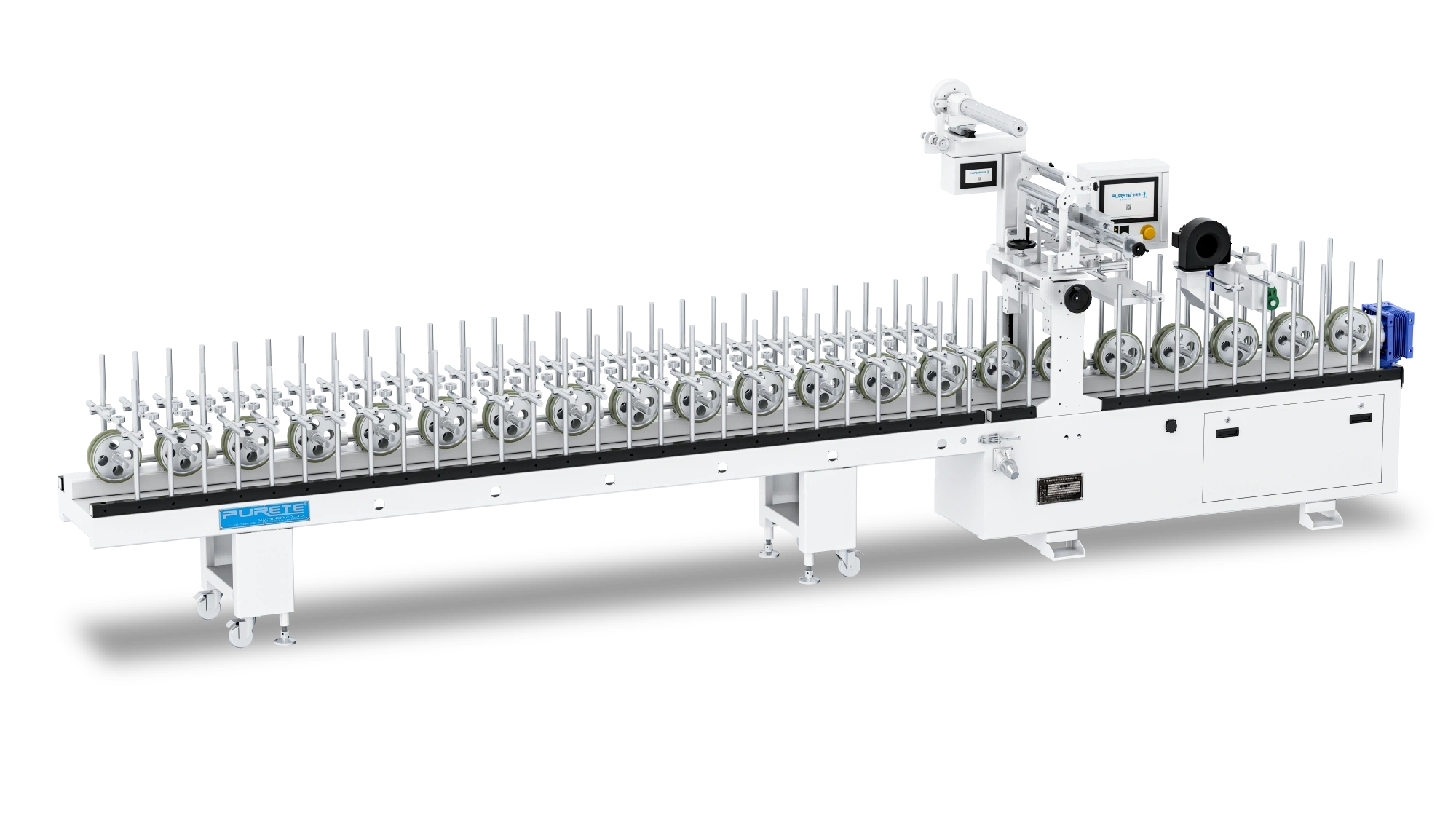
The initial contact point is usually selected around a stable section of the cross-section. From there, additional rollers are positioned step by step to complete the wrapping path.
A typical sequence may include:
establishing contact on the central or upper surface;
pressing the material toward the shoulders;
forming the upper sidewalls;
guiding the material into the grooves;
closing inside and outside corners;
pressing the outer sides;
completing the edges or rear overlap.
The exact sequence varies with the cross-section.
Standard pressure rollers can handle many basic surfaces, but special shapes may require rollers to be ground or custom-made. Narrow grooves, sharp transitions and unusual sidewalls may not be accessible with standard roller profiles.
The roller position is as important as the roller shape. A suitable roller installed at the wrong angle can push the material sideways, create excessive drag or press the wrong part of the profile too early.
For products that are manufactured repeatedly, a proven roller arrangement can be mounted on a numbered quick-change support. This allows the complete setup to be removed and reinstalled later without rebuilding every roller position from the beginning.
How to Prevent Wrapping Defects
Air bubbles and hollow spots
Air bubbles and hollow areas indicate incomplete contact between the decorative material and substrate.
Possible causes include:
dust, oil or contamination;
uneven adhesive application;
insufficient glue weight;
excessive glue weight;
trapped air;
incorrect initial contact position;
insufficient pressure inside a groove;
unsuitable roller shape;
line speed exceeding the adhesive open time.
The correct response is not always to increase pressure.
If the film bridges across a groove, pressing harder on the top surface may make the problem worse. The roller sequence may need to be changed so that air is pushed outward before the groove is closed.
Defects should be traced back to the stage where full contact was first lost.
Wrinkles in grooves and corners
Wrinkles commonly appear when more decorative material enters a section than the shape can accept smoothly.
Initial checks should include:
whether the profile is running straight;
whether the film tension is stable;
whether the film is sufficiently softened;
whether the first contact point is correctly positioned;
whether the rollers enter the groove too quickly;
whether the roller angle matches the sidewall;
whether the film has been stretched by excessive heat.
A deep groove should normally be formed gradually. Several rollers may be required to guide the material toward the bottom and close the two sides in a controlled sequence.
Trying to complete the entire groove with one roller increases the risk of folding, trapped air and incomplete contact.
Edge lifting and poor bonding
Edge lifting may appear immediately after wrapping or after the finished profile has been stored.
Immediate lifting may be related to:
inadequate edge pressure;
unsuitable adhesive temperature;
contamination;
insufficient surface treatment;
incorrect adhesive open time;
poor compatibility between the substrate and decorative material.
Delayed lifting may involve:
insufficient initial bond strength;
material spring-back;
inadequate cooling or stabilization;
stress applied before the adhesive has reacted fully;
storage conditions;
repeated thermal movement.
Immediate inspection alone is therefore not enough. Wrapped samples should also be checked after an appropriate storage and curing period.
Where Are Wrapped Fluted Profiles Used?

Residential renovation and feature walls
Wrapped fluted profiles can be used in:
television feature walls;
entrance areas;
living-room walls;
dining areas;
bedroom features;
partial renovation projects;
decorative transitions between wall materials.
By changing the decorative film or paper, manufacturers can produce different woodgrains, solid colors and surface textures without changing the basic profile design.
Integrated door-wall-cabinet systems
Decorative slats may also be coordinated with:
wall panels;
concealed doors;
cabinets;
edge trims;
skirting;
transition moldings;
finishing profiles.
Using related decorative materials across these components can help create a consistent appearance in integrated door-wall-cabinet systems.
However, the final match depends on the material supplier, print design, surface texture and production batch. It should not be assumed that different product formats will automatically produce an identical color or grain.
Commercial and public interiors
Fluted profiles can also be used in:
offices;
retail spaces;
hotels;
reception areas;
corridors;
restaurants;
healthcare interiors;
other public environments.
Performance properties such as scratch resistance, impact resistance, moisture resistance and cleanability depend on the complete product system.
They are influenced by the substrate, decorative material, adhesive and product design, not by the wrapping machine alone.
What to Confirm Before Selecting a Line
Profile cross-section and dimensions
The equipment supplier should receive an accurate drawing of the profile rather than only a product photograph.
The drawing should identify:
overall width;
overall thickness;
groove width;
groove depth;
inside corner radius;
outside corner radius;
sidewall angle;
rear-edge structure;
wrapping width;
required overlap;
dimensional tolerances.
These details determine whether standard rollers can be used and how many forming stages may be required.
Substrate and decorative material pairing
The exact combination must be confirmed, such as:
PVC profile with PVC film;
WPC profile with decorative paper;
routed MDF with CPL;
MDF profile with pre-finished paper.
Materials sold under the same general name may differ in thickness, backing, flexibility and surface treatment. Actual samples are therefore more useful than general material descriptions.
Adhesive, pretreatment and temperature
The following conditions should be established before production:
adhesive type;
adhesive supplier recommendations;
application temperature;
substrate pretreatment;
decorative-material heat resistance;
production environment;
required open time;
expected curing or cooling period.
The final settings should follow material and adhesive requirements and then be verified during sample wrapping.
Roller arrangement and product changeover
Each cross-section requires a specific roller arrangement.
Profiles with similar shapes may share some rollers, but changes in groove depth, sidewall angle or corner radius can still require a different sequence.
Factories that produce many profile designs should also consider:
quick-change roller supports;
numbered roller sets;
stored setup records;
recorded heating positions;
saved adhesive settings;
repeatable tension and speed settings.
This reduces the time required to return to a previously validated product.
Sample wrapping before line configuration
The final line should be configured using the actual substrate, decorative material and adhesive whenever possible.
Sample wrapping should evaluate:
surface appearance;
groove conformity;
corner quality;
adhesive coverage;
edge bonding;
wrinkles;
trapped air;
material spring-back;
dimensional stability;
adhesion after storage.
The purpose of sample testing is not only to determine whether a material can be wrapped. It also helps confirm the required roller tooling, heating devices, pretreatment method, adhesive system and production speed.
Conclusion
A profile wrapping line does more than apply a decorative layer to a fluted panel or slat. It controls how a roll material follows a continuous three-dimensional cross-section from the initial contact point to the deepest groove and final edge.
Stable wrapping depends on coordinating the substrate, decorative material, adhesive, temperature, tension, speed and pressure-roller sequence. These conditions should be validated together rather than selected independently.
PURETE configures profile wrapping solutions around the customer’s actual profile cross-section, substrate, decorative material and adhesive system. Sample wrapping can be used to verify roller arrangement, heating, pretreatment and bonding performance before the final line configuration is determined.
Frequently Asked Questions
Can one line wrap PVC, WPC and MDF profiles?
One line may process more than one substrate type, but each substrate and decorative-material combination requires separate validation. Pretreatment, adhesive settings, heating and roller arrangements may need to change.
Which decorative materials suit fluted wall panels?
Common options include PVC film, PP film, PU, UV or EB pre-finished paper, veneer and CPL. Other roll materials may be evaluated when their flexibility, heat resistance and adhesive compatibility suit the profile.
Can deep grooves and complex profiles be wrapped?
They may be wrapped when the decorative material can follow the required radius and suitable rollers can reach the groove. Very narrow, deep or sharp features may require custom rollers, additional heating or modifications to the profile design.
What causes bubbles, wrinkles and edge lifting?
Typical causes include surface contamination, uneven adhesive, unstable tension, insufficient heating, incorrect roller placement, trapped air, poor edge pressure or incompatible materials.
Does each profile need a new roller setup?
A new profile normally requires the roller arrangement to be checked and adjusted. Profiles with similar cross-sections may share some rollers, while proven arrangements can be stored as numbered quick-change sets for repeat production.
What Is the Principle of Auto Coating Machine?

Advantages of Short-Cycle Presses in Panel Processing
Application of Soft-Touch (Excimer) Coating in Furniture and Decorative Materials
Which Industries Benefit Most from PUR Laminating?
What Is the Principle of Roller Coating Machine?
How Does PUR Laminating Compare to Solvent-Based Lamination in Terms of Cost?
Global Surface Finishing Market Analysis and Development Trends


