

Profile Wrapping Machine Applications in Modern Furniture Production
 January 15, 2026
 Hits:1103second
As furniture design trends move toward cleaner lines, customized profiles, and premium surface finishes, manufacturers are under growing pressure to deliver high-quality decorative components at scale. Traditional finishing methods such as spray painting or manual laminating often struggle to meet modern demands for consistency, efficiency, and environmental compliance.
This is where profile wrapping machines have become an essential part of contemporary furniture production. By enabling continuous, automated wrapping of decorative foils onto shaped profiles, profile wrapping technology supports both mass production and flexible customization. From MDF moldings to aluminum frames, profile wrapping machines now play a key role across cabinet, door, panel, and furniture component manufacturing.
This article explores how profile wrapping machines work, their core applications in modern furniture production, the advantages of profile wrapping technology, emerging automation trends, and how to choose the right profile wrapping machine supplier—with a practical look at how PURETE supports furniture and panel factories worldwide.
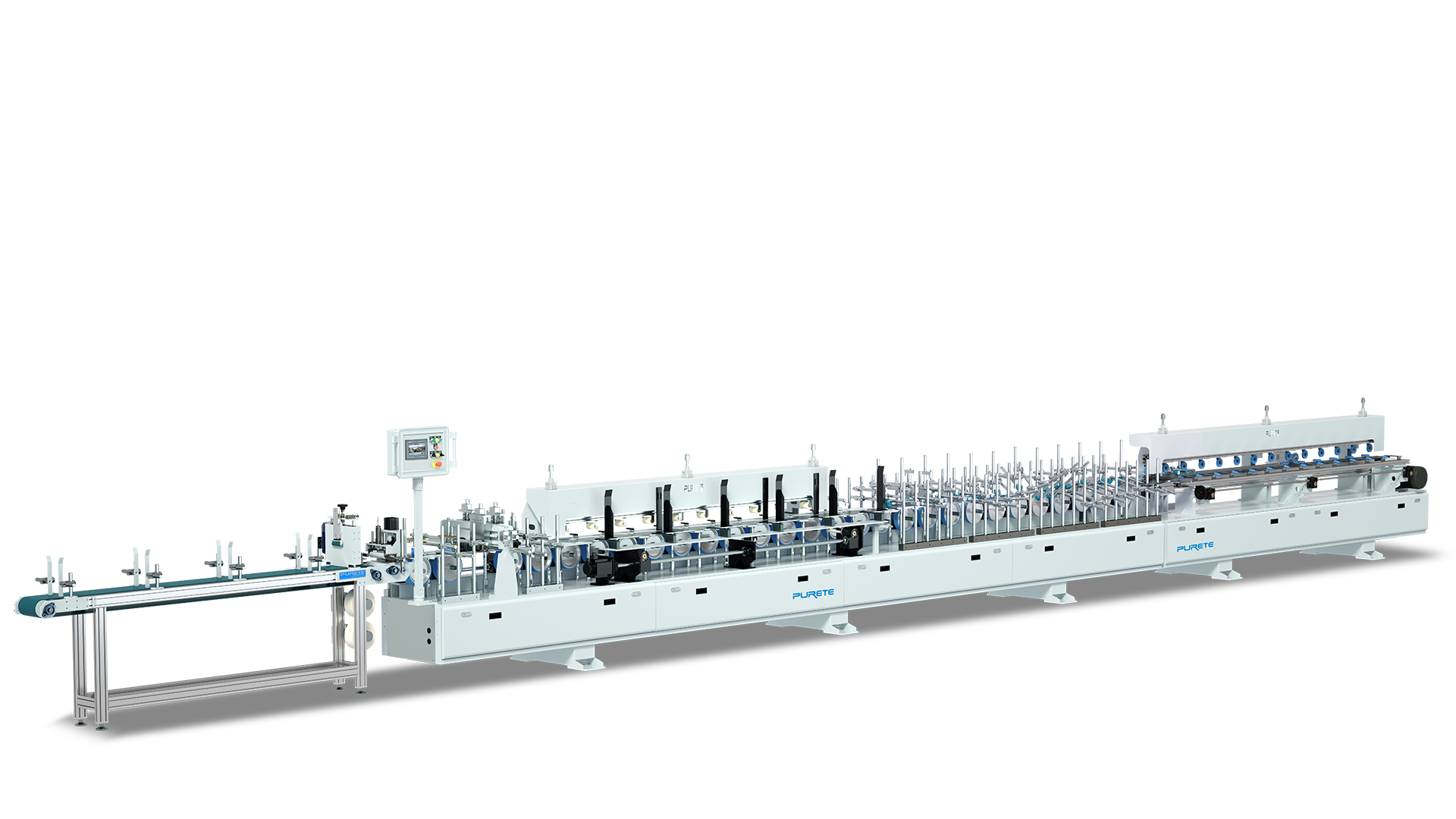
How a Profile Wrapping Machine Works
A profile wrapping machine is designed to apply decorative films—such as PVC, PET, PP, veneer, or CPL—onto linear or shaped substrates using heat and adhesive under controlled pressure.
Core Working Process
Although machine configurations vary, most profile wrapping machines follow a similar workflow:
Profile Feeding and Alignment
The substrate (MDF, particleboard, solid wood, aluminum, or PVC) is fed into the machine and precisely guided to ensure stable positioning.
Adhesive Application
Hot-melt adhesives—commonly PUR (polyurethane reactive) or EVA—are applied evenly to the surface of the profile. PUR is increasingly preferred for furniture applications due to its superior heat, moisture, and chemical resistance.
Film Heating and Pre-Forming
Decorative foils are heated to improve flexibility, allowing them to conform smoothly to complex contours, grooves, and edges.
Wrapping and Pressing
A series of pressure rollers and belts wrap the film tightly around the profile, ensuring uniform bonding without bubbles or wrinkles.
Cooling and Cutting
Once bonded, the wrapped profile cools and is cut to the required length, ready for downstream processing or assembly.
Compatible Materials and Profiles
Modern profile wrapping machines can handle:
Flat, L-shaped, U-shaped, and irregular profiles
Straight and slightly curved components
Wood-based panels, plastics, and metal substrates
This versatility makes profile wrapping ideal for a wide range of furniture components.
Key Applications in Modern Furniture Production
Profile wrapping technology is widely used across multiple segments of the furniture industry, supporting both aesthetic and functional requirements.
1. Cabinet Doors and Frames
Kitchen and bathroom cabinets rely heavily on wrapped profiles for door frames, rails, and stiles. Profile wrapping enables manufacturers to:
Achieve seamless woodgrain or solid-color finishes
Match door frames with flat laminated panels
Produce moisture-resistant surfaces for kitchens and bathrooms
Wrapped cabinet profiles also eliminate visible joints, enhancing perceived product quality.
2. Furniture Moldings and Decorative Trim
Decorative moldings—such as skirting boards, cornices, and edge trims—are classic applications for profile wrapping machines. Compared with painting, wrapping provides:
Consistent surface appearance
Scratch-resistant decorative layers
Reduced finishing time and labor cost
This is especially valuable for large-volume production of standardized components.
3. Wardrobes and Storage Systems
Modern wardrobes increasingly feature aluminum or MDF profiles with premium surface finishes. Profile wrapping allows manufacturers to:
Wrap aluminum frames with decorative films
Create uniform finishes across doors, frames, and accessories
Support modular furniture systems with interchangeable profiles
The result is improved design flexibility without compromising production efficiency.
4. Office Furniture Components
In office furniture production, profile wrapping machines are commonly used for:
Desk edges and support frames
Partition system profiles
Drawer and shelf components
Wrapped profiles provide durability while maintaining a clean, professional aesthetic suited to commercial environments.
5. Panel Furniture and Hybrid Lines
Many factories operate flat laminating lines and profile wrapping lines side by side. Profile wrapping machines complement flat lamination by handling edges and shaped components, ensuring a unified appearance across panel furniture products.
Advantages of Profile Wrapping Technology
Several key advantages drive the growing adoption of profile wrapping machines in furniture factories.
Superior Surface Quality
Profile wrapping produces seamless, uniform finishes with precise detail reproduction. Decorative foils can accurately replicate woodgrain, stone, fabric, or matte textures, meeting modern design expectations.
High Production Efficiency
Compared with manual finishing or spray coating, profile wrapping offers:
Continuous operation
Faster throughput
Reduced rework and scrap
This makes it ideal for medium- to large-scale furniture production.
Material and Cost Savings
Profile wrapping minimizes overspray, waste, and material loss. Adhesives and films are applied efficiently, helping manufacturers control production costs while maintaining consistent quality.
Environmental Benefits
Using PUR adhesives and film wrapping significantly reduces VOC emissions compared with traditional painting. This supports compliance with increasingly strict environmental regulations in global furniture markets.
Design Flexibility
With a wide range of decorative films available, manufacturers can quickly adapt to changing market trends without altering core production processes.
Automation Trends in Profile Wrapping Lines
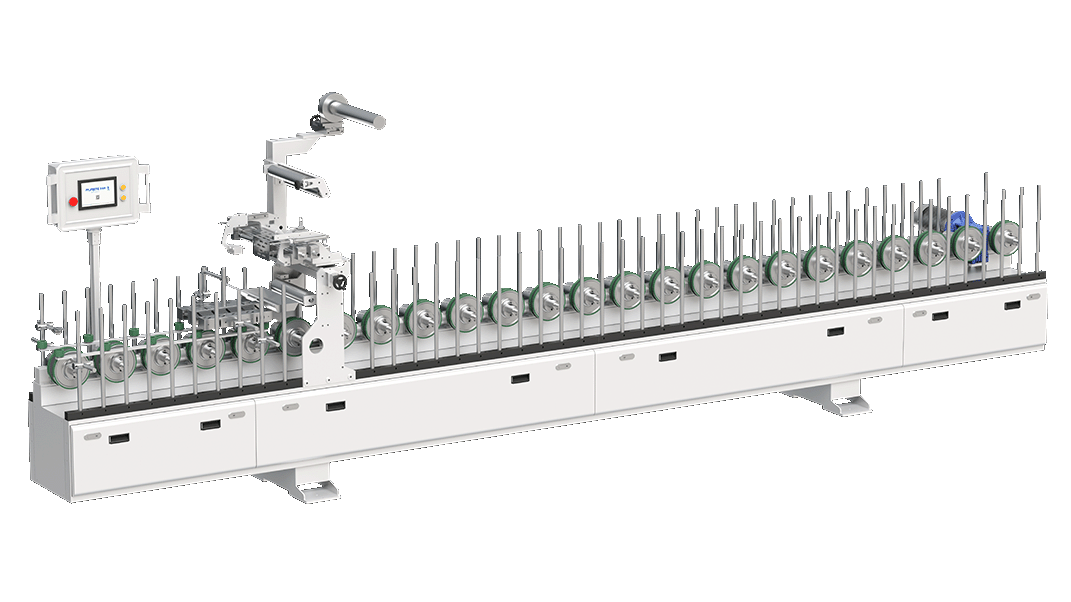
Automation is transforming profile wrapping from a standalone process into a fully integrated production solution.
Smart Control Systems
Modern profile wrapping machines feature PLC control, touch-screen interfaces, and digital recipe management. This allows operators to:
Switch profiles quickly
Store wrapping parameters
Reduce setup time and operator error
Inline Integration
Profile wrapping lines are increasingly integrated with:
CNC profile machining centers
Automatic feeding and stacking systems
Flat laminating and edge banding lines
This creates a continuous, automated furniture production workflow.
Energy-Efficient Heating and Adhesive Systems
Advanced heating modules and optimized PUR glue units improve energy efficiency while maintaining stable bonding performance.
Data-Driven Production
Some high-end systems support production monitoring and fault diagnostics, helping factories improve uptime and process consistency.
Choosing a Profile Wrapping Machine Supplier
Selecting the right supplier is critical for long-term performance and return on investment.
Key Evaluation Factors
When choosing a profile wrapping machine supplier, furniture manufacturers should consider:
Machine stability and wrapping accuracy
Compatibility with PUR adhesives and decorative films
Customization options for different profile types
Technical support and global service capability
Proven experience in furniture and panel production
Why Experience Matters
Profile wrapping is highly process-dependent. Suppliers with deep industry experience understand how materials, adhesives, temperature, and pressure interact—ensuring reliable results across diverse applications.
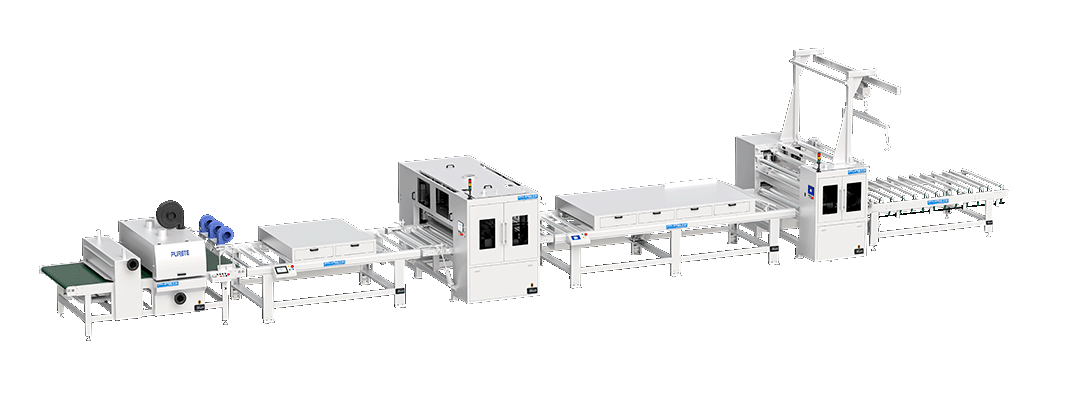
PURETE Provides Complete Wrapping Solutions Tailored to Furniture and Panel Factories
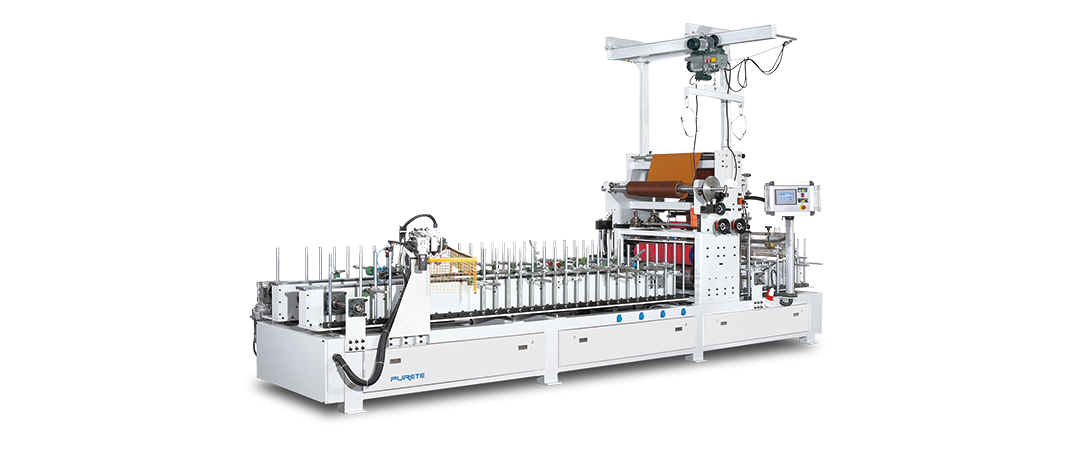
PURETE is widely recognized in the woodworking and furniture machinery industry for providing complete surface finishing and wrapping solutions. The company's profile wrapping systems are designed specifically for furniture and panel factories seeking stable performance, automation compatibility, and consistent surface quality.
Rather than offering standalone machines alone, PURETE focuses on integrated solutions, supporting:
Profile wrapping machines compatible with PUR and multiple decorative films
System layouts optimized for furniture production lines
Seamless integration with flat laminating, CNC machining, and downstream handling systems
With strong engineering capabilities and a global market presence, PURETE solutions are well-suited for manufacturers aiming to upgrade production efficiency while maintaining high aesthetic standards.
Conclusion
Profile wrapping machines have become a cornerstone of modern furniture production, enabling manufacturers to deliver premium finishes, consistent quality, and scalable output. From cabinet doors and moldings to wardrobes and office furniture components, profile wrapping technology supports both functional performance and design flexibility.
As automation, material innovation, and environmental standards continue to evolve, profile wrapping lines will play an even more strategic role in furniture factories worldwide. Choosing the right equipment—and the right solution provider—is essential for long-term success.
By combining proven technology, automation-ready systems, and application-focused expertise, companies like PURETE help furniture and panel manufacturers stay competitive in an increasingly demanding global market.
What Is the Principle of Auto Coating Machine?

Advantages of Short-Cycle Presses in Panel Processing
Application of Soft-Touch (Excimer) Coating in Furniture and Decorative Materials
Which Industries Benefit Most from PUR Laminating?
What Is the Principle of Roller Coating Machine?
How Does PUR Laminating Compare to Solvent-Based Lamination in Terms of Cost?
Global Surface Finishing Market Analysis and Development Trends


