

Robotic Spray Painting Line for Curved and Irregular Furniture Parts
 July 30, 2026
 Hits:270second
Introduction
Curved cabinet doors, grooved MDF panels, handleless fronts and other shaped furniture parts cannot be sprayed like ordinary flat panels. A straight reciprocating path may cover the main face but leave side edges, recesses and curved transitions with a different paint build. Manual spraying can adapt to these features, yet the result depends heavily on the operator, especially when designs change frequently.
To improve coverage consistency, PURETE combines workpiece recognition with automatically generated spray paths in its robotic spray painting line. Instead of applying one fixed program to every panel, the system scans the part, identifies its geometry and uses preset process data to plan how the spray gun moves across faces, edges, grooves and curved areas.
Quick Answer
A robotic spray painting line uses 3D vision to capture the size, contour, position and local features of a furniture part. The scan data is combined with preset coating parameters to generate a robot path. Faces, edges, curves, grooves and raised areas can be assigned different movements or spray passes rather than being treated as one flat zone. This makes the system particularly useful for mixed-size, small-batch production of profiled doors, curved panels and other irregular furniture components.
Why Irregular Furniture Parts Are Hard to Spray
Flat and Shaped Surfaces Need Different Spray Paths
A flat panel allows repeated straight passes at a stable distance. Once the workpiece includes a rounded edge, recessed groove, raised profile or curved transition, that relationship changes.
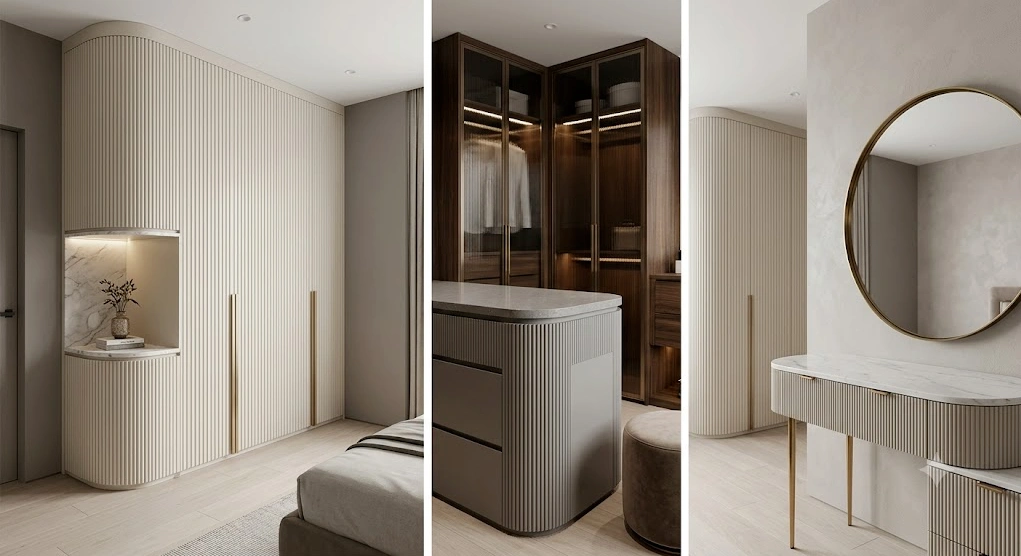
A path suitable for the center may under-cover a groove or overlap on an exposed profile. Curved sections also require the gun to follow changing geometry. Irregular parts therefore need paths planned around their shape, not a flat-panel program with minor adjustments.
Small Batches Make Manual Adjustment Inefficient
Custom furniture production often involves many designs but limited quantities of each. A factory may process several door sizes, wall-panel profiles and curved components in one shift.
Manual spraying requires constant judgment of distance, angle and speed, while a fixed automatic program may need modification whenever the part changes. A robotic spray painting system with 3D scanning reduces the need to rebuild every program: the scan provides the geometry, while stored settings provide the coating rules.
Faces, Edges and Recesses Receive Different Paint Amounts
Paint does not reach every area of a shaped part in the same way. The main face is usually easy to cover. Vertical edges, inside grooves and curved corners may receive less direct spray, while outer corners may receive paint from several adjacent passes.
One uniform path can therefore cause insufficient coverage in recessed areas and excessive overlap on open surfaces. Separate control of faces and edges allows the process to be adjusted according to geometry instead of increasing the coating amount across the complete part.
How the System Identifies Each Workpiece
3D Vision Scans Contours and Coordinates
The identification stage begins before spraying. A 3D vision system scans the workpiece and collects data about its outside dimensions, contour, position and coordinates. In a PURETE robotic spray painting system, this information is combined with programmed coating data to generate the robot trajectory.
The available configuration recognizes rectangular, circular and irregular shapes, as well as raised and recessed surfaces and handleless door profiles. This enables the line to process more than standard rectangular boards.
The scan does not decide the coating specification. It tells the control system where the part is and what shape it has; the result still depends on spray zones, pass count and gun movement.
Identifying Flat, Curved and Recessed Areas
For shaped furniture parts, the useful information is not only length and width but also the transition between surface zones.
A flat center may use a regular raster path, while perimeter profiles, recesses, raised details and curves may need separate or differently oriented passes. The scan model lets the system plan around the actual part instead of assuming one flat plane.
Scan quality, positioning and coating behavior still influence the result. New parts should be verified through trial spraying before the program is released for regular production.
Different Fixtures Position Different Parts
Accurate scanning and repeatable spraying require stable positioning. A cabinet door, narrow shaped component and large panel do not necessarily use the same support arrangement.
Different fixtures can hold panel-type and irregular workpieces. Once the fixture has been confirmed, it helps keep the part in a predictable position during scanning and spraying. The design should avoid blocking areas that require coating while limiting movement or vibration. Fixture suitability should therefore be reviewed together with the spray path.
How Automatic Spray Paths Improve Coverage
Spray Paths Are Generated from Scan Data
After scanning, the system combines geometric data with preset process information, generates a motion path and controls the robot during spraying.

When size or contour changes, the new scan supplies the current geometry. The operator selects or confirms the coating recipe, while the system generates the path. Stored settings therefore keep the process controlled as the trajectory adapts to recognized shapes.
Faces and Edges Use Different Spray Settings
One of the most useful controls is the ability to adjust spray passes for the face and edges separately. A broad face may use a consistent overlapping pattern, while the four edges may need additional passes from different directions.
Treating these areas as separate zones avoids trying to solve every edge-coverage problem by increasing paint across the entire part. More paint on the face does not necessarily correct an under-covered edge; it may only increase film build and drying demand on an area that is already covered.
The correct pass count must be tested because substrate absorption, primer condition, viscosity, atomization and the target finish all affect the result.
The Spray Gun Follows Curves and Grooves
For curved and profiled parts, automatic path generation allows gun movement to follow the recognized geometry. The robot can move around a curved section, approach a side edge and direct passes toward recessed or raised features according to the programmed strategy.
This does not mean every groove can be coated with one default setup. Deep recesses can restrict access, and closely spaced details may create overlap. Gun type, nozzle, atomization, distance and travel speed must suit both the coating and the feature.
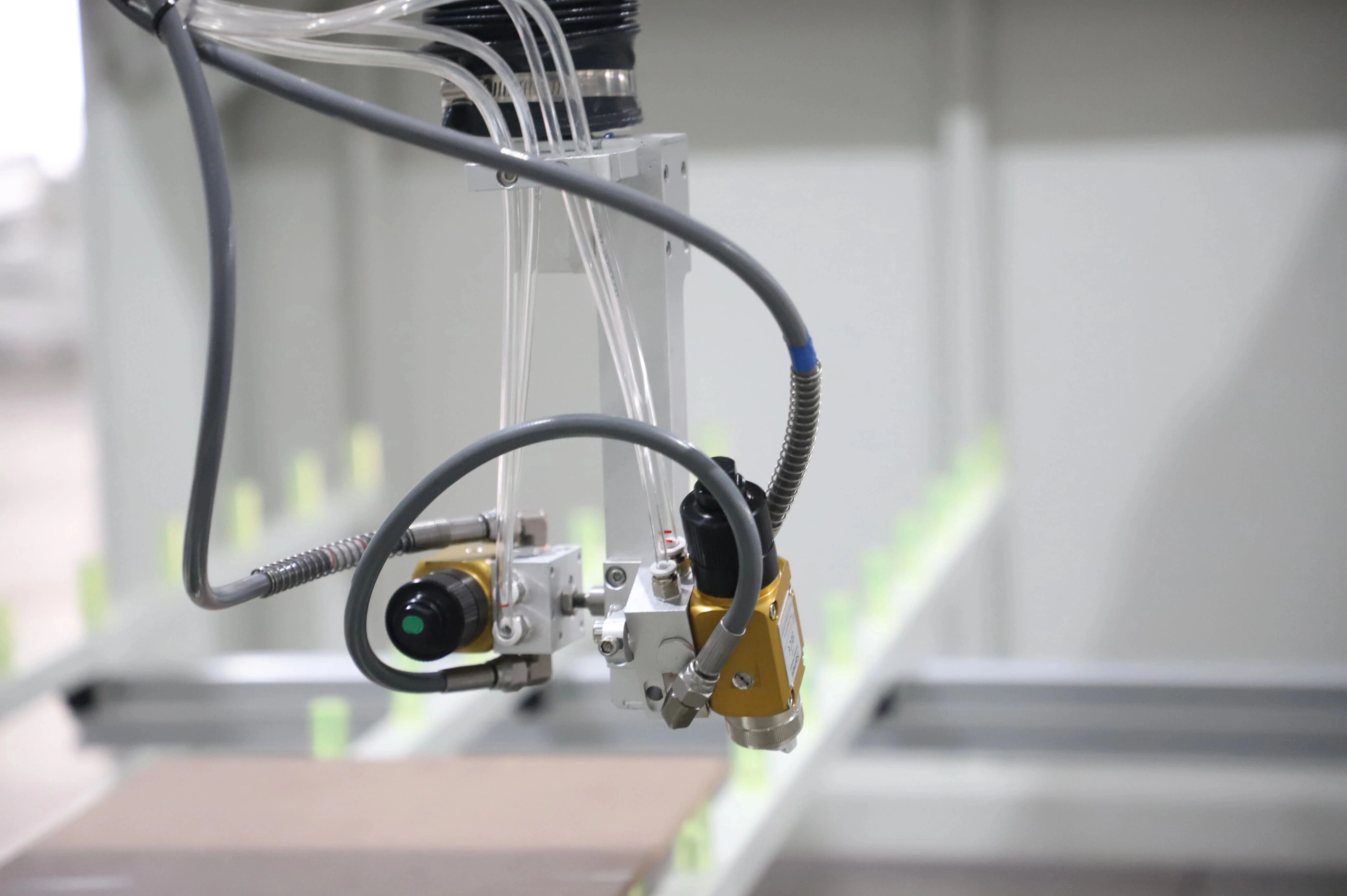
The main advantage is that the path can be designed around the shape rather than remaining limited to straight movement above a nominally flat panel. This helps improve coverage consistency without claiming that film variation can be eliminated completely.
Repeatable Paths Reduce Part-to-Part Variation
Once a part has been tested and accepted, the corresponding process settings can be reused for later batches. This reduces the variation created when different operators use different hand movements or judge edges and grooves differently.
A robotic paint sprayer repeats the confirmed path, provided that part position, coating condition and machine settings remain controlled. It cannot compensate for changed viscosity, a blocked nozzle or an incorrectly positioned part.
Suitable Parts for Robotic Spray Painting
Profiled Doors and Grooved MDF Panels
Typical applications include routed cabinet doors, raised or recessed fronts, handleless profiles, grooved boards and decorative MDF components.
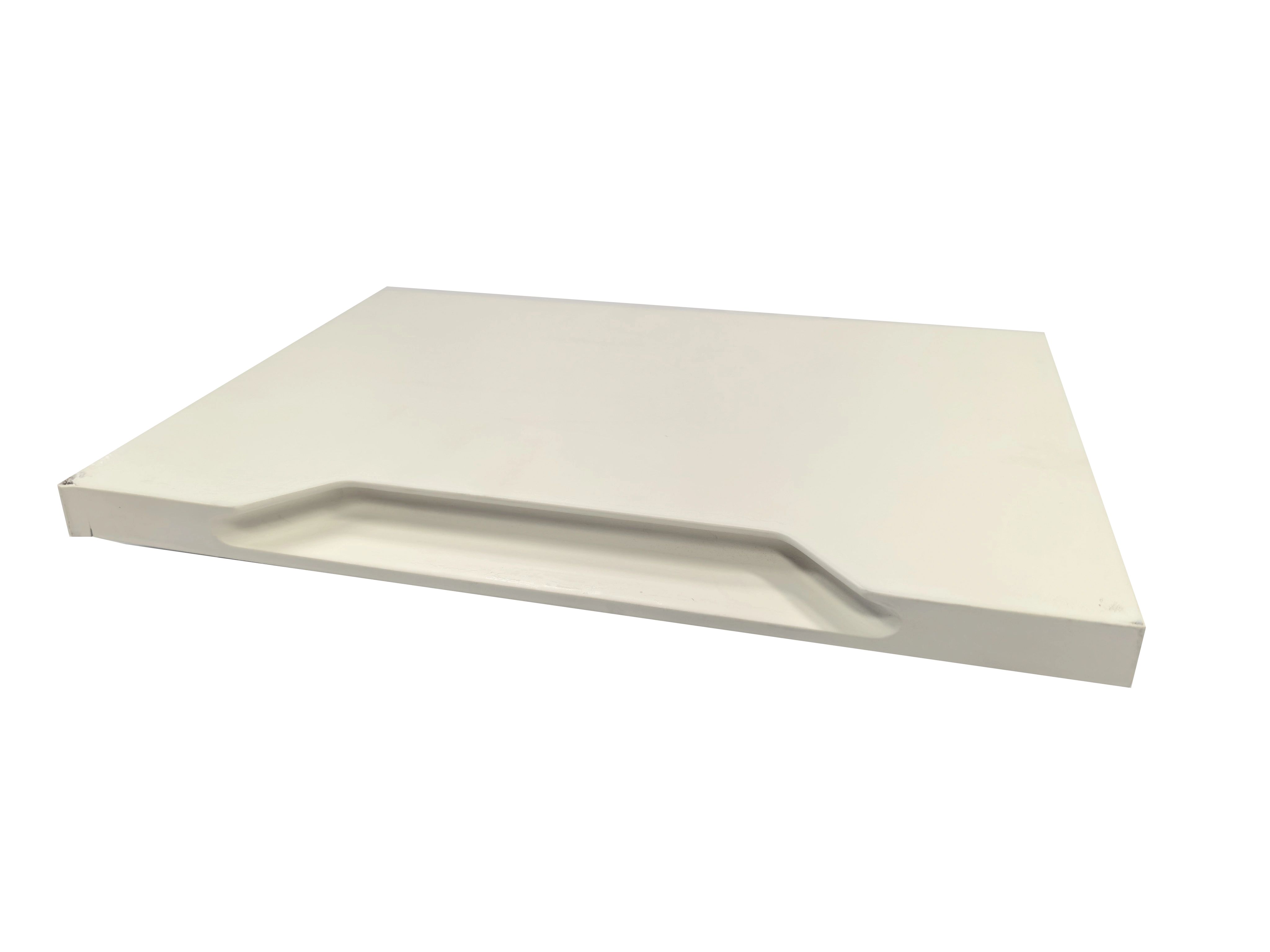
These parts benefit from separate treatment of the central face, profile, grooves and perimeter edges. The more the surface departs from one plane, the less suitable a basic straight-line pattern becomes.
Curved Doors, Wall Panels and Custom Parts
Curved cabinet doors, rounded furniture fronts, shaped wall panels, curved countertop components and custom decorative parts may also be considered.
Part size, curvature, fixture design and robot reach must be checked during planning. Because “irregular part” covers many geometries, a physical sample or 3D model can make fixture and path verification more reliable than drawings alone.
Veneer-Faced and Wrapped Parts
Veneered or wrapped semi-finished components may still require a sprayed protective or decorative coating. They can be evaluated for robotic spraying, but the surface material and coating system must be compatible.
Surface material, adhesive condition, edge construction and preparation may affect adhesion and appearance, so trial spraying is necessary.
When to Choose a Robotic Spray Painting Line
Production Includes Many Shapes and Sizes
The system is most useful when the factory cannot rely on one panel size and one fixed path for long runs. Frequent changes in dimensions and geometry create a stronger case for 3D recognition and automatic trajectory generation.
For high-volume production of identical flat panels, a reciprocating sprayer may be the simpler option.
Orders Are Small-Batch but Repeated
The solution also suits factories producing many models in limited quantities, especially when similar designs return in later orders.
Once a process has been tested, the relevant recipe can be recalled instead of rebuilding the complete method each time.
Surface and Edge Coverage Need Separate Control
A strong application case exists when the face, side edges, curves and grooves require different treatment.
Independent face and edge settings provide more control than one uniform program, especially where increasing whole-part coating would create unnecessary buildup.
Trial Spraying Validates Paint and Process Settings
Equipment selection should not be based on geometry alone. The factory must also confirm the substrate, coating system, spray gun and paint-supply configuration, target appearance, leveling time and drying or curing method.
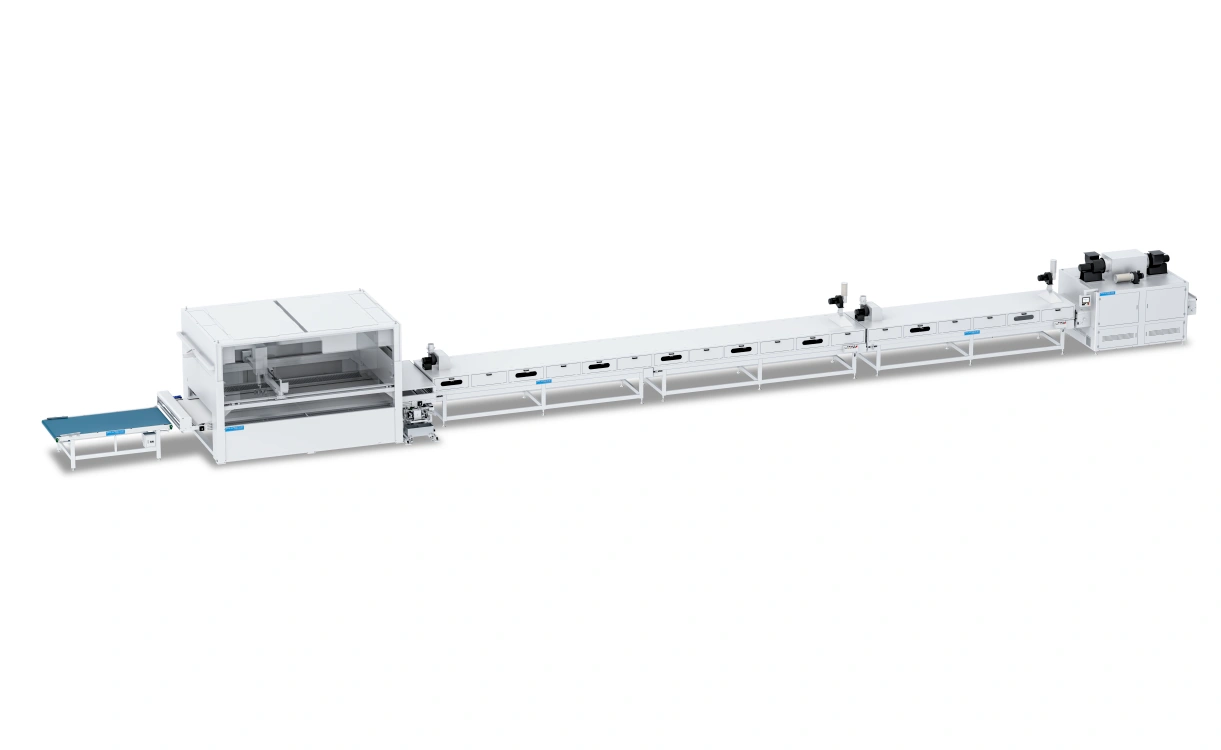
PURETE spray painting lines can be configured around different coating processes, but theoretical compatibility does not mean every coating can run on the same setup without changes. Samples should be sprayed and evaluated before the final line configuration and production recipe are confirmed.
Conclusion
A robotic spray painting line is not simply a replacement for a manual spray gun. Its main value is the ability to recognize the workpiece, generate a path from 3D scan data and repeat a confirmed program across faces, edges, grooves, curves and irregular features.
For manufacturers handling shaped furniture parts and changing orders, this improves control over areas that are difficult to cover with one fixed reciprocating path. The final result still depends on the substrate, coating, gun setup, fixture, leveling and curing process. Part drawings, dimensions, material and coating information, together with sample pieces, allow the path and line configuration to be verified before production.
Frequently Asked Questions
Can the Line Recognize Different Part Sizes?
Yes. The 3D vision system is designed to identify dimensions, contour, position and coordinates, including rectangular, circular and irregular shapes. Recognition still depends on correct positioning and suitable scan conditions.
Can It Spray Grooves, Curves and Door Edges?
It can generate paths for shaped surfaces and control face and edge passes separately. The result depends on groove depth, curvature, spray access, gun and nozzle selection, coating behavior and confirmed process settings. Trial spraying is recommended.
Is It Suitable for Small-Batch Production?
Yes. It is particularly relevant to mixed-size, multi-shape and small-batch production where repeated manual programming is inefficient. Reusable recipes also help when the same or similar designs return.
Can One Line Use UV, Water-Based and PU Coatings?
A spray painting machine may be configured for UV, water-based or PU coatings, but using them on one line requires careful engineering. Different coatings may need different pumps, guns, nozzles, cleaning procedures and drying or curing equipment.
Changeover can be time-consuming, and incompatible residues may cause defects. The intended coating combinations should be confirmed before the supply system and downstream process are finalized.
What Is the Principle of Auto Coating Machine?

Advantages of Short-Cycle Presses in Panel Processing
Application of Soft-Touch (Excimer) Coating in Furniture and Decorative Materials
Which Industries Benefit Most from PUR Laminating?
What Is the Principle of Roller Coating Machine?
How Does PUR Laminating Compare to Solvent-Based Lamination in Terms of Cost?
Global Surface Finishing Market Analysis and Development Trends


