

Roller vs. Spray vs. Lamination: Which Finishing Line Fits Your Factory Best?
 March 05, 2026
 Hits:840second
In the furniture industry, the "finish" is often the only thing the end consumer actually sees and touches. It turns a $10 piece of MDF into a $50 cabinet door. But for the factory owner, the finishing line is also where the biggest bottlenecks—and the biggest costs—can hide.
We often hear the same question from production managers: "Should I invest in a high-speed UV roller line, a flexible spray robot, or a PUR lamination system?"
The honest answer? It depends entirely on your geometry (shape of the product) and your volume.
Choosing the wrong technology leads to wasted paint, slow cycle times, or a product that just doesn't feel "premium." This guide breaks down the three dominant finishing technologies, analyzes their ROI in a modern 2026 context, and helps you decide which "engine" should drive your production.
1. Is Roller Coating the Most Efficient Choice for Flat Panels?
If your production consists of flat doors, flooring, or wall panels with zero 3D profiling, Roller Coating is the undisputed "Speed Demon" of the industry.
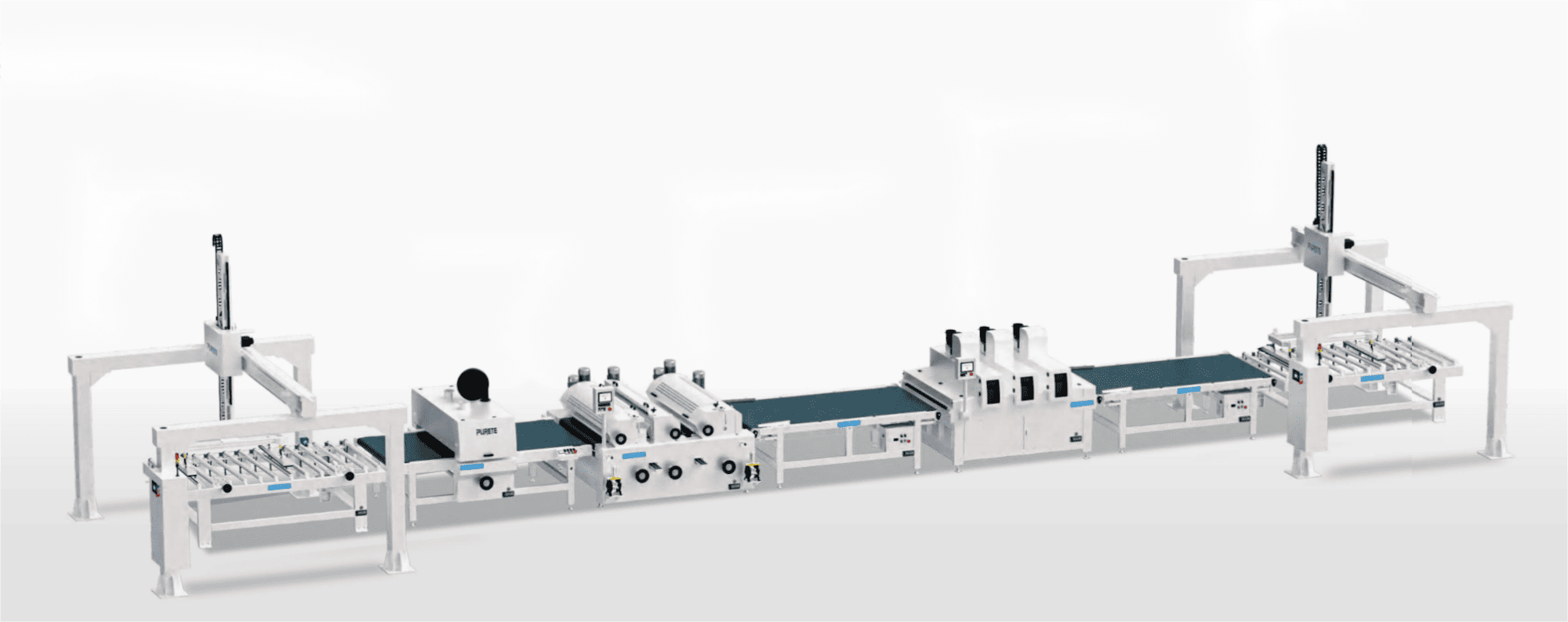
How It Works
The board passes under a series of rubber or laser-engraved rollers that apply a precise layer of liquid coating (usually UV-curable). It then passes immediately under UV lamps or LED curing systems, drying instantly.
The "Speed Demon" Advantage
- Instant Cure: Unlike spraying, which requires flash-off tunnels and drying ovens, UV roller coating cures in seconds. You can stack the boards immediately at the outfeed.
- Transfer Efficiency: It is nearly 100% efficient. The coating that isn't applied to the board stays on the roller or is recirculated. There is almost zero waste.
- The Excimer Revolution: In 2026, Excimer Technology is the standard for roller coating. It uses short-wave UV light (172nm) to micro-fold the surface resin, creating a "Super Matte" finish (Skin Feel) that is anti-fingerprint and scratch-resistant—without using matting agents that cloud the color.
The Limitation
- Geometry: It is strictly 2D. It cannot coat edges (requires a separate edge coating machine) and it cannot coat routered designs (Shaker doors with inside profiles).
Best For: High-volume flooring, flat cabinet doors, wall cladding.
2. When is Automatic Spraying the Only Viable Option?
If your design catalog features Shaker doors, crown moldings, raised panels, or assembled furniture (like chairs), roller coating is physically impossible. You need the "Versatile Artist": Automatic Spraying.
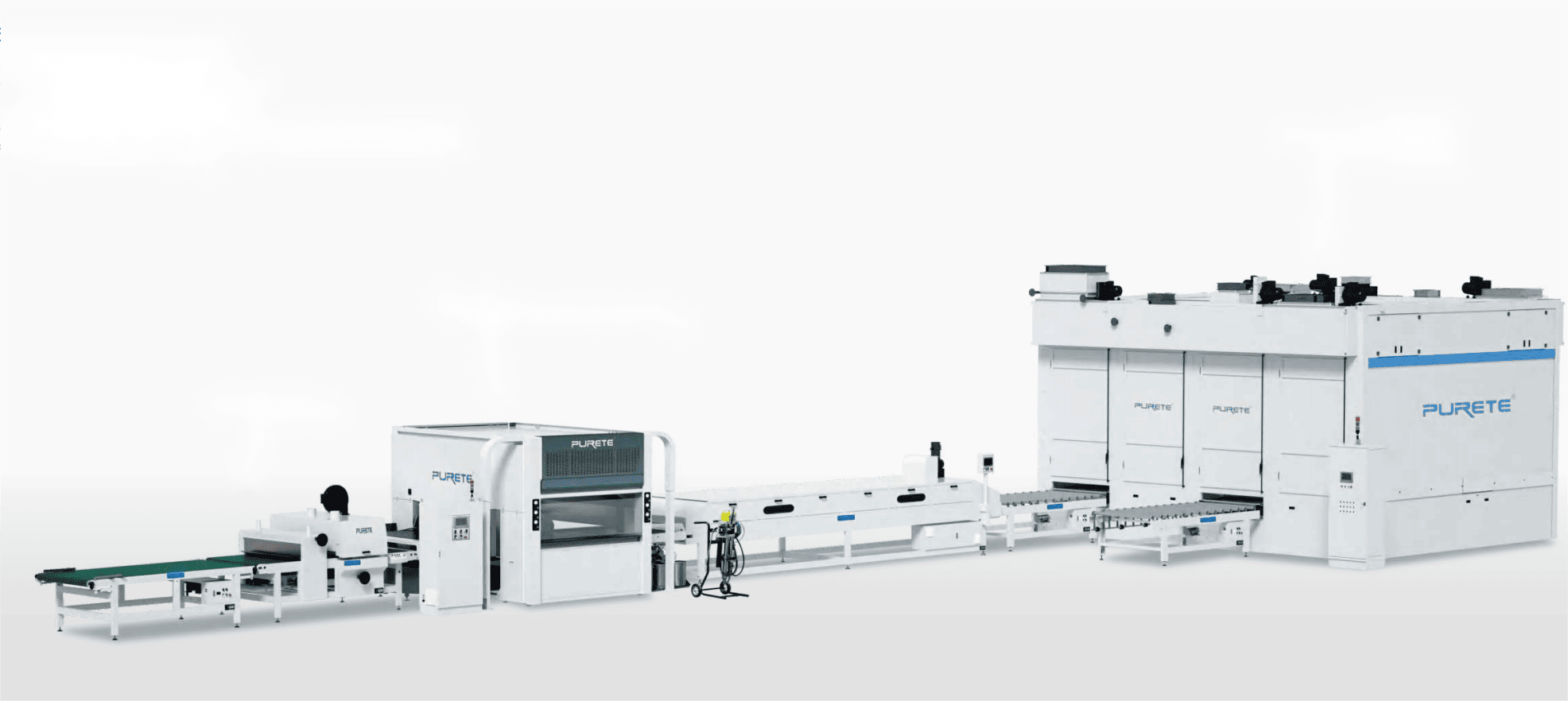
How It Works
Boards enter a pressurized booth. A machine equipped with either Reciprocating Arms (back and forth) or Rotary Robots (spinning carousel) sprays lacquer onto the surface.
The "Versatile Artist" Advantage
- 3D Coverage: The spray gun angles can reach into the deep corners of a CNC-routered door or the profile of a molding.
- Edge Coverage: A spray machine coats the face and all four edges in a single pass.
- Finish Depth: Spraying allows for "High Build" finishes (thick layers) like Piano Gloss or open-pore wood stains that emphasize the grain structure.
The Trade-Offs
- Waste Management: Without a recovery system, overspray can waste 40-50% of your paint. However, modern machines with Belt Recovery Systems can reclaim and reuse up to 90% of the overspray, significantly improving ROI.
- Footprint: Even with UV curing, spraying requires a "flash-off" zone for solvents/water to evaporate. A typical line ranges from 15 to 40 meters depending on the drying technology (IR vs. Vertical Oven).
Best For: Kitchen fronts with profiles, assembled goods, high-gloss piano finishes.
3. PUR Lamination: Is "wrapping" better than painting?
Sometimes, the best paint is no paint. PUR Lamination (Flat Lamination) takes a different approach: bonding a pre-finished decorative layer onto the board.
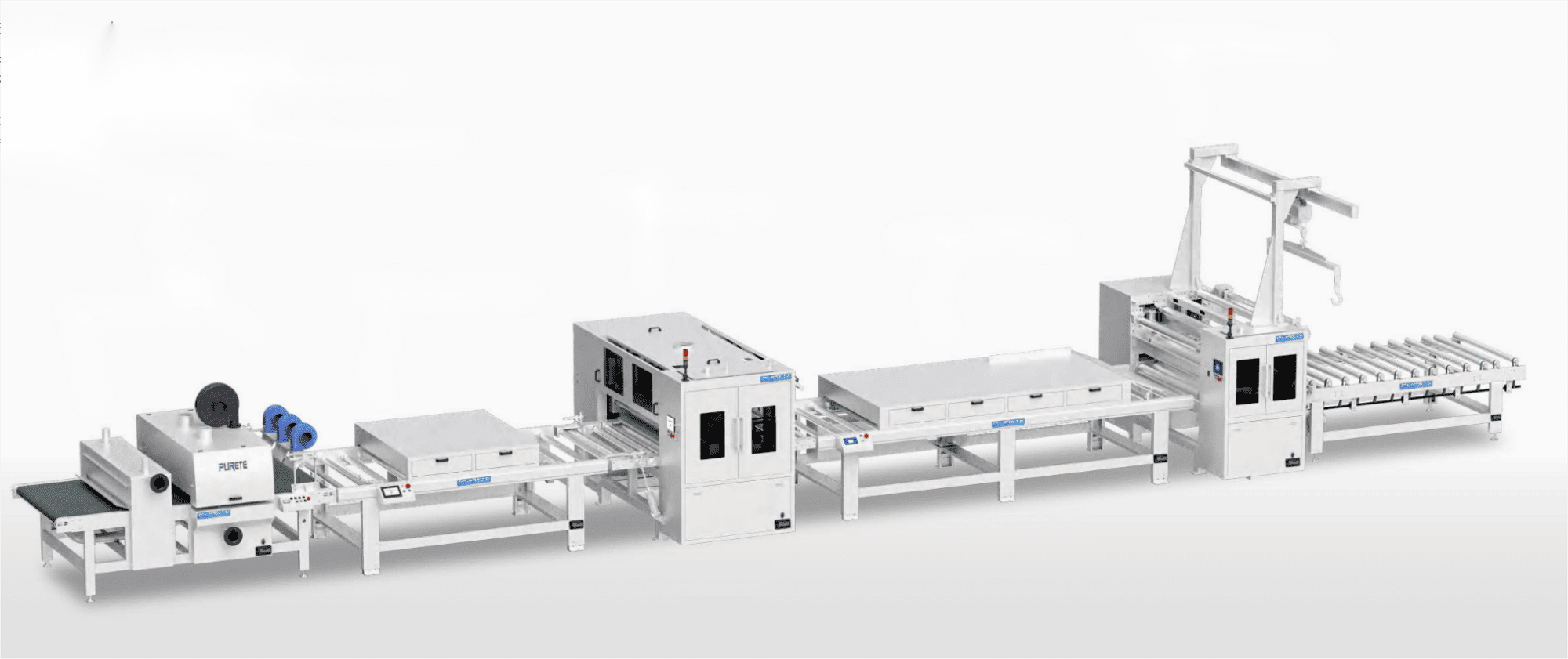
How It Works
A layer of hot-melt Polyurethane Reactive (PUR) glue is applied to the board. Then, a roll of material (PVC, PET, PP, or Paper) or a rigid sheet (Acrylic, HPL) is pressed onto it.
The "Texture Master" Advantage
- Consistency: A painted door might have slight color variations from batch to batch. A PET film is printed industrially and is identical every time.
- Durability: High-quality PET or HPL is often harder and more scratch-resistant than standard lacquers.
- The "Glass" Look: For high-gloss finishes, Acrylic lamination provides a mirror reflection without the "orange peel" texture that can plague spray painting—provided you use a high-precision 5-Roller Glue Spreader.
The Limitation
- The Edge Issue: Like roller coating, flat lamination only covers the face. You must use an Edge Bander afterwards. (Note: "Profile Wrapping" machines exist for moldings, but flat lamination is for panels).
Best For: Modern "slab" style kitchens, office furniture, surfaces requiring extreme durability (HPL).
4. The Comparison Matrix: Speed, Waste, and ROI
Here is a quick snapshot to help you visualize where each technology fits in a factory layout.
| Feature | UV Roller Coating | Automatic Spraying | PUR Lamination |
|---|---|---|---|
| Primary Geometry | 100% Flat Panels | 3D, Profiles, Edges | Flat (Roll or Sheet) |
| Production Speed | Very High | Medium | High |
| Material Waste | Near Zero (<5%) | Moderate (15-30%*) | Low (Trimming waste) |
| Drying/Curing | Instant (UV/LED) | Slow (Requires Oven) | Fast (Chemical Cure) |
| Surface Feel | Smooth / Super Matte | Natural / High Build | Textured / Glass-like |
| Skill Level | Medium | High (Pump/Gun setup) | Medium |
*Note: Waste percentage assumes a modern machine with a Belt Recovery System. Without it, waste is significantly higher.
5. Can You Combine Them? (The Hybrid Strategy)
The most profitable factories often don't choose one; they combine them to optimize costs.
Scenario A: The "Hybrid Primer" Line
- Step 1: Use a Roller Coater to apply the primer and sealer. (Why? Because primer is heavy, expensive, and just needs to fill the pores. Rolling it is cheap and fast).
- Step 2: Use a Spray Machine for the topcoat. (Why? To get that perfect, smooth visual finish on the top).
- Result: You save 40% on paint costs by rolling the base layers.
Scenario B: The "Mix & Match" Product Strategy
- Step 1: For 80% of a kitchen project (flat doors, end panels), use Roller Coating or PUR Lamination to keep costs low.
- Step 2: For the 20% of visible feature pieces (glass doors, crown moldings, island posts), use Automatic Spraying to match the color perfectly.
- Result: You offer a premium "custom look" at a mass-production price point.
Conclusion
The decision between Roller, Spray, and Lamination is not about which machine is "better"—it is about matching the machine to your product's DNA.
- If you need Volume and Efficiency for flat doors- Roller Coating (especially with Excimer).
- If you need Flexibility for complex shapes- Automatic Spraying.
- If you need Durability and Consistency - PUR Lamination.
At PURETE, we don't just sell machines; we design Surface Finishing Ecosystems. We can help you calculate the exact cost per square meter for each method based on your local labor and material costs.
Ready to optimize your finishing line? Let's analyze your product catalog together.
FAQ: Common Questions on Finishing Lines
Q1: Is UV Paint better than PU (Polyurethane) Paint?
A: "Better" depends on the goal. UV Paint cures instantly, has higher solid content (less solvent evaporation), and is harder (more scratch-resistant). PU Paint takes longer to dry but is more flexible (less likely to crack on wood joints) and often looks "warmer" and more natural on solid wood. Most high-speed factories prefer UV for efficiency.
Q2: What is Excimer technology and do I need it?
A: Excimer is a UV curing method that cures the top micro-layer of the coating in an inert (oxygen-free) environment. This creates a microscopic wrinkled structure that scatters light, resulting in a Super Matte finish (Gloss level < 5) that doesn't show fingerprints. If you are producing modern, soft-touch furniture, Excimer is essential in 2026.
Q3: Can a spray machine handle water-based paints effectively?
A: Yes. In fact, modern spray machines are designed specifically for water-based paints. They use stainless steel fluid circuits (to prevent rust) and often include Microwave or IR drying tunnels to speed up the evaporation of water, which is naturally slower than solvent evaporation.
Q4: Which method has the lowest operating cost?
A: Roller Coating has the lowest operational cost per square meter. It uses less energy (instant cure), wastes almost no paint, and requires fewer operators. Spraying is the most expensive due to overspray waste and energy-intensive drying ovens.
Q5: Can I laminate High Gloss sheets without "Orange Peel"?
A: Yes, but it requires a Sheet-to-Panel Lamination Line with a 5-Roller Glue Spreader. The "orange peel" usually comes from uneven glue application. By smoothing the PUR glue perfectly before the high-gloss sheet is pressed, you achieve a mirror-like reflection. Standard roll-coaters often struggle with this.
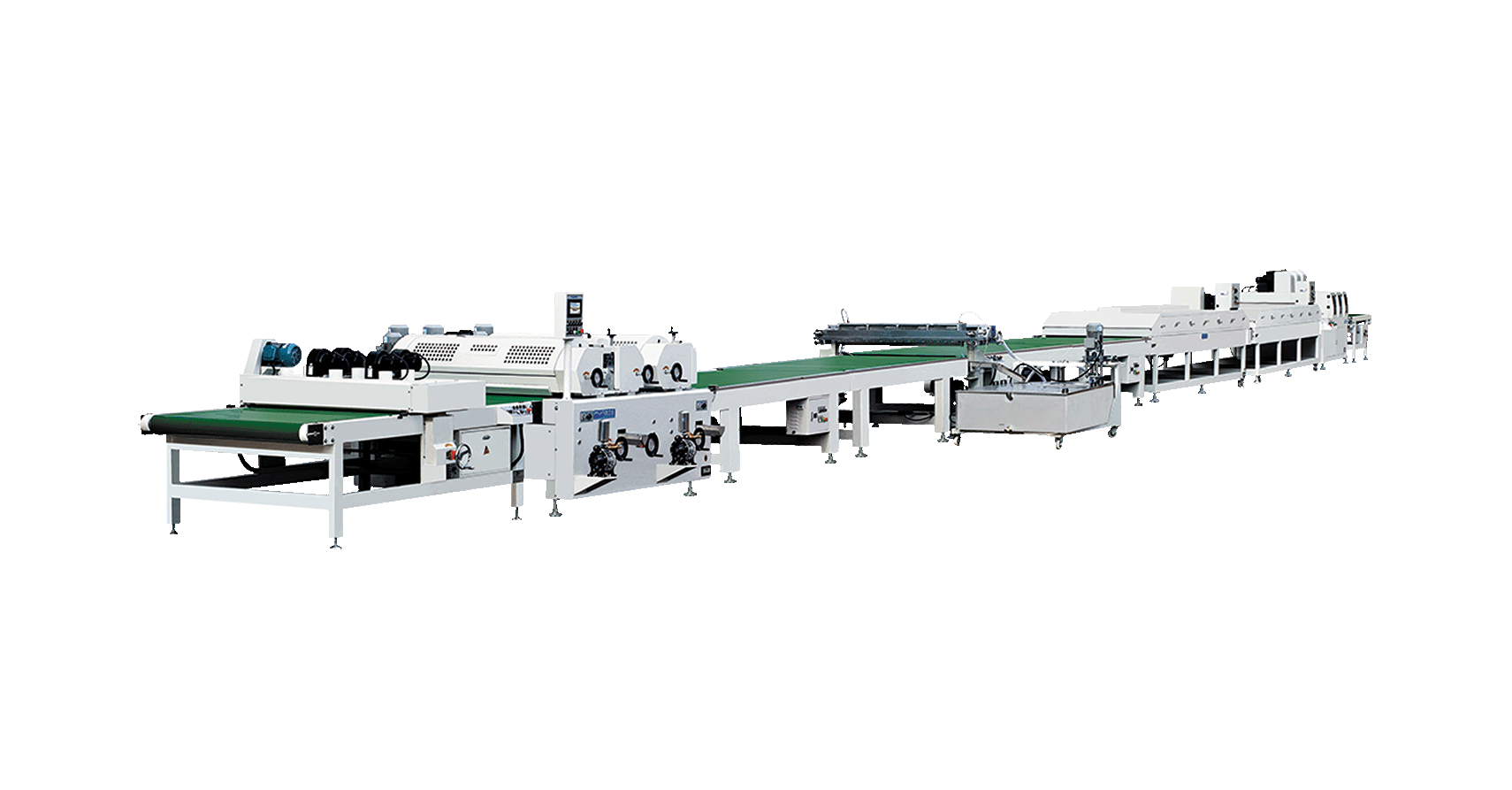
What Is the Principle of Auto Coating Machine?

Advantages of Short-Cycle Presses in Panel Processing
Application of Soft-Touch (Excimer) Coating in Furniture and Decorative Materials
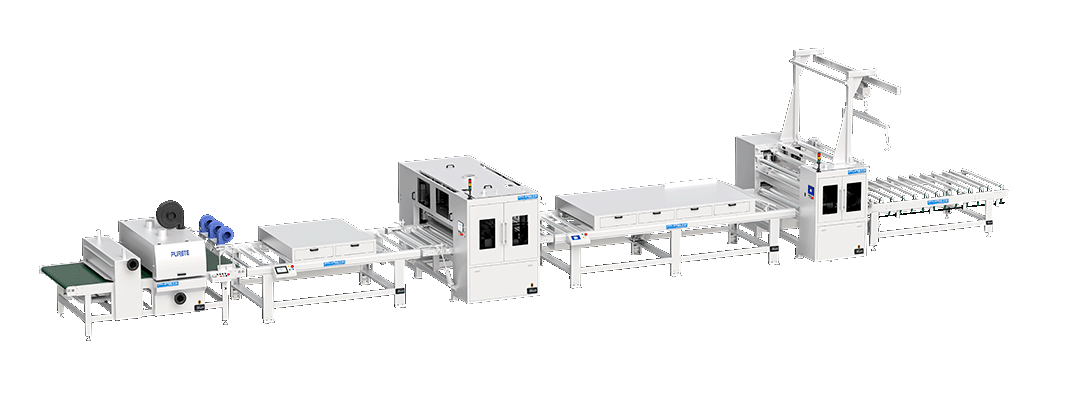
Which Industries Benefit Most from PUR Laminating?
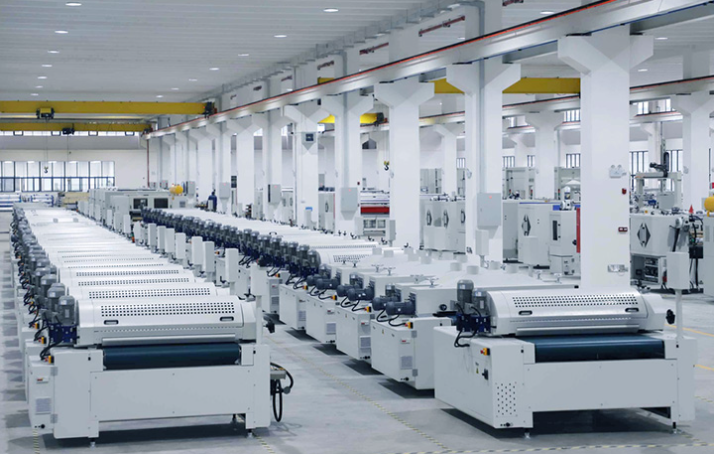
What Is the Principle of Roller Coating Machine?
How Does PUR Laminating Compare to Solvent-Based Lamination in Terms of Cost?
Global Surface Finishing Market Analysis and Development Trends


