

Soft-Touch Melamine Panels with Short-Cycle Pressing
 July 30, 2026
 Hits:264second
Introduction
Standard short-cycle pressing is widely used for melamine-faced panels, but demanding dark woodgrains, open-pore patterns, deep embossing and synchronized textures can expose small differences in reflection, texture alignment and tactile quality. Bright points around embossed pores or muted grain definition may be especially visible on premium dark surfaces. For panel manufacturers developing higher-value tactile collections, one possible route is to add a high-end thermo-compression film above the decorative paper and press the layers together in one controlled cycle. The aim is to create a composite surface in which the paper, film, press plate and substrate work together.
Quick Answer
A short-cycle press can produce a softer and more integrated melamine panel surface by adding a high-end thermo-compression film to the decorative paper layup. Under suitable heat, pressure and cycle conditions, the film conforms to the embossed surface and forms a continuous finishing layer. This can suit soft-touch applications that do not require a downstream coating line. The result still depends on actual materials and verified process settings, so trial pressing is essential.
Why Dark Woodgrain Pressing Shows Surface Defects
Highlights Around Embossed Pores
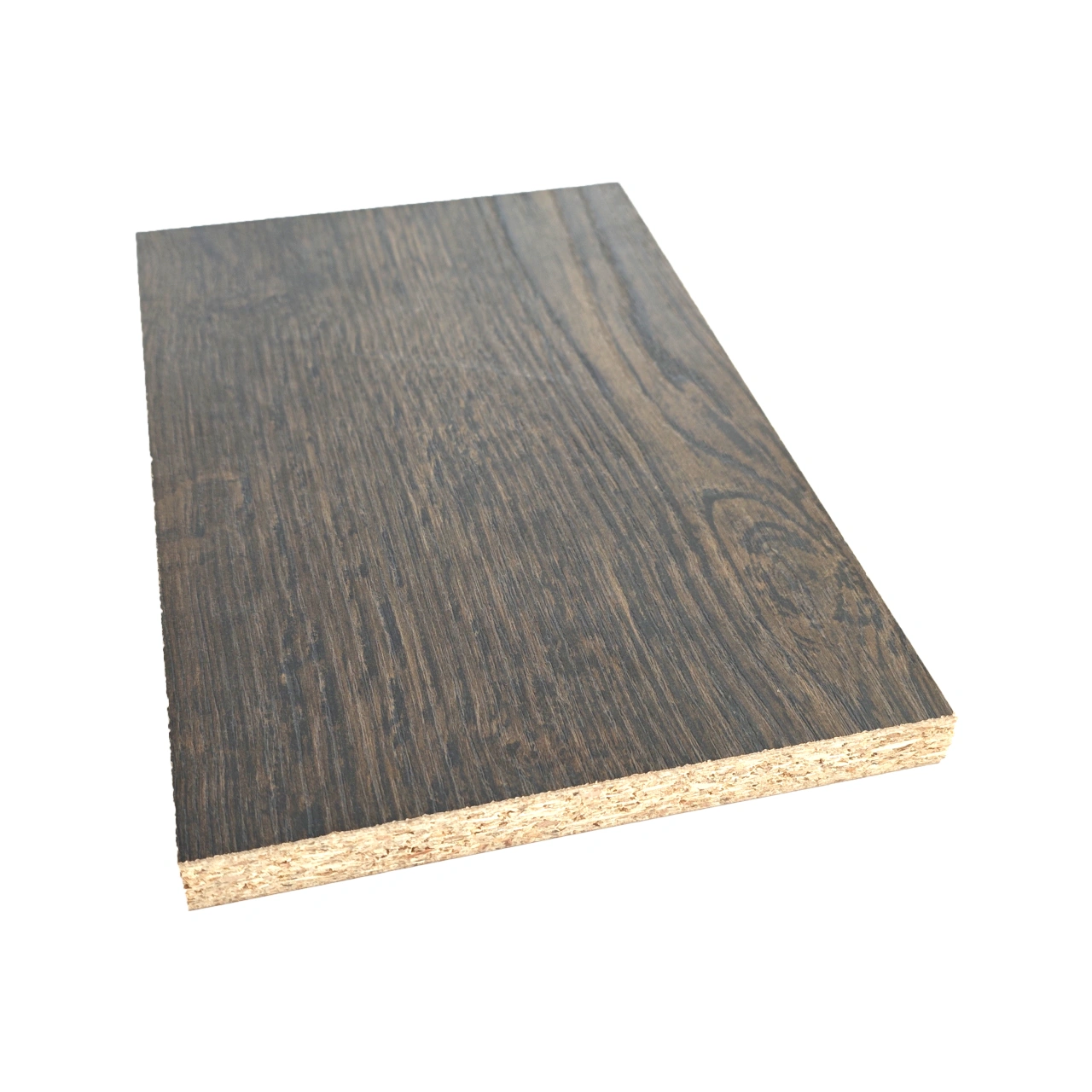
Dark colors and open woodgrain patterns make local reflection easier to see. If the surface layer does not follow the embossed structure evenly, pore edges and deep channels may reflect more light than the surrounding area. Visibility depends on the paper, resin distribution, press plate, lighting and finish standard.
Muted Woodgrain Definition
Woodgrain depth is not created by pressure alone. The printed pattern, decorative paper, embossed steel plate and surface layer must support the same visual direction. When the printed grain and physical texture do not correspond, the panel can look flat or artificial. Synchronized texture requires the embossed structure to align closely with the printed pattern.
Fingerprints and Uneven Tactile Feel
A refined touch is also a material-system result. Fingerprint resistance, stain behavior, abrasion resistance and tactile uniformity depend mainly on the selected surface materials and verified panel performance, not on the press alone.
How Composite Pressing Changes the Layup
A conventional layup commonly includes balancing paper, a wood-based substrate and decorative face paper. Composite film pressing introduces an additional surface layer. A typical top-side structure may include:
- Panel substrate
- Decorative melamine paper
- High-end thermo-compression film
- Embossed or smooth press plate above the layup
The reverse side may use balancing paper; the final arrangement is project-specific.
Why a Separate Film-Laying Station Matters
Adding film changes more than the material stack. The film must be laid flat without wrinkles or contamination and remain aligned with the decorative paper while entering the press. The laying rhythm must match the loading system and press cycle. The station may need independent film handling, paper-film positioning, dust control and stable transfer into the press.
How Composite Short-Cycle Pressing Works
Material Layup and Alignment
The process starts with a clean panel. The balancing paper, substrate, decorative paper and film are positioned according to the approved layup. Dust, folded edges or movement during feeding can remain visible after pressing.
Where synchronized texture is required, the printed woodgrain must match the steel-plate pattern. Depending on the project, visual scanning, registration marks and precision feeding may control alignment. These are optional configurations.
Heat, Pressure and Embossing
The assembled panel enters the press, where heated platens and the hydraulic system apply the specified cycle. Heat supports bonding and surface formation, pressure brings the layers into controlled contact, and the press plate transfers the required texture.
There is no universal recipe. Panel dimensions, substrate type, paper, film, plate depth and target finish all influence temperature, pressure and dwell time. Deeper embossing may need different pressure conditions, while excessive pressure can deform the substrate.
Film Conformity to Embossed Surfaces
Under the specified heat and pressure conditions, the high-end thermo-compression film conforms to the embossed surface structure and forms a continuous finishing layer. Without supplier data, it should not be described as penetrating every wood pore.
Cooling and Surface Formation
After pressing, the panel is unloaded, cooled and allowed to stabilize. Appearance should be checked immediately and after conditioning. Gloss, texture clarity, adhesion and tactile consistency depend on the complete cycle rather than one parameter in isolation.
Surface Improvements from Composite Pressing
Softer, More Refined Tactile Finish
With compatible materials, the film can create a more continuous surface and a softer touch around embossed details.
Better Dark Woodgrain Definition
The process is relevant to panels where dark color and open grain are central to the design. A suitable film and press-plate combination can support stronger visual depth without adding a separate liquid coating layer.
Fewer Highlights Around Embossed Pores
Because the film follows the embossed structure, it can help reduce abrupt reflection differences around pores and channels. It may minimize visible highlights, but it should not be described as eliminating every bright point under all lighting conditions.
Fingerprint, Stain and Abrasion Performance
These properties must be attributed to the film-paper system and finished-panel tests. Supplier data and verified results should support any anti-fingerprint, stain or abrasion claims.
Composite Pressing vs Melamine and Excimer Coating
| Factor | Conventional Melamine Pressing | Composite Film Pressing | Excimer Coating |
|---|---|---|---|
| Surface formation | Decorative paper pressed onto the panel | Paper and thermo-compression film pressed in one cycle | Liquid coating followed by excimer treatment |
| Additional coating stage | Usually not required | May be avoided for selected products | Required |
| Typical surface direction | Standard decorative and embossed surfaces | Refined tactile and functional decorative surfaces | Ultra-matt, soft-touch coated surfaces |
| Main dependency | Paper, press plate and pressing cycle | Film-paper compatibility and pressing cycle | Coating formulation, inert environment, excimer treatment and curing |
| Trial testing | Recommended | Essential | Essential |
Composite film pressing is not a complete replacement for excimer coating because the two processes form the surface in different ways. An excimer coating line applies a liquid coating, carries out excimer treatment under controlled process conditions and then completes curing. For manufacturers whose target finish specifically depends on a liquid coating and excimer treatment, PURETE's F2 Excimer Soft-Touch Production Line follows this coating-based route. Composite pressing is therefore an alternative only when a pre-manufactured surface film can meet the required appearance and performance.
What to Verify Before Mass Production
Film and Decorative Paper Compatibility
Trial panels should be checked for unstable adhesion, discoloration, whitening, bubbles, uneven appearance, unclear texture and edge defects. Tests must use the actual paper and film combination intended for production.
Press Plate and Texture Compatibility
The plate structure, texture depth and surface condition influence film conformity and light reflection. For synchronized texture, the steel-plate pattern must correspond with the printed grain and the feeding method must prevent movement after registration.
Temperature, Pressure and Cycle Settings
Settings should be developed through controlled trials and recorded with the substrate, paper batch, film batch, press plate and observed result. A successful recipe still requires verification for another board size or material batch.
Panel Substrate Quality
Flatness, moisture condition, density uniformity, thickness tolerance and cleanliness affect the result. A premium surface film cannot compensate for a visibly uneven, contaminated or unstable substrate.
Trial Pressing and Surface Testing
Before approval, manufacturers should define relevant tests, such as appearance, gloss, adhesion, scratch or abrasion behavior, fingerprint and stain evaluation, registration accuracy, and stability after cooling. Acceptance criteria should be agreed by the manufacturer, film supplier and technical team.
When Composite Pressing Is Suitable
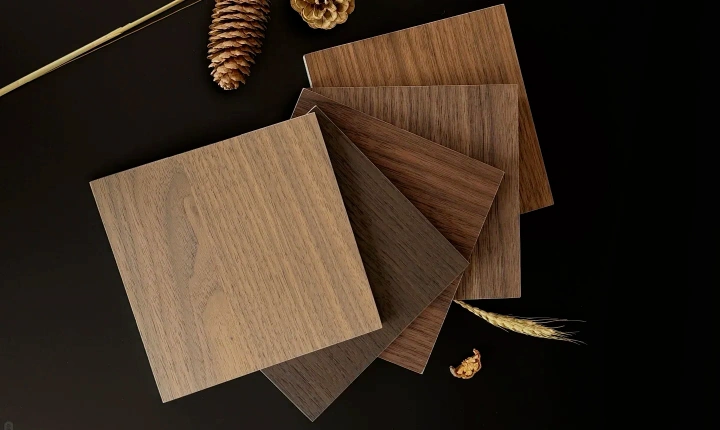
This route is relevant to melamine-faced panel manufacturers, decorative board factories, furniture panel suppliers and whole-house customization producers developing premium dark-grain or tactile collections. Applications include dark woodgrain, open-pore and deeply embossed panels, soft-touch boards and selected anti-fingerprint products.
It is not automatically suitable for every paper, film, steel plate or substrate. It is not the right route when the target depends specifically on liquid coating and excimer treatment. Selection should begin with the panel specification, not the assumption that film improves every design.
How PURETE Integrates Composite Pressing into a Short-Cycle Press Line
For panel manufacturers planning to produce this surface at scale, the main question is not simply which press to select. The decorative paper and high-end thermo-compression film must be laid accurately, remain aligned during transfer, enter the press without wrinkles or contamination, and move through cooling and inspection at a cycle that matches the factory's production target.
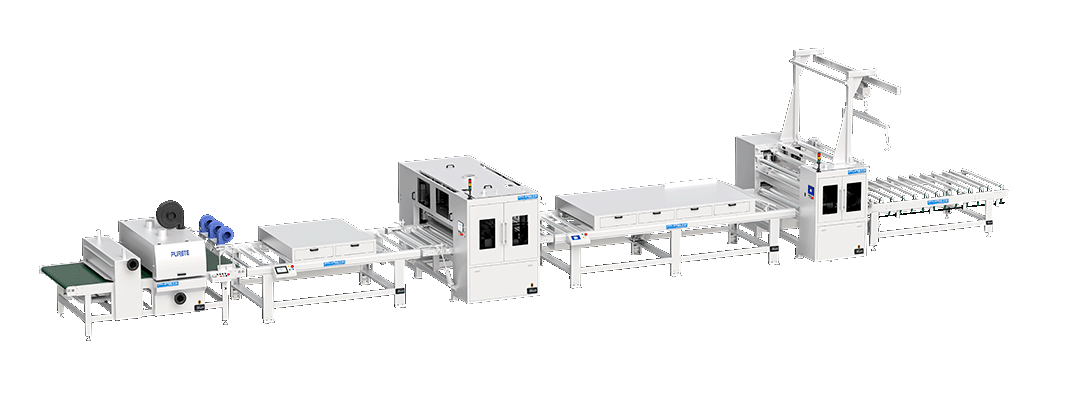
PURETE configures composite short-cycle pressing solutions around the customer's actual substrate, decorative paper, film, press plate and required surface effect. Depending on the verified process, the line may include independent paper and film laying, precision positioning, automatic loading, short-cycle pressing, cooling, inspection and stacking.
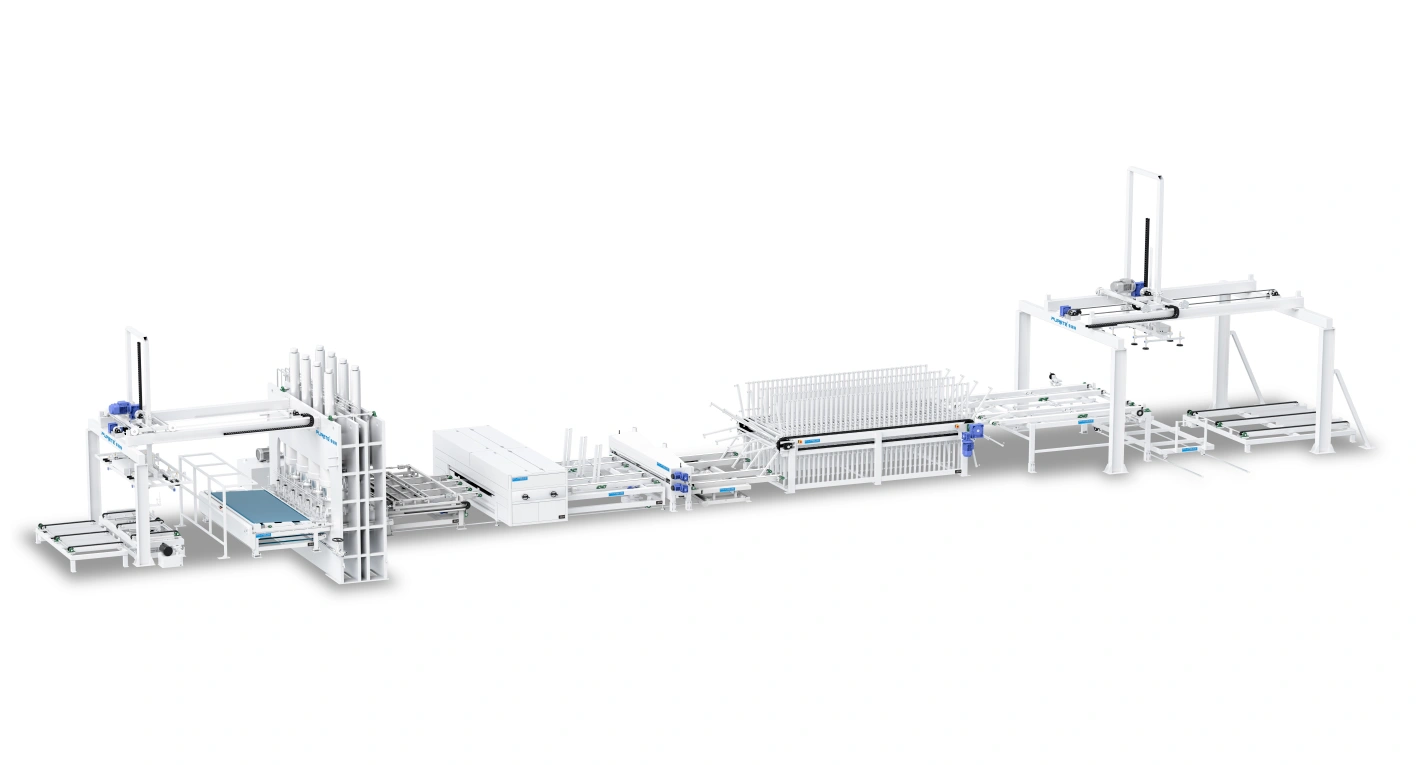
For MDF, particleboard, plywood or HDF panel production, PURETE's SCP3 Short-Cycle Pressing Production Line can provide the base platform for decorative and impregnated paper pressing, with the final texture formed by the selected press plate. Where a project requires longitudinal feeding, automatic double-sided paper laying, larger-format handling or double-sided inspection, a configuration based on PURETE's 4700T Vertical Short-Cycle Press Line may be considered.
Neither line should be treated as a fixed off-the-shelf package for every film-pressing project. PURETE first uses the intended substrate, paper, film and press plate to verify the surface result. The trial data then determines whether the process is suitable and which positioning, loading, pressing, cooling and inspection modules are actually required.
Conclusion
Composite short-cycle pressing is not simply the addition of another film layer. The finished surface depends on the interaction of the substrate, paper, high-end thermo-compression film, press plate, positioning method and pressing cycle. With compatible materials, the process can create a softer tactile finish, improve dark woodgrain definition and reduce unwanted highlights around embossed pores without adding a complete downstream coating line. For manufacturers evaluating this route, PURETEuses trial pressing to verify the material combination before the production-line configuration is finalized.
FAQ
Is High-End Thermo-Compression Film Compatible with All Melamine Papers?
No. Compatibility depends on the decorative paper, film formulation, resin system, press plate and process settings. The actual materials must be trial pressed.
Can Composite Pressing Replace Excimer Coating?
Not completely. It can be an alternative for selected soft-touch decorative panels, but it does not reproduce every appearance or performance property of an excimer-coated surface.
Can an Existing Short-Cycle Press Be Upgraded for Film Pressing?
Possibly. The answer depends on the press structure, layup system, feeding method, controls and available cycle time. A separate film-laying station and positioning equipment may be required.
What Should Be Tested Before Mass Production?
The production team should verify appearance, gloss, adhesion, texture clarity, abrasion or scratch behavior, fingerprint resistance, stain resistance and stability using the exact substrate, paper, film and press-plate combination.
To evaluate the process, prepare the intended panel substrate, decorative paper, high-end thermo-compression film, press plate requirements and target surface standard. PURETE can then use these materials for trial pressing and line-configuration assessment.
What Is the Principle of Auto Coating Machine?

Advantages of Short-Cycle Presses in Panel Processing
Application of Soft-Touch (Excimer) Coating in Furniture and Decorative Materials
Which Industries Benefit Most from PUR Laminating?
What Is the Principle of Roller Coating Machine?
How Does PUR Laminating Compare to Solvent-Based Lamination in Terms of Cost?
Global Surface Finishing Market Analysis and Development Trends


