

What Is Reciprocating Spray Technology and How Does It Work?
 June 30, 2026
 Hits:507second
Introduction
In industrial finishing, coating quality depends on stable gun movement, controlled material output, and a production flow that matches the required finish. Manual spraying can handle flexible work, but it is difficult to keep the same speed, distance, and overlap across long shifts. A reciprocating spray machine improves this process by moving spray guns in a controlled back-and-forth path within an automatic spray painting line. For suppliers such as PURETE, this equipment is usually part of a complete spray coating system connected with conveyors, spray booths, drying sections, and loading or unloading units.
Quick Answer
Reciprocating spray technology uses a moving arm or frame to drive spray guns repeatedly across the workpiece surface. The system controls spray stroke, gun speed, spray distance, coating output, and conveyor movement to improve coating consistency. It is commonly used in furniture, board, metal, and plastic manufacturing where products require repeatable finishing in batch production.
What Is Reciprocating Spray Technology?
Reciprocating spray technology is an automated coating method based on repeated linear motion. During production, the spray gun moves back and forth while the product passes through the spraying area. This controlled motion replaces unstable manual hand movement with a repeatable mechanical process.
A reciprocating spraying machine is suitable for products with regular shapes and repeated production batches. Typical workpieces include cabinet doors, furniture panels, wooden boards, metal sheets, equipment covers, and plastic parts with accessible surfaces.
In factory use, the machine works as part of a larger spray coating system. Final coating quality depends not only on gun movement, but also on coating supply, booth airflow, conveyor speed, overspray control, and drying capacity.
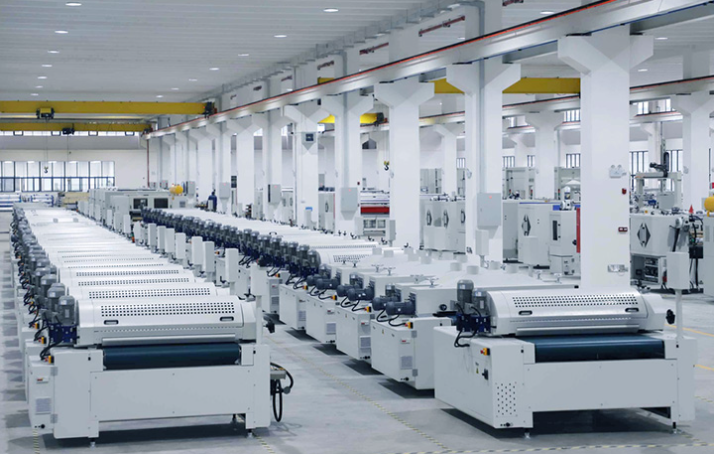
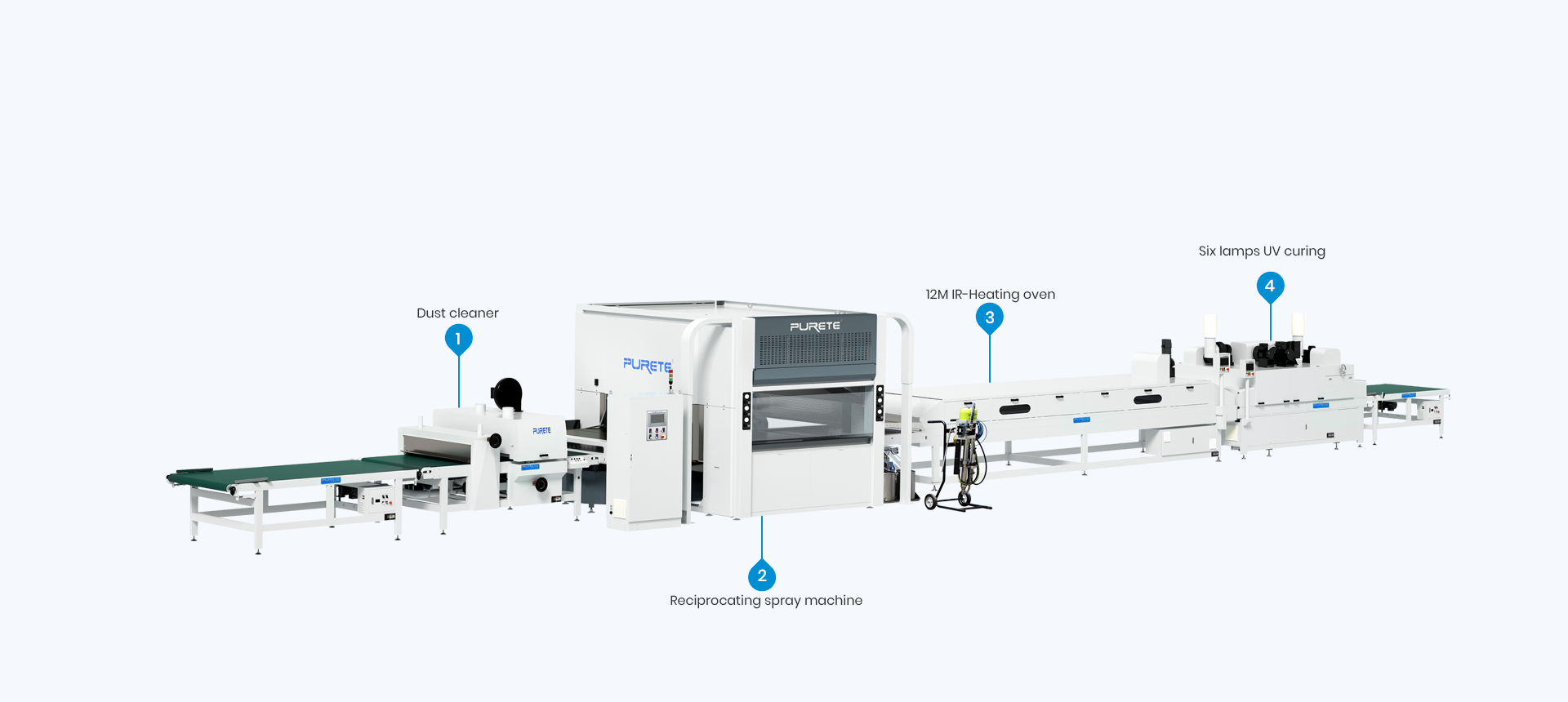 PURETE Reciprocating Spray Painting Production Line
How Reciprocating Spray Painting Works
In a typical automatic spray painting process, the workpiece enters the spray booth through a conveyor. Sensors or positioning devices help define the product size and spraying range. The reciprocating unit then moves one or more spray guns across the surface according to preset parameters.
Key process variables include stroke length, reciprocating speed, conveyor speed, spray distance, gun angle, coating flow, and atomizing pressure. These variables must work together. If the conveyor speed is too high, coating coverage may be insufficient. If the gun movement is too slow, coating may become too thick in overlap areas.
A stable setup also needs booth ventilation, overspray control, and drying capacity. Reciprocating spray equipment is therefore not only about gun motion. It is about keeping the whole coating process balanced from product entry to final drying.
Key Components of a Reciprocating Spray System
A reciprocating spray system usually includes a moving arm or frame, spray guns, control cabinet, conveyor, spray booth, coating supply system, filtration unit, and drying or curing equipment.
The reciprocating mechanism controls the path of the spray gun. A single-arm system may be enough for narrow workpieces, while wider panels may require multiple guns or a two-arm structure. The goal is to cover the surface evenly without excessive overlap.
Spray guns affect atomization, coating distribution, and finish appearance. Gun selection depends on coating type, viscosity, required film thickness, and product material.
The conveyor controls product flow through the spray area. Its speed must match spray movement and downstream drying capacity. If the drying section cannot keep pace, the production line may still face bottlenecks even when the spraying machine runs well.
Advantages of Reciprocating Spraying
The main advantage of reciprocating spraying is repeatability. Once the spray path, speed, distance, and coating output are set correctly, the system can repeat the same spraying action across many products. This reduces variation caused by operator fatigue or different manual spraying habits.
Another advantage is coating efficiency. Manual spraying often creates uneven overlap and unnecessary overspray. A reciprocating spray machine can make the spray path more predictable, which may reduce coating waste when product shape and process parameters are suitable.
The system also supports more stable production planning. For factories producing furniture parts, panels, doors, or metal components in repeated batches, stable coating quality can reduce sanding, repainting, rework, and inspection pressure.
Labor reduction is another practical benefit. The machine does not remove all manual work, because setup, cleaning, loading, inspection, and maintenance are still required. However, it reduces dependence on highly skilled sprayers for repetitive coating tasks.
Applications in Furniture and Metal Manufacturing
In furniture manufacturing, reciprocating spray technology is used for cabinet doors, wardrobe panels, wooden boards, table parts, chair parts, and decorative panels. These products often require consistent film thickness, surface smoothness, and gloss control.
In board and panel finishing, the machine can be integrated with dust cleaning, conveyors, drying tunnels, and unloading equipment. This allows the factory to build a continuous finishing process instead of treating spraying as a separate manual station.
In metal manufacturing, reciprocating spraying can be used for sheet metal parts, equipment covers, frames, aluminum components, and fabricated products. These parts may need primer, protective coating, or decorative finish. The system should be configured according to coating material, surface preparation, product weight, and curing requirements.
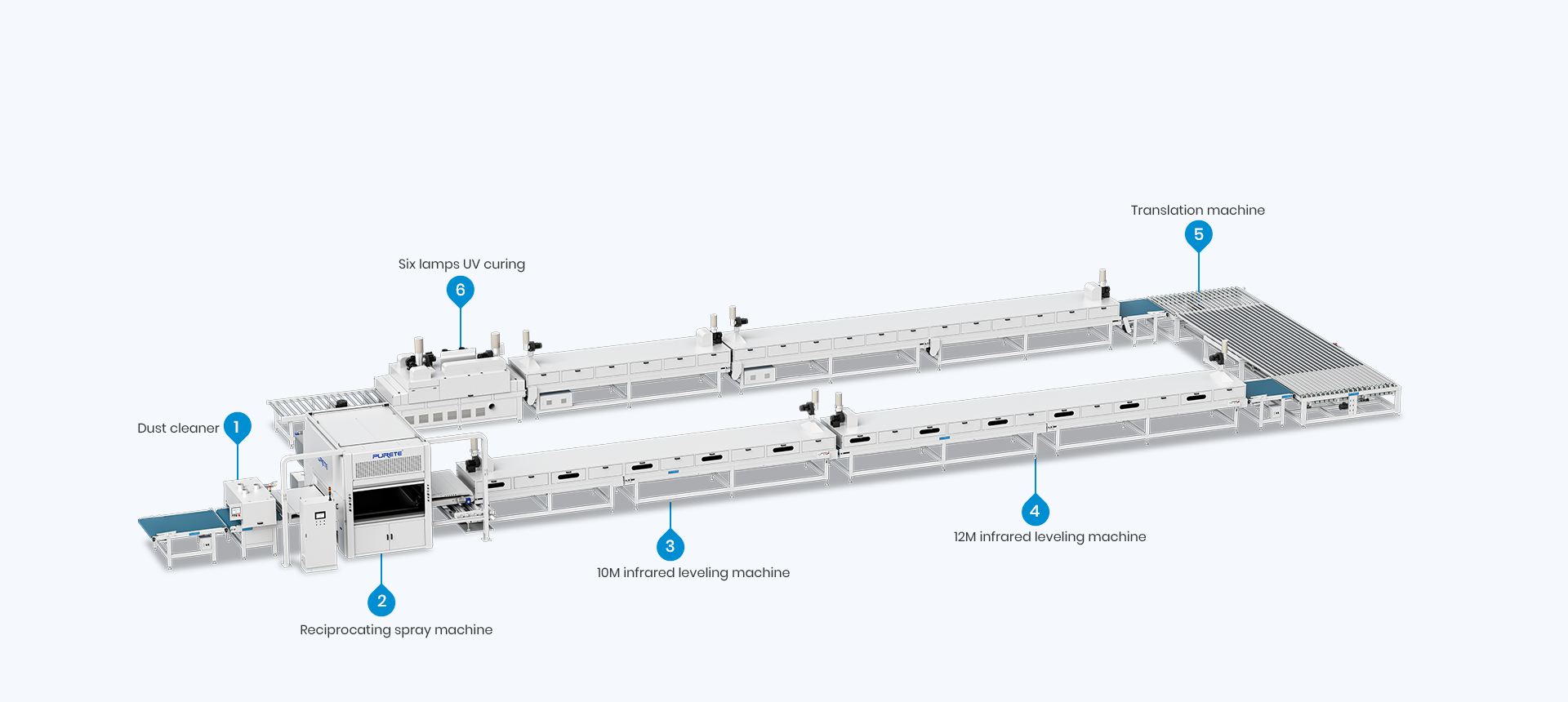 PURETE P4 PU/UV + Water-Based Reciprocating Spray Production Line
Plastic components can also use reciprocating spraying when the surface is suitable for controlled gun movement. For complex three-dimensional products, factories may need robotic spraying, special fixtures, or manual touch-up.
Reciprocating vs. Conventional Spray Painting
Conventional spray painting usually refers to manual spraying in a booth. Its strength is flexibility. Skilled workers can adjust gun movement quickly when product shapes change or when the factory handles small custom batches.
The main limitation is consistency. Manual spraying depends on worker skill, experience, and physical condition. Film thickness, edge coverage, gloss, and overspray may vary between workers and shifts.
Reciprocating spraying is better for repeated production. It standardizes gun movement and helps factories control the coating process more easily. The tradeoff is that the system requires setup, parameter testing, and product matching before stable production.
Compared with robotic spray painting, reciprocating systems are usually simpler and more cost-effective for flat or regular products. Robotic systems are better for complex shapes, multi-angle spraying, and detailed path programming.
When to Choose Reciprocating Spray Technology
A factory should consider reciprocating spray technology when it has repeated product categories, stable batch production, and clear coating quality requirements. It is especially suitable when manual spraying creates problems in consistency, labor cost, or production speed.
Product shape is the first selection factor. Flat panels, doors, boards, sheet metal parts, and regular components are good candidates. Products with deep cavities, complex curves, or hidden surfaces may require robotic spraying or manual repair.
Production volume is the second factor. If a factory only handles small custom orders, manual spraying may still be more practical. If repeated batches run every day, automation can improve process stability and reduce rework.
Line integration is the third factor. The machine should match conveyor speed, booth airflow, coating supply, drying capacity, and factory layout. When evaluating a reciprocating spray machine manufacturer or reciprocating spray machine supplier, buyers should check process design experience, automatic spray painting line integration, and after-sales support.
Conclusion
Reciprocating spray technology is a practical automation method for factories that need repeatable coating quality and stable production flow. A reciprocating spray machine improves automatic spray painting by controlling gun movement, spray overlap, and coating rhythm.
Its value is strongest when it is integrated into a complete spray coating system. For furniture, board, metal, and plastic manufacturing, the key decision is whether the equipment fits product shape, batch size, coating material, conveyor layout, and drying process.
FAQ
What is a reciprocating spray system?
A reciprocating spray system is an automated coating system where spray guns move back and forth across the workpiece surface. It usually includes a reciprocating unit, spray guns, conveyor, booth, coating supply system, control cabinet, and drying or curing equipment.
How does reciprocating spraying improve coating efficiency?
It improves coating efficiency by making spray movement, gun distance, and overlap more consistent than manual spraying. This can reduce unnecessary overspray and improve coating distribution.
What types of products benefit most from reciprocating coating?
Products with repeated shapes and batch production benefit most, including furniture panels, cabinet doors, wood boards, decorative panels, metal sheets, equipment covers, and plastic parts.
Is reciprocating spraying more cost-effective than manual spraying?
It can be more cost-effective when production volume is stable and quality requirements are consistent. Savings usually come from reduced rework, lower dependence on skilled manual spraying, and more stable production flow.
Can reciprocating systems be integrated into automated production lines?
Yes. Reciprocating systems can be integrated into automatic spray painting lines with conveyors, loading equipment, spray booths, drying ovens, curing tunnels, and unloading sections.
What Is the Principle of Auto Coating Machine?

Advantages of Short-Cycle Presses in Panel Processing
Application of Soft-Touch (Excimer) Coating in Furniture and Decorative Materials
Which Industries Benefit Most from PUR Laminating?
What Is the Principle of Roller Coating Machine?
How Does PUR Laminating Compare to Solvent-Based Lamination in Terms of Cost?
Global Surface Finishing Market Analysis and Development Trends


