

Continuous Coating Line vs Batch Coater: Which Production Mode Fits Your Factory?
 March 30, 2026
 Hits:891second
Choosing between a continuous coating line and a batch coater is rarely a simple equipment decision. In real manufacturing projects, the better option depends on how your factory runs today, what kind of products you make, how often you change specifications, and whether your growth plan is based on scale, flexibility, or both.
In many industrial coating applications, buyers initially compare these two systems by speed or price. That is understandable, but it is not enough. In practice, the more important questions are usually about effective output, process stability, changeover losses, labor structure, utility readiness, and long-term cost per unit.
This guide explains where continuous lines usually perform better, where batch systems are often more economical or flexible, and why the right answer depends on substrate type, coating method, drying requirements, and production profile rather than machine category alone. If you are still defining your project scope, it also helps to review a broader coating line buying guide before requesting quotations.
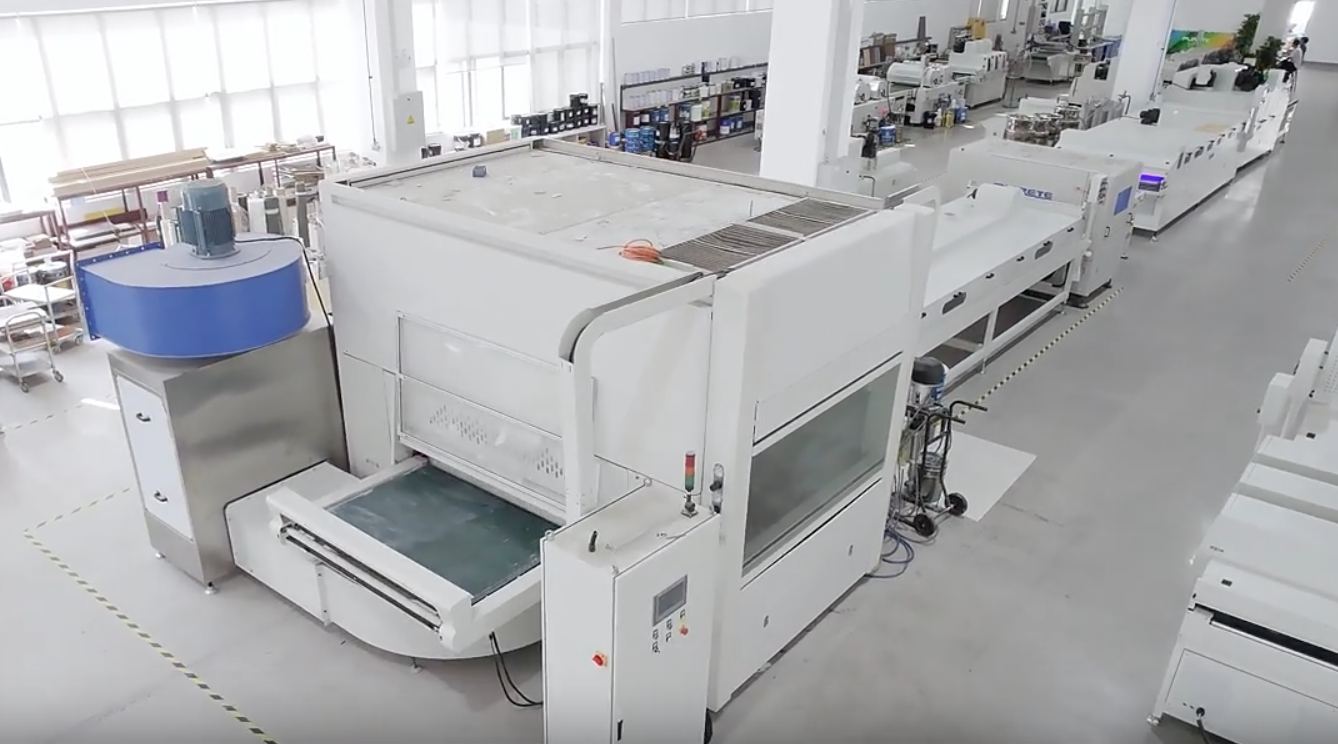
What Is the Difference Between a Continuous Coating Line and a Batch Coater?
The basic difference is straightforward: a continuous coating line processes material in an uninterrupted inline flow, while a batch coater processes material in separate production lots. However, the technical and commercial implications of that difference can vary significantly depending on the process.
What is a continuous coating line?
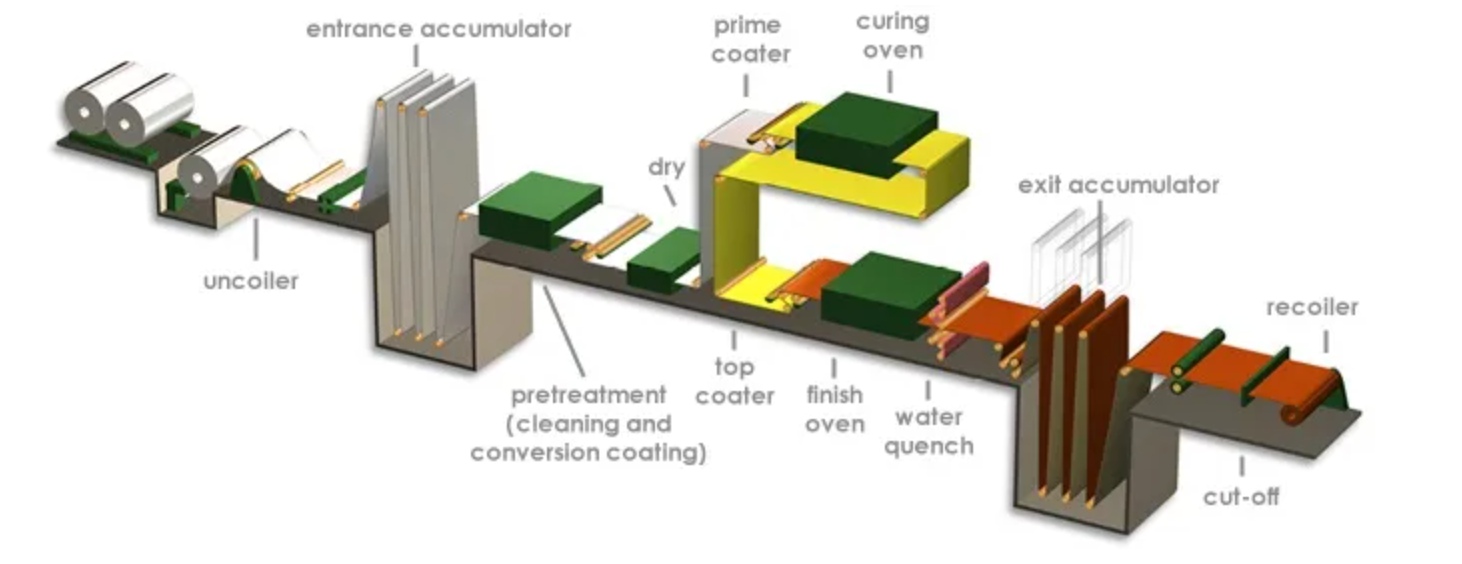
A continuous coating line is typically an integrated web or material handling system in which the substrate moves through coating, drying, curing, cooling, and winding in sequence. In many roll-to-roll coating line applications, this type of system is designed for longer production runs and more stable operating conditions.
In standardized production environments, a continuous line often offers:
- better utilization during long runs
- stronger automation integration
- lower interruption frequency
- more stable process conditions once steady state is reached
- lower unit cost when utilization is high enough
That said, these advantages depend on the line being well matched to the coating chemistry, drying design, substrate behavior, and target production volume. For projects requiring higher integration and long-run efficiency, a dedicated continuous coating line is often the starting point for evaluation.
What is a batch coater?
A batch coater processes material one lot at a time. Each batch may involve loading, setup, coating, processing, unloading, cleaning, and resetting before the next run begins. This production mode is often more practical where product variety is high or process switching is frequent.
In many smaller-scale or mixed-product environments, batch systems are often chosen because they can support:
- more frequent recipe changes
- shorter production runs
- easier testing or pilot work
- lower initial project risk
- more flexible scheduling
However, batch production is not automatically the better choice for every low-volume factory. The final fit still depends on how often products change, how tight the quality requirements are, and how much process control is needed. For factories prioritizing flexibility, a batch coater may be more practical during the early stage of project planning.
A realistic takeaway
As a general rule, continuous lines are often better suited to stable, higher-volume, lower-mix production, while batch coaters are often more practical in smaller-batch, higher-mix, or validation-stage manufacturing. But the final decision should always be based on your actual process conditions rather than on broad equipment labels.
How Do Continuous and Batch Production Modes Organize Manufacturing Differently?
The difference between the two systems is not only mechanical. It is also operational. In real projects, the production mode affects how time is spent, where downtime occurs, how operators intervene, and how output should be measured.
Continuous operation is designed around flow efficiency
A continuous line is built to move material through the process with minimal interruption. In applications with stable products and long runs, this can reduce the production time lost to repeated stopping and restarting.
In many factories, that can improve:
- line utilization over long shifts
- consistency once the process reaches steady state
- integration with upstream and downstream equipment
- output planning for repeat orders
However, this advantage is strongest when the factory can keep the line running under relatively stable conditions. If product changes are frequent, the theoretical efficiency advantage may narrow in practice.
Batch operation is designed around segmented control
A batch coater organizes production by separate lots. This usually creates more setup time between runs, but it also allows more controlled switching between different products, recipes, or process settings.
This can be beneficial when the factory handles:
- frequent changeovers
- variable materials
- custom or trial production
- shorter order cycles
- process development work
The trade-off is that batch production often sacrifices some throughput efficiency to gain flexibility and lot-by-lot control.
Why this matters in equipment selection
In actual factory planning, the gap between rated speed and effective output is often larger than buyers expect. That gap is shaped by setup time, cleaning, changeovers, inspection pauses, startup losses, and utility constraints. For this reason, production mode should be evaluated through real operating behavior, not equipment brochures alone.
Which System Usually Offers Higher Production Capacity?
In many standard industrial applications, a continuous coating line can deliver higher total output than a batch coater. But higher capacity only creates value if the factory can use it efficiently.
Continuous lines often perform better in high-volume, repeat-order environments
Where production demand is stable and specifications do not change often, continuous lines usually provide stronger output efficiency. This is mainly because they reduce repeated interruptions and support longer steady-state operation.
That tends to be an advantage in factories with:
- stable monthly demand
- larger repeat orders
- fewer SKU changes
- stronger pressure to reduce unit cost
- sufficient utilities and plant readiness for continuous production
In these cases, continuous production may improve both throughput and long-run cost efficiency.
Batch coaters may be more economical in mixed or inconsistent demand conditions
A batch coater may have lower nominal throughput, but it can still be the better business choice if the production profile includes frequent product switching or smaller order volumes. In such cases, maximum speed may matter less than practical scheduling efficiency.
This is often true when a factory has:
- fluctuating demand
- many low-volume SKUs
- frequent trials or product validation work
- customer-specific production requirements
- uncertain medium-term growth visibility
Under those conditions, the real value of the equipment comes from flexibility and risk control rather than from raw output.
Capacity should be measured in context
When comparing systems, buyers should look at:
- Rated capacity under ideal conditions
- Effective capacity after changeovers, cleaning, and downtime
- Capacity utilization based on actual order patterns
In many real projects, effective output matters far more than catalog speed. If your operation requires a broader evaluation of throughput and process layout, it is also useful to compare available coating machine solutions before final selection.
Which Production Mode Is Better for Changeovers and Product Mix?
This is one of the most important selection questions, especially in industries where product variety affects profitability more than maximum speed.
Continuous lines usually work best when product variation is limited
A continuous line tends to perform best when the factory runs the same product family for longer periods. In that environment, the line can stay near steady state and avoid repeated transition losses.
This is often beneficial when:
- product widths are relatively standardized
- coating weight targets do not change often
- recipe switching is limited
- long runs are commercially common
- planning stability is strong
In these conditions, the efficiency advantage of continuous production is easier to realize.
Batch systems are often more practical when changeovers are frequent
A batch coater is often easier to manage when the factory changes products regularly. This may include different substrates, chemistries, colors, coating weights, or performance specifications.
That often makes batch systems a practical fit for:
- short-run production
- custom orders
- product development work
- pilot manufacturing
- mixed weekly production schedules
Still, not every high-mix factory should automatically choose batch equipment. Some advanced continuous systems can also be configured for faster changeovers, especially when product families are related and process windows are well controlled.
A more accurate buying rule
If your commercial model depends on long, repeatable production runs, a continuous line is often the better fit. If it depends on frequent switching across different products, a batch coater is often more manageable and more economical. The key is to compare how you make margin, not only how fast the equipment runs.
How Do the Two Systems Differ in Automation and Labor Requirements?
Automation level is an important comparison point, but it should be evaluated carefully. Higher automation does not automatically mean lower total labor demand. In many cases, it means lower manual intervention per unit of output, but higher requirements for process control, maintenance, and technical support.
Continuous lines often support deeper system integration
A modern continuous line can often integrate multiple process controls into one operating system. Depending on the application, this may include:
- web handling automation
- closed-loop tension or speed control
- inline thickness monitoring
- recipe management
- centralized HMI operation
- data collection and traceability
This is especially valuable in factories that prioritize repeatability, compliance, and scalable output management.
Batch systems often rely more on operator intervention between lots
In many real production environments, batch systems involve more manual setup and operator-driven adjustment between runs. That can be a disadvantage in some factories, but it can also be useful where product variation is high and process flexibility matters more than continuous automation.
Batch systems are often preferred when:
- frequent manual adjustment is acceptable
- product variety makes rigid automation less practical
- the project budget is more limited
- the operation benefits from lot-by-lot control
- pilot or development work is part of daily production
What manufacturers should evaluate internally
Before choosing a system, buyers should assess:
- whether labor availability is becoming a bottleneck
- whether operator consistency affects quality performance
- whether the plant can support automated controls reliably
- whether maintenance capability matches system complexity
The practical question is not “Which system uses less labor?” but “Which system fits our workforce and operating model better?”
Which System Usually Delivers More Stable Quality?
This is one of the areas where oversimplification causes the most confusion. A continuous coating line is not automatically higher quality, and a batch coater is not automatically less stable. The more accurate question is: Which system can maintain more consistent output under your specific process conditions?
Continuous lines often provide stronger consistency in stable long-run production
Where a line can run for long periods under steady conditions, continuous coating often provides stronger output uniformity. Once the process is stabilized, it may be easier to maintain:
- coating weight consistency
- line speed stability
- drying or curing repeatability
- stage-to-stage synchronization
- lower variation across long production runs
This is one reason why continuous lines are often preferred in standardized, large-volume web coating applications.
Batch systems can also achieve high quality, but control discipline matters more between lots
A well-designed batch coater with strong procedures, trained operators, and suitable process controls can absolutely deliver high-quality coating. However, batch-to-batch repeatability is often more sensitive to:
- setup accuracy
- startup conditions
- cleaning quality
- operator adjustments
- lot handling consistency
The most realistic conclusion
Continuous lines often have an advantage in uniformity during long, stable production runs, while batch systems can perform very well in controlled smaller-lot production when operating discipline is strong. Final quality performance depends heavily on coating method, formulation, substrate behavior, equipment design, and inspection standards. If your products require stricter process consistency, reviewing a supplier’s technical support and validation capability is just as important as comparing the machine itself.
How Do the Cost Structures Differ?
Cost is one of the most misunderstood comparison points because many buyers focus on machine price first and operating economics second. In coating projects, that can be a costly mistake.
Batch systems often involve lower initial investment in standard configurations
In many standard applications, batch coaters have a lower upfront cost because the system scope is smaller and integration demands may be lighter.
This is often true when:
- the required automation level is modest
- the line width or speed is limited
- utilities are simpler
- workshop adaptation is minimal
- the project is intended for pilot or flexible production
But this should not be treated as a universal rule. A high-specification batch system with tight tolerances, advanced controls, or demanding environmental requirements can also be a significant investment.
Continuous lines may lower cost per unit when utilization is high
A continuous line usually requires a larger initial investment, but it may reduce unit cost over time if the plant can keep the system well utilized. The cost advantage often comes from:
- fewer interruptions
- stronger labor productivity per unit
- lower transition waste
- better output efficiency in long runs
- greater integration of process control
This cost model works best when order volume is high enough to keep the line near effective production levels.
What buyers should compare
A more realistic cost comparison should include:
- capital investment
- installation and plant modification cost
- utility demand
- labor structure
- changeover loss
- scrap or startup waste
- maintenance and service support
- cost per unit at expected utilization
In coating equipment selection, the cheapest quotation is not always the lowest-cost decision. Before comparing suppliers, it is worth reviewing your installation and commissioning requirements as part of the total project budget.
Comparison Table: Continuous Coating Line vs. Batch Coater
The table below summarizes the most common differences. These are general tendencies rather than absolute rules.
| Factor | Continuous Coating Line | Batch Coater |
| Production mode | Inline continuous flow | Separate lot-by-lot production |
| Typical best-fit demand | Higher-volume, repeat production | Smaller-batch, mixed production |
| Changeover handling | Often less efficient for frequent switching | Often more practical for frequent switching |
| Automation integration | Usually higher | Usually moderate, but application-dependent |
| Manual intervention per unit | Often lower at steady state | Often higher between lots |
| Consistency in long runs | Often stronger | More dependent on repeated setup quality |
| Initial investment | Often higher | Often lower in standard projects |
| Cost advantage | Often better at high utilization | Often better at lower scale or higher mix |
| Expansion logic | Better for large-scale throughput growth | Often easier for step-by-step flexible expansion |
This comparison is useful as a starting point, but it should not replace process evaluation, material testing, or project-specific engineering review.
What Technical Factors Should Buyers Confirm Before Requesting a Quote?
One of the most common reasons for poor equipment selection is incomplete input data. Before comparing machine types, the factory should first define its actual process and production requirements.
Key technical factors to confirm
At minimum, buyers should clarify:
- substrate type and thickness range
- coating method
- target coating weight or thickness tolerance
- solvent-based, water-based, hot melt, UV, or slurry system
- drying or curing requirements
- target line speed
- production width
- monthly output target
- number of SKUs and expected changeover frequency
- workshop space, exhaust, heating, and power conditions
These factors directly affect equipment design, process feasibility, safety requirements, and project cost. If your application involves specialty materials, it also helps to compare related process pages such as hot melt coating machine solutions or other application-specific systems on your shortlist.
Why this is critical
In real equipment projects, many selection problems come from trying to choose a line before defining the process. A supplier can only recommend the right system when the production inputs are clear enough to evaluate. This is also why many manufacturers prepare these details before sending an inquiry.
What Are the Most Common Selection Mistakes?
Many buying mistakes happen not because the equipment is poor, but because the decision criteria are incomplete.
Common mistakes buyers make
In many coating projects, problems begin when buyers:
- compare only speed, not utilization
- assume future demand will be stable without evidence
- underestimate changeover loss
- ignore utility and workshop constraints
- compare machine prices without comparing lifecycle cost
- skip sample testing or process validation
These issues can lead to low utilization, unstable quality, or disappointing ROI even when the equipment itself is technically capable.
A more reliable selection approach
The best way to choose is to compare the equipment against actual production behavior: order size, SKU complexity, changeover frequency, quality tolerance, labor conditions, and future demand visibility. In many cases, pilot testing or sample validation is worth the time because it reduces the risk of buying the wrong production model. Buyers who need deeper project support often review a supplier’s projectand factory tour before moving into quotation or layout planning.
Which Factories Are Usually Better Suited for a Continuous Coating Line?
A continuous line is often the better fit for factories where production is standardized enough to justify flow-based manufacturing and long-run optimization.
Typical fit conditions
A continuous line is often suitable when the factory has:
- stable monthly output demand
- repeat orders of similar products
- longer runs and fewer interruptions
- pressure to lower cost per unit at scale
- sufficient technical and utility infrastructure
- a strategy focused on higher automation and long-term throughput growth
This profile is common in mature production environments where repeatability and scale matter more than frequent changeovers.
When an upgrade may make sense
A factory should seriously evaluate a continuous line when:
- current batch production has become a clear bottleneck
- effective output is too low because of repeated restarts
- order patterns have become more stable
- customers require tighter consistency over longer runs
- labor-intensive operation is becoming a competitive weakness
Even then, the upgrade should be based on production evidence, not only on growth expectations. For buyers moving toward higher-capacity projects, a dedicated continuous coating line can be a useful next step in evaluation.
Which Factories Are Usually Better Suited for a Batch Coater?
A batch coater is often the more practical option for factories where flexibility, shorter runs, and staged investment matter more than maximum integrated throughput.
Typical fit conditions
Batch systems are often suitable when the factory has:
- mixed or uncertain order demand
- frequent recipe or product changes
- pilot, trial, or development work
- limited initial project budget
- smaller order sizes
- a need for lot-based control and flexible scheduling
This is common in specialty materials, early-stage product development, and factories serving multiple smaller customer segments.
Why batch systems remain strategically important
Batch systems continue to be relevant because they can reduce entry risk, support testing, and adapt more easily to uncertain demand. For some manufacturers, especially those validating a market or developing new products, that flexibility is more valuable than theoretical maximum throughput. If your project priority is flexible setup rather than full-line automation, comparing a batch coater solution with your application requirements is often the most realistic approach.
How Should Buyers Evaluate a Coating Equipment Supplier?
Production mode selection is only one part of a successful project. Supplier capability also matters, especially where process matching, commissioning quality, and after-sales support affect final performance.
What to look for in a supplier
A capable supplier should be able to discuss:
- coating method suitability
- material and formulation considerations
- drying or curing design implications
- line integration capability
- testing or validation support
- installation and commissioning experience
- operator training and service response
This is important because coating equipment is not only a machine purchase. It is a process implementation project.
Final Recommendation: Which Production Mode Is the Better Fit?
There is no universal answer that applies to every coating project. In many standardized, high-volume applications, a continuous coating line is often the better long-term solution because it can support stronger throughput efficiency, better steady-state consistency, and lower unit cost at high utilization.
In many mixed-product, lower-volume, or development-stage environments, a batch coater is often the more practical solution because it can reduce investment risk, handle frequent switching more easily, and support more flexible production planning.
The right decision depends on your product mix, substrate, coating method, quality tolerance, utilities, labor structure, and demand pattern. For most buyers, the best next step is not to ask which machine category is better in general, but which production mode is more appropriate for the way the factory truly operates. If you are preparing a project inquiry, reviewing both the continuous coating line and batch coater pages can help narrow the technical discussion before contacting the supplier.
FAQ
1. Is a batch coater always better for small factories?
Not always. A batch coater is often more suitable for smaller factories, especially when demand is mixed, budgets are limited, or product changes are frequent. But if a smaller factory has stable, repeat high-volume orders, a compact continuous solution may also make sense.
2. Does a continuous coating line always provide better quality?
No. A continuous line often provides stronger consistency during long, stable production runs, but final quality depends on coating method, material behavior, process control, and equipment design. A well-managed batch process can also achieve high quality.
3. When should a manufacturer upgrade from batch to continuous production?
Usually when batch production has become a clear capacity or consistency bottleneck, demand is stable enough to support longer runs, and the factory can justify the investment with real utilization rather than optimistic forecasts.
4. Which system is easier to expand later?
That depends on what “expand” means. Batch systems are often easier to expand step by step through flexible added capacity. Continuous lines are often better for large-scale throughput growth once production becomes standardized.
What Is the Principle of Auto Coating Machine?

Advantages of Short-Cycle Presses in Panel Processing
Application of Soft-Touch (Excimer) Coating in Furniture and Decorative Materials
Which Industries Benefit Most from PUR Laminating?
What Is the Principle of Roller Coating Machine?
How Does PUR Laminating Compare to Solvent-Based Lamination in Terms of Cost?
Global Surface Finishing Market Analysis and Development Trends


