

Profile Wrapping for Healthcare Interiors: Coordinating Wall Panels, Trims and Grilles
 August 31, 2026
 Hits:214second
In healthcare interiors, the wall panel is only one part of the finished system. The visual quality of a corridor, patient room, reception area or public zone is often decided by the details around it: edge trims, decorative grilles, door surrounds, skirting, transition profiles and inside or outside corners.
These components must work together in color, texture, gloss level, grain direction and edge quality. This is where coating and profile wrapping become complementary production processes.

Profile Wrapping Solutions for Decorative Wall Panels
A wide wall panel may require UV coating, spray coating, PUR lamination or wide-panel wrapping. A narrow trim or shaped grille component may require a profile wrapping machine. The objective is not to force every product through one process, but to create a coordinated product family for the same interior project.
Why Healthcare Wall Systems Need More Than Flat Panels
Healthcare projects often include long, visually continuous surfaces. In a corridor, a wall panel may meet a door frame, corner profile or decorative slatted section several times. In a patient room, the wall finish may connect with furniture panels, headwall components, skirting and service access zones. In a lobby or waiting area, decorative grilles and linear features may be used to create a more welcoming environment.
At each junction, small inconsistencies become visible.
A panel with a warm wood-grain finish may look mismatched if the edge trim has a different grain direction. A corner profile with an uneven overlap can interrupt the visual line of the wall. A decorative grille may appear disconnected if its slats do not match the surrounding panel finish.
For manufacturers, the challenge is therefore not simply producing a wall panel. It is coordinating the complete surface system.
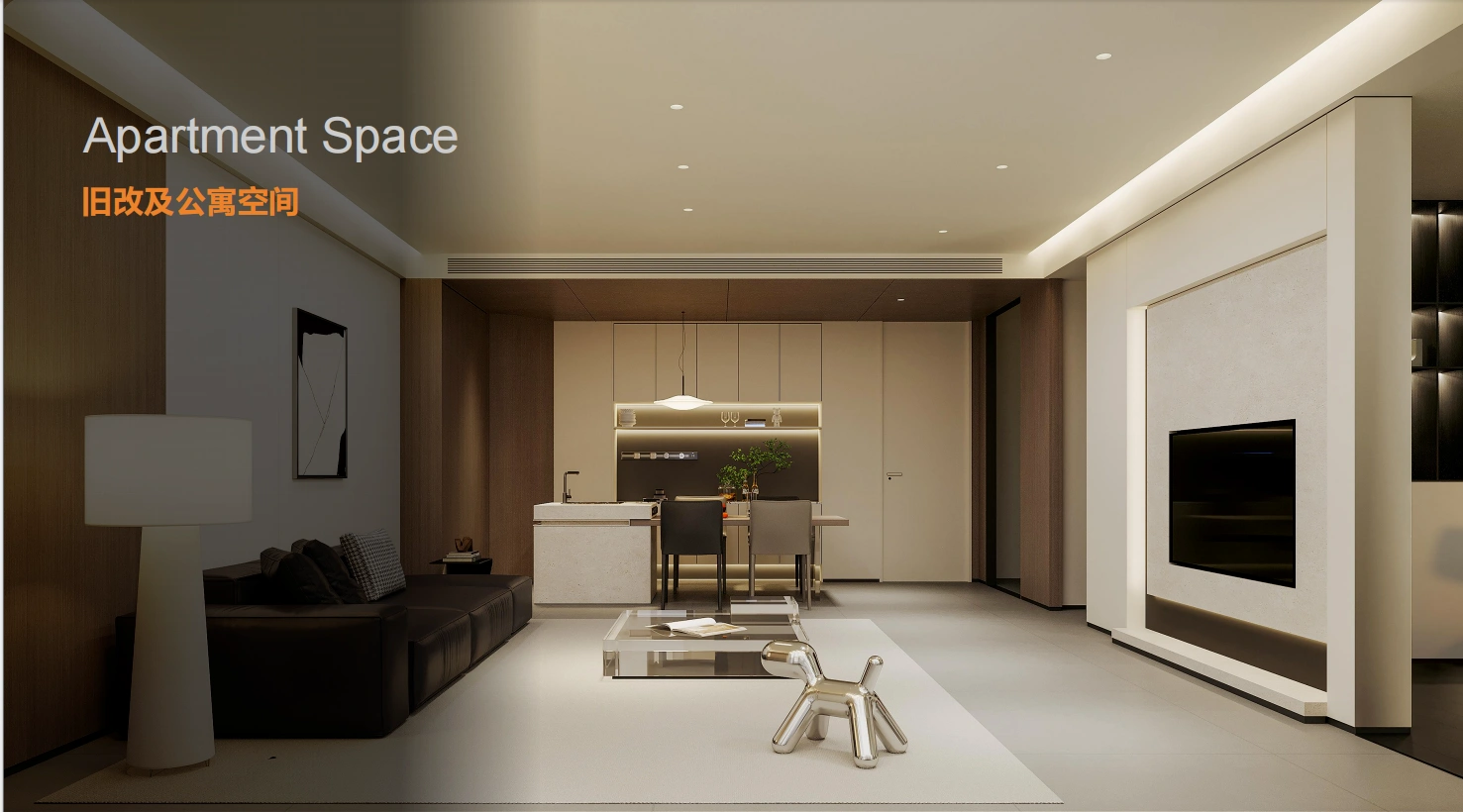
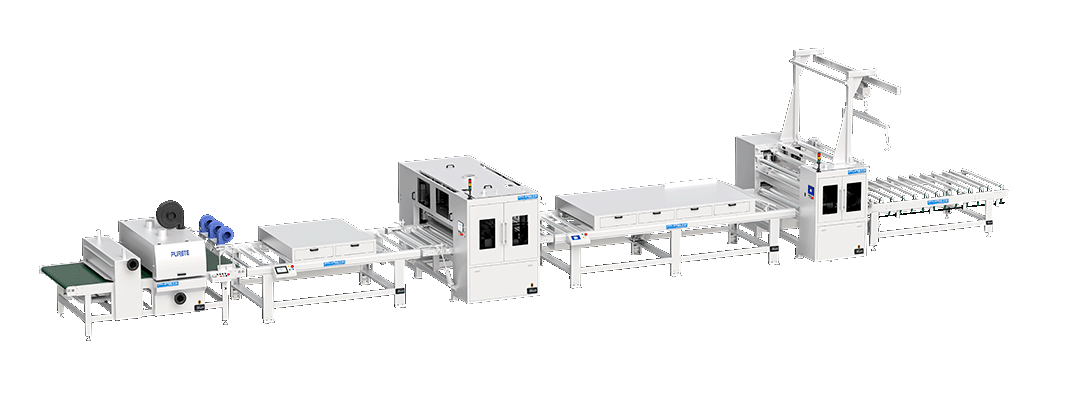
Wrapping Production Line for Decorative Wall Panels and Profiles
Where Coating and Profile Wrapping Fit Together
| Interior component | Suitable production route | Main production question |
|---|---|---|
| Wide wall panels | UV coating, spray coating, PUR lamination or panel wrapping | Can the line maintain uniform finish across the full board? |
| Narrow edge trims | Profile wrapping machine | Can the decorative material follow the complete cross-section? |
| Individual grille slats | Profile wrapping line | Can grooves, shoulders and narrow edges be wrapped consistently? |
| Flat grille panels | Panel wrapping or coating line | Is the grille a sheet product or a group of linear profiles? |
| Corner and transition profiles | Profile wrapping or folding line | Where should the seam, overlap or fold be positioned? |
This distinction is important. A flat decorative grille and a grille made from individual wrapped slats may look similar after installation, but they require different equipment and process control.
How Profile Wrapping Supports Healthcare Interior Manufacturing
A profile wrapping line normally combines substrate feeding, surface preparation, adhesive application, decorative material feeding, heating and staged pressure.
The process begins with a clean and dimensionally stable substrate. Depending on the product, the core may be MDF, PVC, WPC, aluminum or another compatible material. The decorative material may be PVC, PET, CPL, paper or natural veneer.
The adhesive is then applied by a roller or slot-based system. PUR, EVA and PO hot melts may all be used in profile wrapping, but the correct choice depends on the actual substrate, surface material, application temperature, open time and production speed.

Profile Wrapping Production Line for Decorative Profiles
The most important stage is forming. A shaped profile cannot normally be wrapped correctly by applying pressure from one direction only. Multiple guide rollers and forming wheels gradually bring the material around the profile’s shoulders, grooves, sidewalls and edges.
This is especially important for:
Narrow wall-panel trims
Slatted decorative grilles
Door and window surrounds
Skirting profiles
Outside corner sections
Profiles with recessed or angled surfaces
Before full production, manufacturers should test the actual profile and finish combination. The test should check surface appearance, edge bonding, groove conformity, corner quality, wrinkles, trapped air, material spring-back and dimensional stability after storage.
PURETE’s profile wrapping line guide for fluted wall panels explains why profile geometry, adhesive, temperature, speed and roller arrangement must be tested together.
Selecting Profile Wrapping Equipment and Coating Lines
The right question is not “Which machine has the highest speed?” It is “Which production route can make every component to the required quality?”
A panel wrapping machine or coating line may be appropriate for large flat wall panels. A profile wrapping machine is better suited to narrow linear components. A complete profile wrapping line may be justified when a factory produces multiple trims, slats and mouldings every day.
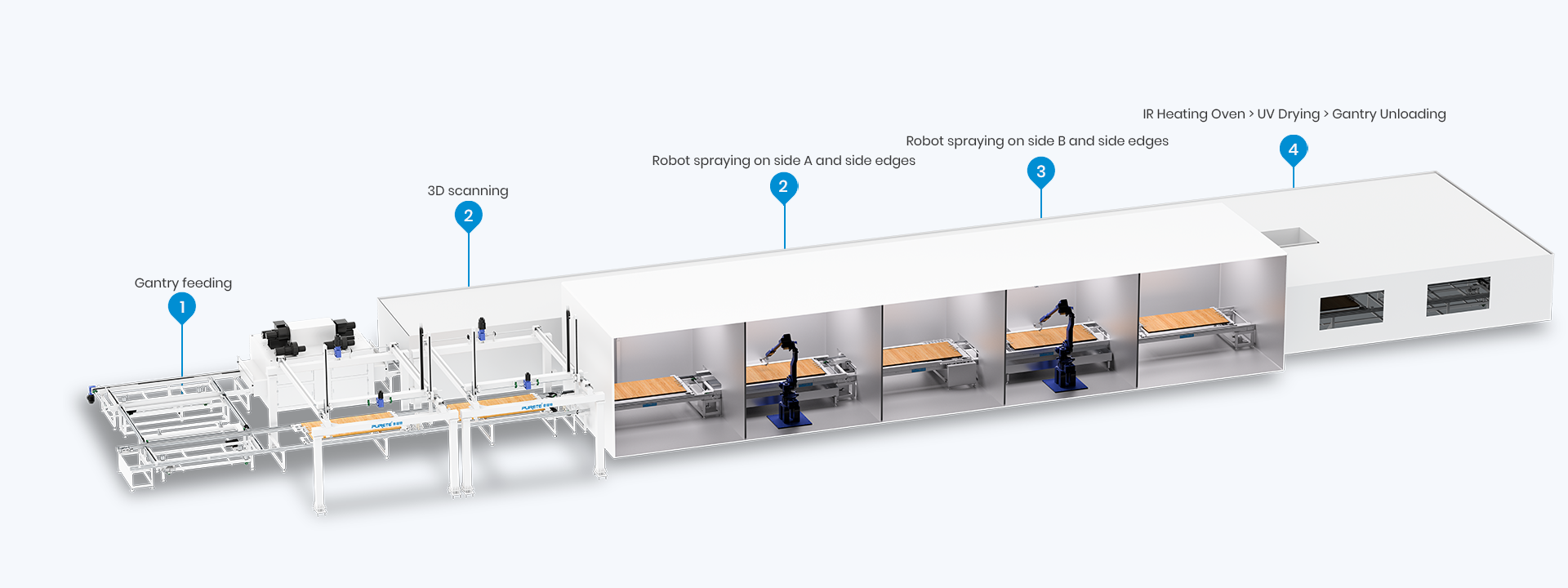
Surface Coating and Finishing Production Line Solutions
For a factory already producing coated wall panels, adding profile wrapping equipment can extend the product range without changing the overall design language. The main production benefit is the ability to supply the panel body and its supporting profiles as one coordinated package.
Before requesting a proposal, prepare:
Profile cross-section drawings
Width, height and minimum length
Substrate type
Decorative film, paper or veneer
Required coating or wrapping finish
Target output and product mix
Number of product changes
Factory layout, power and compressed air conditions
A sample-based evaluation is more useful than a quotation based only on catalogue dimensions.
Choosing Profile Wrapping Adhesives
Adhesive selection should be treated as part of the complete process, not as an independent purchase.
PUR hot melt may be evaluated where the finished component requires strong bonding and resistance to demanding service conditions. EVA or PO systems may suit particular indoor applications and established material combinations. However, no adhesive should be selected solely because it is commonly used in the industry.
The manufacturer should confirm:
Substrate surface condition
Film or veneer composition
Required application temperature
Initial bond and open time
Production speed
Edge and corner requirements
Storage and installation conditions
The adhesive technical data sheet should be reviewed together with the machine settings. Dust, poor material tension, incorrect temperature or unsuitable roller pressure can still cause defects even when the adhesive itself is suitable.
A Mexico Industry Scenario Within a Global Market
The same production logic applies globally, but Mexico provides a practical example of how furniture, coating and healthcare interior supply chains can overlap.
According to Mexico’s national economic data, the furniture, mattress and blinds manufacturing subsector recorded 32,545 economic units in May 2026. The largest concentrations included Estado de México, Michoacán and Jalisco. Separately, the paint, coating and adhesive manufacturing industry recorded 699 economic units, with the highest numbers in Estado de México, Jalisco and Guanajuato. These figures describe the wider industrial base, not the healthcare wall-panel market itself. Data México furniture data and paint, coating and adhesive data.
Mexico’s 2024 private healthcare statistics also show that 52.5% of private healthcare establishments were concentrated in seven states, including Estado de México, Mexico City, Jalisco, Guanajuato, Michoacán, Veracruz and Puebla. INEGI healthcare statistics.
For manufacturers, this creates a realistic project model: a furniture or panel factory may supply coated wall boards, wrapped trims, decorative grille components and corner profiles to contractors working on healthcare, hospitality and commercial interiors.
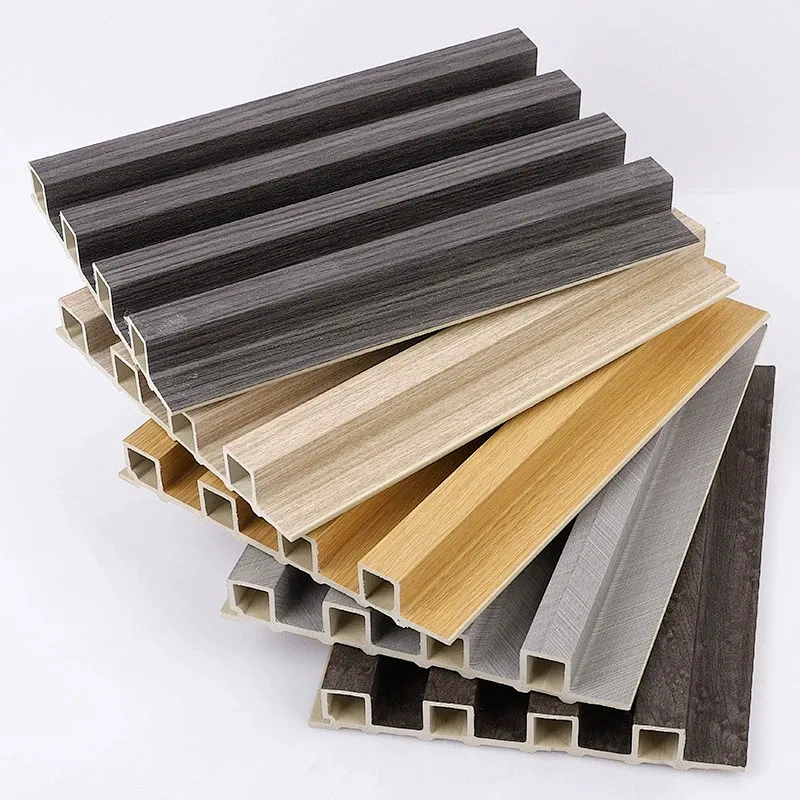
Profile Wrapping Equipment for Wall Panels and Interior Profiles
September 2026 Exhibition Invitation
The September 2026 exhibition cycle provides an opportunity to examine this complete relationship between design, materials, coating, wrapping and production equipment. The official WMF information lists more than 400 exhibitors and over 30,000 trade visitors, with the event covering machinery, materials and furniture manufacturing technologies.
We invite furniture manufacturers, wall-panel producers, interior contractors, distributors and project buyers to explore the PURETE’s September 2026 CIFF, WMF and Linyi Wood Expo update.
If you are planning to add profile wrapping to an existing coating factory, bring a profile drawing, sample panel or decorative material. Evaluating the panel, trim, grille and corner as one product family can lead to a more practical line configuration.
Frequently Asked Questions
Can profile wrapping be used for healthcare wall trims?
Yes. It can be used for decorative and transition profiles, provided that the substrate, surface material, adhesive and machine configuration are compatible.
Do wall panels and trims need the same machine?
Not necessarily. Wide panels and shaped linear profiles often require different production routes, although an integrated solution may process both product categories.
What is the most important step before buying equipment?
Test the real substrate, decorative material and profile geometry together. The sample should include edges, grooves, corners and the intended seam position.
Profile wrapping and coating equipment are manufacturing solutions. Any claim relating to fire performance, antimicrobial properties, cleanability or healthcare certification must be supported by the finished material’s documentation and applicable testing.
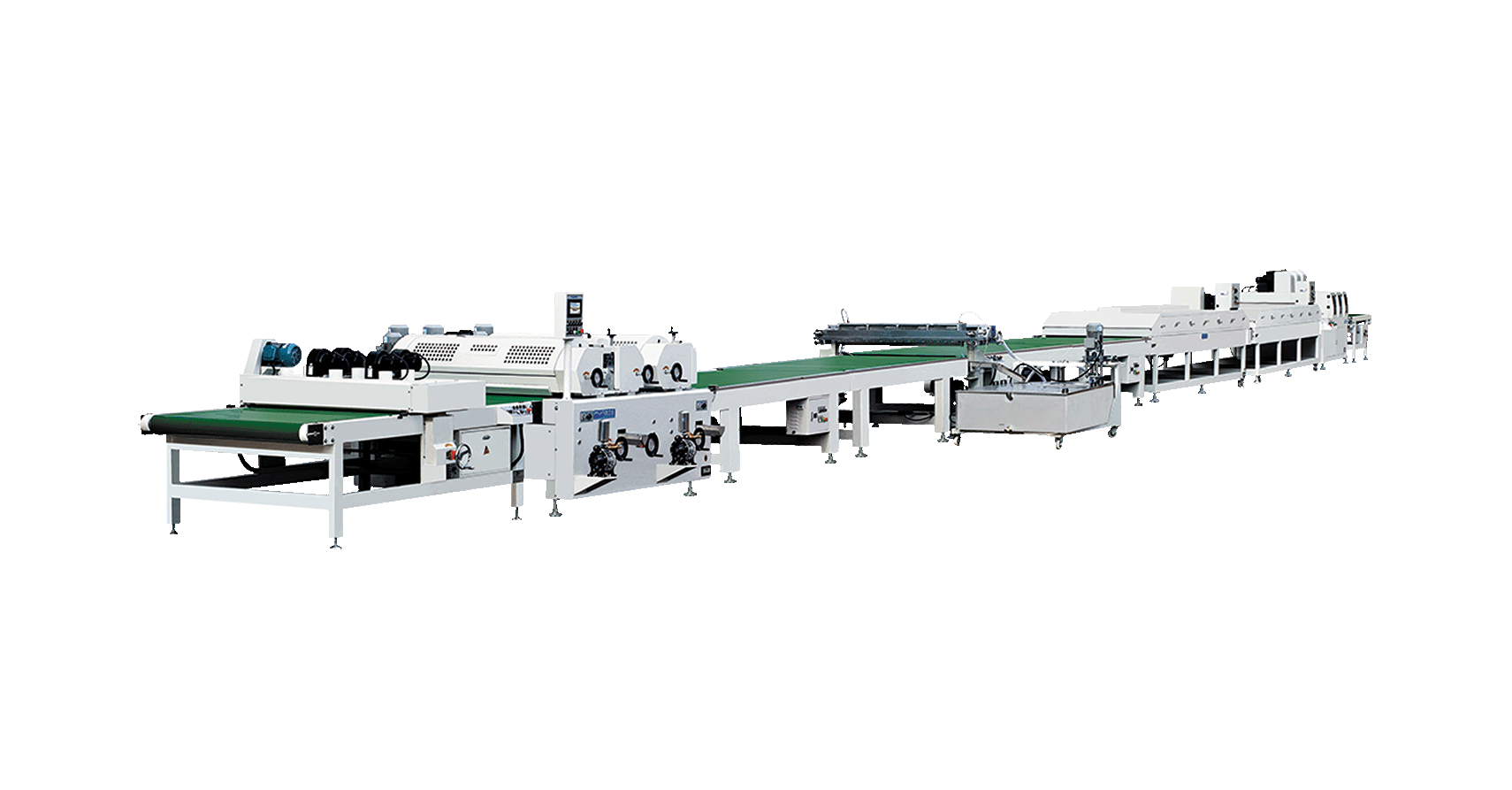
What Is the Principle of Auto Coating Machine?

Advantages of Short-Cycle Presses in Panel Processing
Application of Soft-Touch (Excimer) Coating in Furniture and Decorative Materials
Which Industries Benefit Most from PUR Laminating?
What Is the Principle of Roller Coating Machine?
How Does PUR Laminating Compare to Solvent-Based Lamination in Terms of Cost?
Global Surface Finishing Market Analysis and Development Trends


