

How to Plan a Short Cycle Press Line for Interior Decorative Panels
 August 31, 2026
 Hits:205second
An interior panel project may begin with drawings, finish schedules and installation dates. A panel manufacturer, however, must convert that information into substrates, board sizes, surface finishes, pressing sides, quantities and production batches.
That is why choosing a short cycle press line should not begin with the largest available press or the highest advertised cycle rate. The better starting point is the project’s panel mix and delivery plan.
A practical planning method connects the project requirements with the right materials, production sequence, line configuration and first-piece approval process.
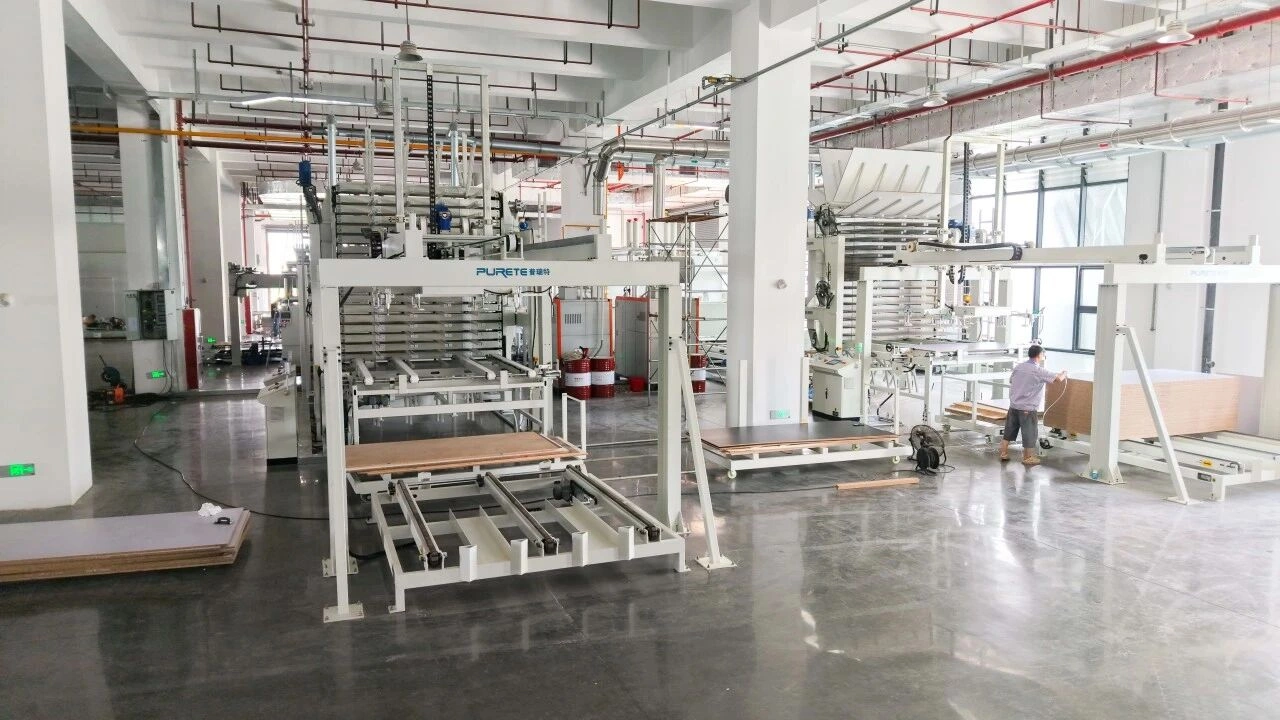 Short-cycle press production line
1. Start With a Panel Matrix, Not a Press Model
Before reviewing a short cycle press machine, create a panel matrix for every product family in the project.
Application area or room
Substrate type
Finished thickness
Board length and width
Decorative paper or film
Surface effect
Single-sided or double-sided pressing
Quantity required
Delivery date
First-piece approval status
For US projects, board formats should be recorded clearly. A 4×8-ft panel and a 4×9-ft-class panel should not automatically be treated as the same production item. The board size affects loading, positioning, press coverage, trimming allowance and stacking.
The matrix also helps separate high-volume standard panels from low-volume custom panels. These two groups may require different production sequences even when they use the same substrate.
2. Group Orders Into Pressable Product Families
The most efficient short cycle pressing plan is usually organized around compatible product families rather than project locations.
Orders can often be grouped when they share the same:
Substrate
Thickness
Board format
Decorative material
Surface texture
Pressing side
Steel press plate
This reduces unnecessary paper changes, plate changes, cleaning time and parameter adjustments.
For example, a project may include woodgrain wall panels, matte cabinet panels and textured door panels. Although all three are decorative panels, they may require different papers, press plates and quality checks. Combining them into one undifferentiated batch can increase changeover time and make first-piece approval more difficult.
When evaluating a hot press machine for industrial laminate, buyers should therefore ask more than “How much pressure does it provide?” The more important questions are:
Can the press handle the required board formats?
Can it maintain stable results across the planned thickness range?
How quickly can press plates be changed?
Can the line support the required single- or double-sided products?
Can inspection and stacking keep pace with the press?
For special tactile surfaces, the paper, film, substrate, press plate and pressing cycle must be tested together. PURETE’s soft-touch melamine panel solution follows this project-specific approach.
3. Match the Line Configuration to the Product Mix
A short cycle lamination press is only one part of a production system. Depending on the project, the complete line may include board separation, dust cleaning, paper laying, alignment, loading, pressing, cooling, inspection, edge treatment and stacking.
The right configuration depends on the factory’s order pattern.
| Planning decision | More suitable when | Main consideration |
|---|---|---|
| Standalone press machine | Stable products with more manual handling | Lower initial complexity, but more labor and coordination |
| Complete press line | Repeated production and tighter delivery windows | Higher automation, but more layout and integration planning |
| Single-sided pressing | Only one face requires decoration | Lower material and handling requirements |
| Double-sided pressing | Both faces must meet appearance requirements | Requires synchronized paper laying and inspection |
| Horizontal feeding | Standard formats and simpler product mixes | Practical for established layouts |
| Vertical or longitudinal feeding | Large formats, high pressure or synchronized textures | Requires careful handling and alignment planning |
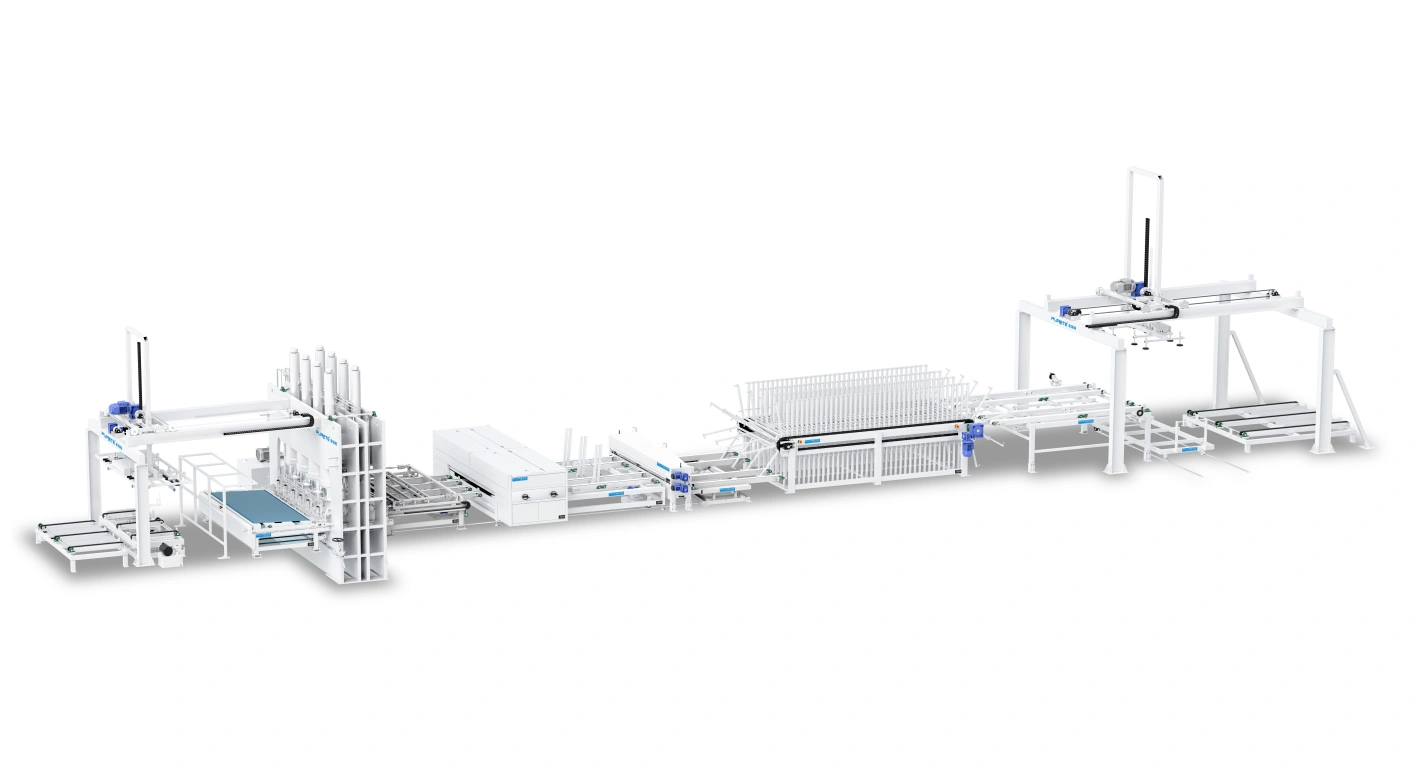
Short-cycle press production line
PURETE’s 4700T Vertical Short-Cycle Press Production Line, for example, is designed around automatic double-sided paper laying, longitudinal feeding, a 4,700-ton pressing force, plate replacement, double-sided inspection and synchronized feed/discharge. These features may be relevant for large-format or double-sided decorative panels, but they should not be treated as necessary for every project.
The configuration should be selected after the product matrix and first-piece requirements are clear.
4. Plan Around Usable Capacity, Not Rated Cycle Time
Rated cycle time is useful for comparing equipment, but it is not the same as project output.
A more realistic planning formula is:
Planned output = rated cycles per hour × boards per cycle × operating utilization × yield
Operating utilization must account for:
Board loading and unloading
Paper positioning
Press plate changes
Cleaning
Inspection
Minor stoppages
Rework and rejected panels
PURETE’s SCP3 short-cycle pressing production line lists a total line length of 32 m, output of 800–1,000 sheets per day, power consumption of 76 kW, a speed of 30–35 seconds per sheet and a sheet size of 1,220×2,750 mm.
These figures are configuration-specific. They also illustrate an important planning principle: a 30–35-second pressing cycle cannot be converted directly into guaranteed daily output. Material handling, changeovers, inspection and line availability determine the result.
For a US project, the production schedule should show both:
Theoretical press capacity
Planned deliverable capacity after utilization and yield assumptions
This makes the quotation easier to compare and reduces the risk of promising a delivery schedule based only on a machine’s fastest cycle.
5. Use First-Piece Validation as the Production Gate
A decorative panel may look acceptable at first glance but still fail when inspected for texture alignment, adhesion, edge quality or dimensional stability.
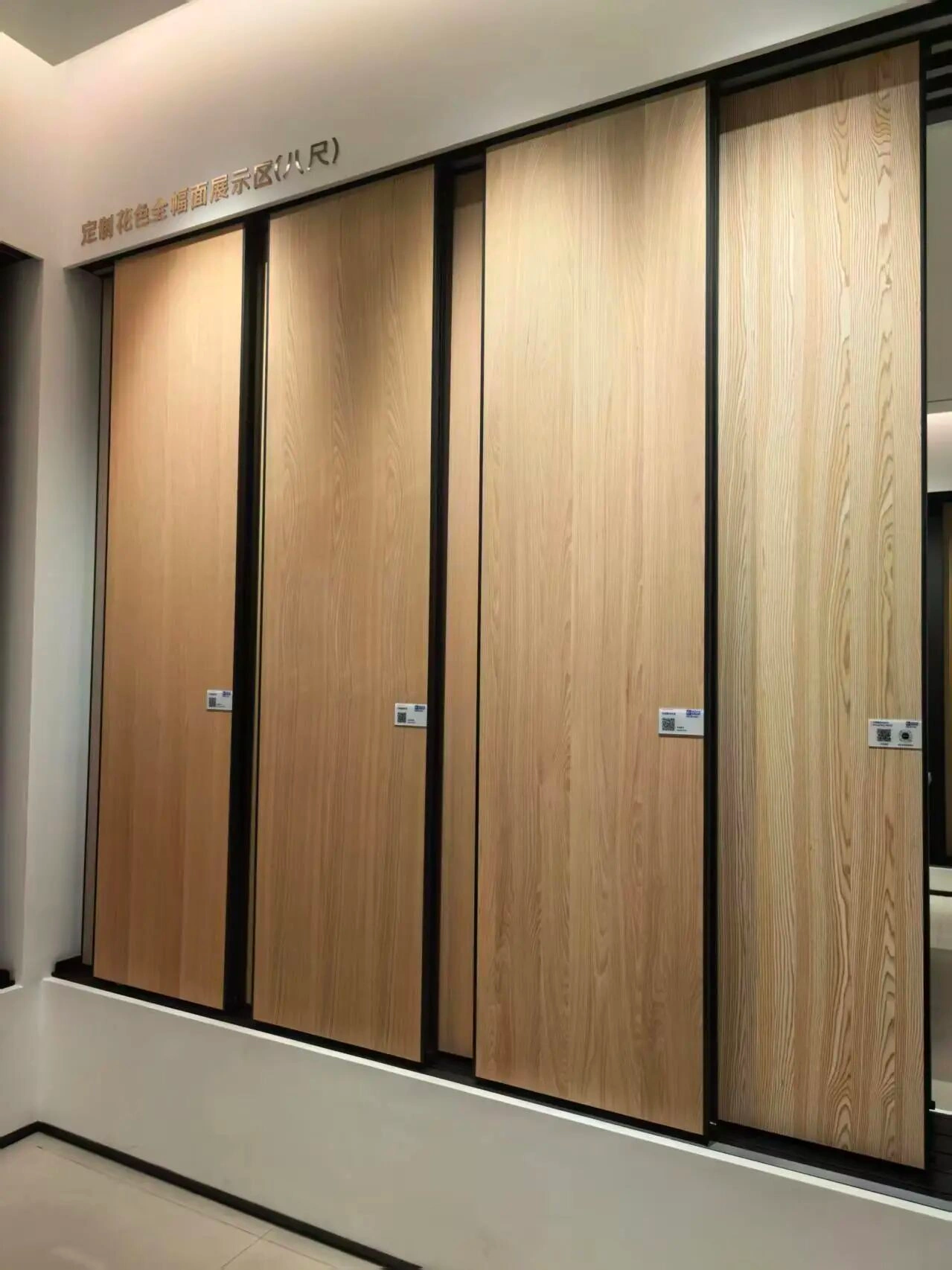
Before releasing mass production, test the combinations that matter most:
Substrate × thickness × decorative material × press plate × pressing side
The first-piece record should include:
Board format
Surface appearance
Texture or grain alignment
Bonding quality
Bubbles or visible defects
Edge condition
Finished thickness
Flatness or warpage
Inspection approval
The approved sample should become the reference for the production batch. If the project contains several surface effects, each major product family should receive its own approval record.
This is also the point at which a short cycle pressing process becomes a verified manufacturing process rather than a theoretical equipment specification.
6. Two Common Interior Project Scenarios
Mixed Small-Batch Panels
A commercial interior project may require several colors, textures and board formats in limited quantities. The priority is usually flexible order grouping, controlled changeovers and clear sample approval.
A fully automated line may still be suitable, but the planning should focus on changeover time and product-family sequencing rather than maximum speed.
Large-Format Double-Sided Panels
A high-volume project may require large panels with synchronized woodgrain or embossed surfaces on both faces. In this case, automatic double-sided paper laying, accurate positioning, suitable feeding direction and double-sided inspection become more important.
The final selection should be based on validated samples and the actual daily product mix.
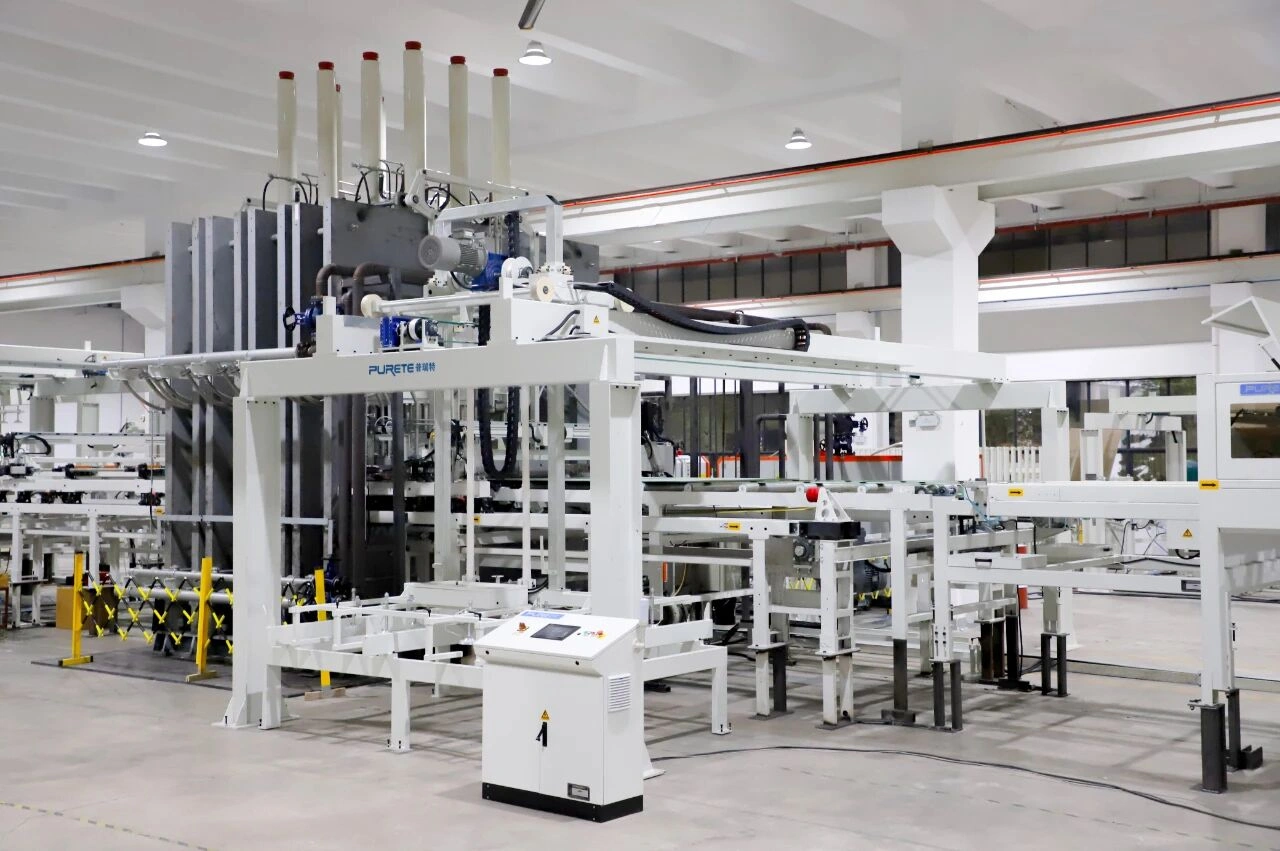
Office & Hospitality coating solutions
7. Common Planning Mistakes
Choosing by maximum tonnage alone
Treating cycles per hour as finished boards per hour
Ignoring the difference between single-sided and double-sided products
Mixing too many decorative finishes in one batch
Failing to include changeover and inspection time
Approving the line before testing the actual materials
Requesting a quotation without providing board sizes and order quantities
Conclusion
A reliable short cycle pressing technology solution begins with a clear panel matrix. By grouping compatible orders, selecting modules according to real production needs, calculating usable capacity and approving first pieces before mass production, manufacturers can build a plan that is easier to quote, schedule and control.
Send PURETE your substrate types, board formats, surface designs, pressing requirements, order quantities and target delivery date to receive a short cycle press line configuration and validation plan.
Data note: The SCP3 figures stated above are published specifications for a specific PURETE configuration. Actual output depends on materials, board format, pressing parameters, automation level and operating conditions.
FAQs
What information is needed for a short cycle press line recommendation?
Provide the substrate, thickness, board sizes, decorative materials, surface effects, pressing sides, quantities by product family, target output and delivery schedule.
Is double-sided pressing always better?
No. It is appropriate when both faces require decoration or when the product design requires balanced surface treatment. The decision should be based on the product specification and verified sample results.
Can one line produce different board sizes?
Often, but the usable size range depends on the press format, feeding system, cylinder arrangement, paper-laying method and production sequence. Each size combination should be confirmed before ordering.
Is a faster cycle always more productive?
No. The final output also depends on loading, unloading, changeovers, inspection, downtime and yield.
What Is the Principle of Auto Coating Machine?

Advantages of Short-Cycle Presses in Panel Processing
Application of Soft-Touch (Excimer) Coating in Furniture and Decorative Materials
Which Industries Benefit Most from PUR Laminating?
What Is the Principle of Roller Coating Machine?
How Does PUR Laminating Compare to Solvent-Based Lamination in Terms of Cost?
Global Surface Finishing Market Analysis and Development Trends


