

How to Laminate Wood Veneer onto Acoustic Cotton Using White Glue and a Hot Press Line
 September 30, 2026
 Hits:16second
A veneer-faced acoustic panel has to do two jobs at once. The visible face needs the warmth and grain of real wood veneer, while the core still needs to contribute to the room's acoustic design. That combination makes the laminating route more demanding than a standard decorative-panel process. Acoustic cotton is porous, so glue penetration, trapped moisture, uneven pressure, and pressure release can all affect the finished panel.
For a factory planning this product, white glue and hot pressing can form a practical process route when the adhesive, veneer, substrate, and final use are matched. The line should not be designed around the press alone. Surface preparation, controlled glue application, pre-pressing, hot pressing, unloading, and post-press cure need to work as one sequence.
Why Laminate a Decorative Veneer onto Acoustic Cotton?
Acoustic cotton provides a functional, porous layer rather than a finished decorative surface. Left exposed, it may not meet the appearance, handling, or cleaning expectations of an interior wall or panel application. A wood veneer facing gives the panel a finished surface while the acoustic layer remains within the board construction.
This construction can suit projects such as meeting-room walls, hotel corridors, cinema wall systems, and selected residential interior partitions. The intended result is not simply a wood panel with another layer attached. It is a composite panel in which the decorative face, adhesive layer, and acoustic core must be considered together.
That is why the material route matters. A veneer that looks consistent at the press exit can still create later problems if glue has entered the porous substrate unevenly, if the panel did not release pressure evenly, or if the assembly moved into the next operation before the adhesive system had stabilized.
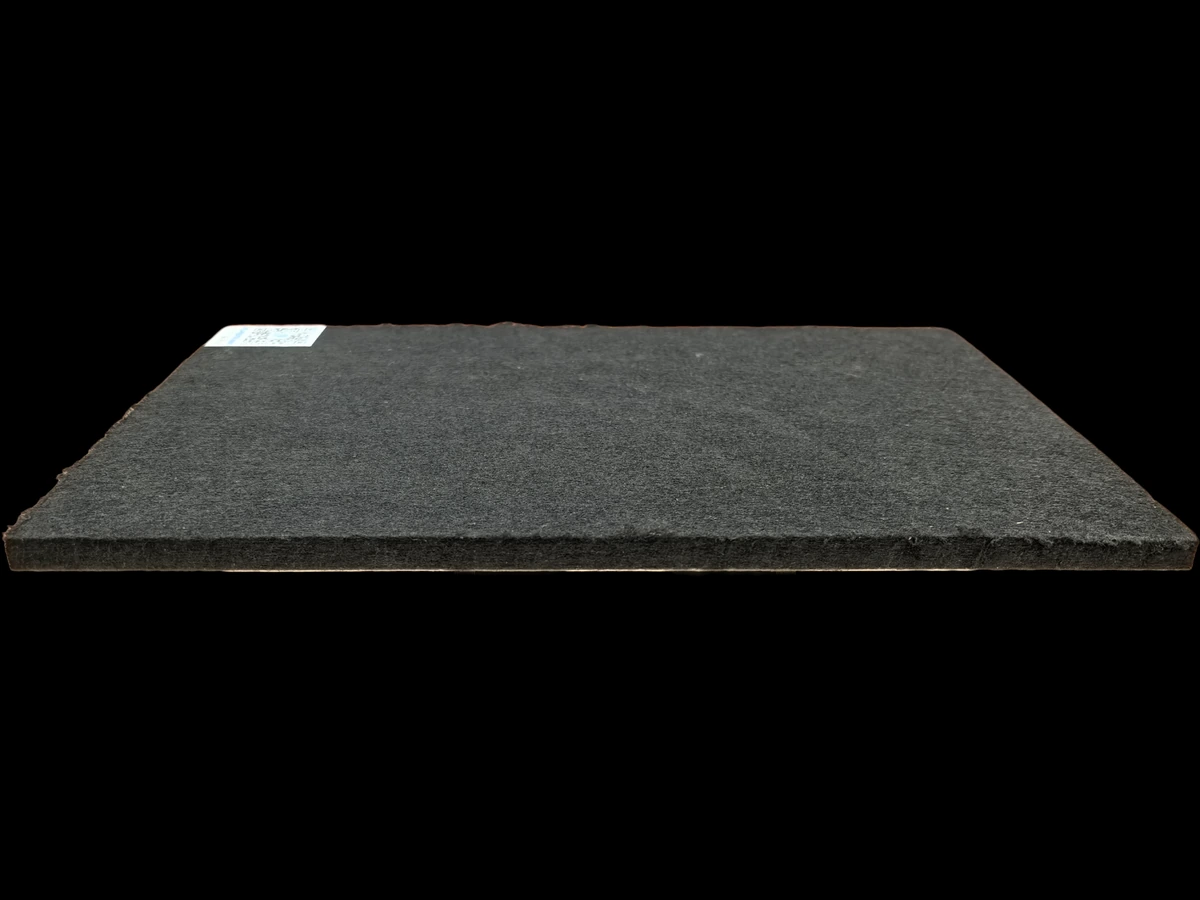
Porous acoustic cotton core before veneer lamination. See T1 Automatic Laminating Production Line.
Which Adhesive Route Fits a Veneer-Faced Acoustic Panel?
Three routes are commonly considered for a veneer-faced acoustic panel: white glue, hot-melt adhesive film, and PUR adhesive. Each route has a different process logic.
| Route | Process focus | Where it fits in this article |
|---|---|---|
| White glue | Controlled coating, assembly, heat and pressure, then cure | The main route discussed here for flat veneer lamination |
| Hot-melt adhesive film | Film placement and heat-pressure bonding | A different route when a dry adhesive layer is required |
| PUR adhesive | Adhesive preparation and controlled laminating | A separate route for projects that select PUR based on their material and use requirements |
Where White Glue Fits
White glue can be considered for single-sided, flat veneer lamination when the production route can control coating, assembly timing, hot pressing, and post-press cure. With an acoustic core, the key question is not only whether the veneer bonds to the panel. The process must also limit unwanted glue movement into the porous surface and maintain a uniform adhesive interface.
The glue supplier's technical data and the actual substrate should define the working viscosity, coating amount, open time, press cycle, and cure conditions. Those settings belong to the selected adhesive and panel construction. They should not be copied from an unrelated wood panel, paper laminate, or film-laminating process.
When Hot-Melt Film or PUR Is a Different Route
Hot-melt film and PUR systems should be treated as different manufacturing routes rather than interchangeable upgrades to white glue. Film systems change how adhesive is introduced to the assembly. PUR systems change the adhesive handling, equipment requirements, and process controls.
When the reader needs to compare PUR and EVA-style panel-lamination choices, link to PUR vs EVA for panel lamination. That comparison can help frame the adhesive family decision, while this article stays focused on white-glue hot pressing for veneer-faced acoustic panels.
The White-Glue Hot-Press Process from Surface Preparation to Cure
The process works best when each stage solves a specific production problem. Surface preparation establishes the bonding surface. Glue application creates a controlled adhesive layer. Closing the assembly before the selected open time ends protects the intended bond path. Hot pressing consolidates the assembly, and the post-press stage lets the panel stabilize before later handling or finishing.
Prepare the Porous Substrate and Veneer
Start with the acoustic substrate, veneer, and any intermediate layer in the condition required by the approved panel specification. The bonding face needs to be clean and free of loose material. For a porous acoustic surface, panel flatness and surface consistency matter because local high or low areas can change contact at the veneer interface.
The veneer should be prepared for the required face quality, grain direction, panel size, and trimming allowance. A consistent oversize allowance supports later edge trimming without pulling the decorative face short of the finished panel edge. Keep the workpieces protected through the loading and conveyance stages so dust, damage, or handling marks do not become part of the laminate.
Apply Glue and Close the Assembly Before the Open Time Ends
The coating stage needs to distribute white glue consistently across the designated bonding face. For an acoustic core, a controlled coating pattern is especially important: insufficient coverage can leave weak areas, while excess or uneven glue can increase the risk of visible defects or local penetration.
After coating, convey the substrate and veneer through a defined assembly window. The line should coordinate the glue coater, veneer presentation, and pre-pressing operation so that panels do not wait unpredictably between steps. A double-roller press can bring the layers into initial contact before the hot press, helping the assembly travel in a controlled, aligned condition.
This is also the point to distinguish normal adhesive settings from adjustments made for a highly absorbent substrate. If the project requires a change in glue viscosity or coating quantity to control penetration, document it as a condition of that adhesive and panel combination. Do not turn a corrective setting for one material into a universal production rule.
Press, Release Pressure Gradually, and Allow the Panel to Cure
The hot press applies the selected temperature, pressure, and dwell time to the assembled panel. Its job is to bring the veneer, adhesive layer, and acoustic substrate into the required contact condition. The actual press program must follow the adhesive system, veneer, substrate construction, panel size, and production specification.
Pressure release also deserves process control. Releasing pressure in planned stages can help avoid a sudden change across a warm, adhesive-bearing assembly. After unloading, keep panels level through the specified cure period before destructive bond checks, trimming, or downstream finishing. This prevents a recently pressed panel from being judged before its adhesive system has reached the condition expected by the process plan.
For readers comparing the roles of the two pressing methods, use hot pressing machine vs cold pressing machine. The relevant choice depends on the adhesive route and panel construction, not on the press name alone.
What Equipment Makes Up a White-Glue Veneer Laminating Line?
A wood laminating machine is one part of a coordinated line. For this panel construction, the line must move the acoustic core and wood veneer through preparation, coating, assembly, pressing, and unloading without losing alignment or surface protection. See short-cycle press machines for the related PURETE press category.
PURETE's client-supplied line concept uses nine stages:
| Stage | Equipment | Role in the line |
|---|---|---|
| 1 | Frame-type gantry loader | Loads panels using a pin-type gripping arrangement |
| 2 | Edge-aligning roller conveyor | Transfers and aligns the substrate |
| 3 | Glue coater | Applies white glue to the specified bonding face |
| 4 | Double-roller press | Brings substrate and decorative material into initial contact |
| 5 | Belt conveyor | Provides transition conveyance |
| 6 | Edge-aligning roller conveyor with veneer rack | Transfers the assembly and presents veneer material |
| 7 | Three-layer hot press | Performs the hot-pressing stage |
| 8 | Edge-aligning roller conveyor | Transfers the pressed panel onward |
| 9 | Frame-type gantry unloader | Removes finished panels from the line |
In one PURETE project configuration, this arrangement was designed as a 33 m line with 127 kW of installed power. That describes a project-specific configuration, not a standard specification for every acoustic-panel factory. Board dimensions, material handling, press format, adhesive process, and required output will determine the final layout.
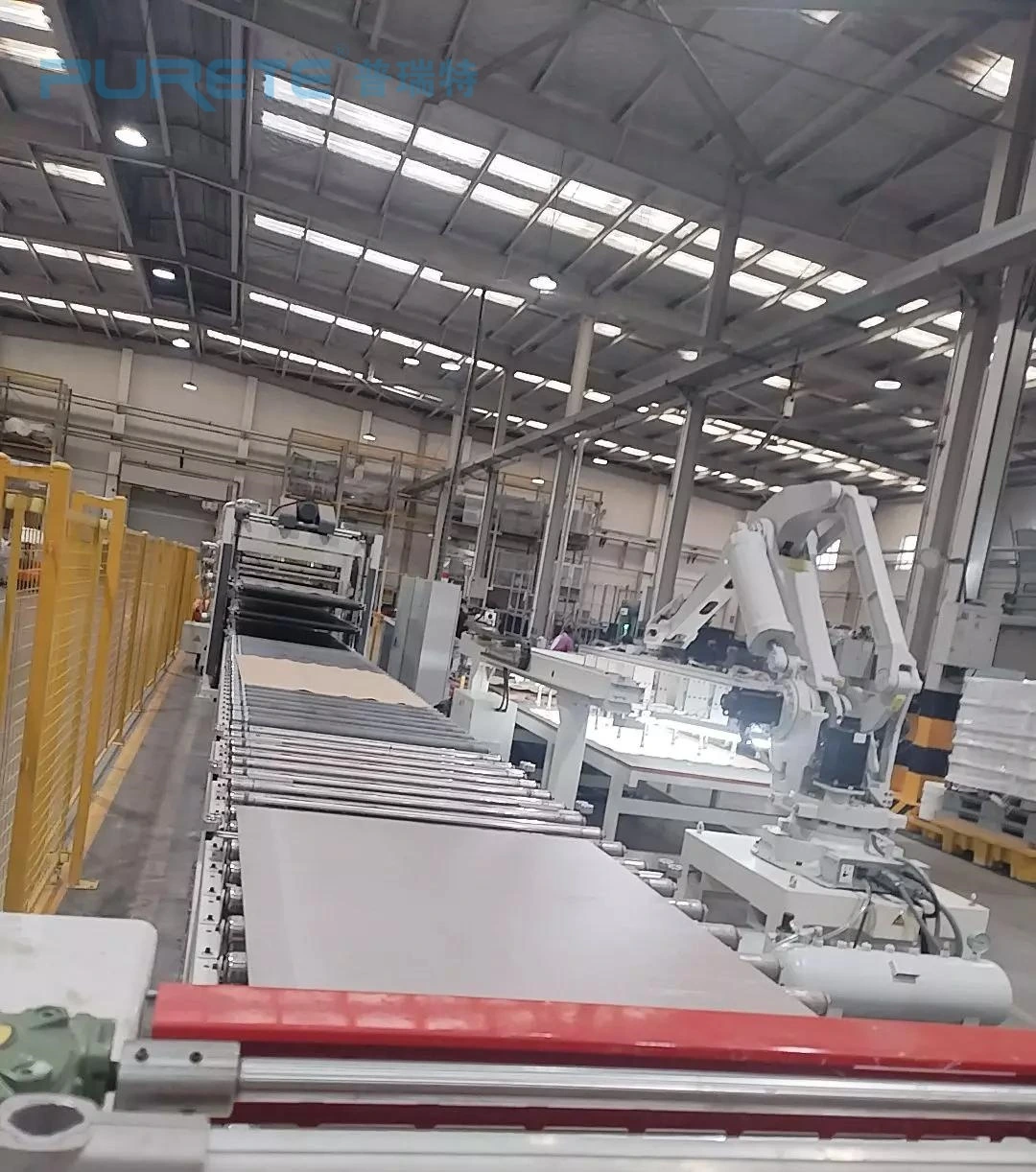
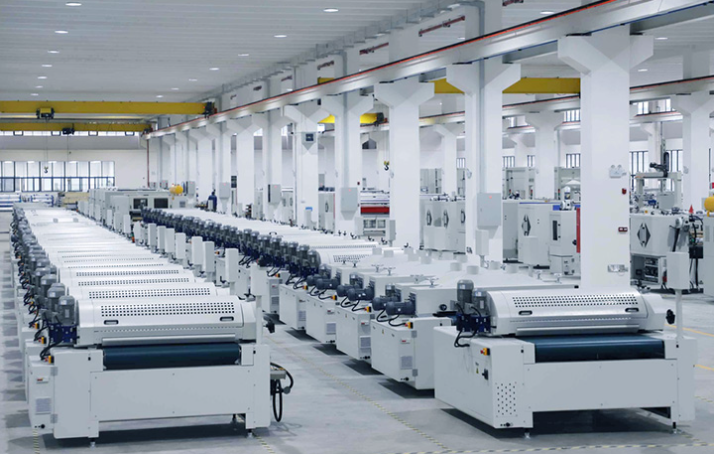
PURETE production line for veneer and acoustic panel pressing. See short-cycle press machines.
How Can the Line Reduce Glue Penetration, Bubbles, and Acoustic Loss?
The main process risk is not a single machine setting. It is an interaction between a porous core, water-based adhesive, veneer, heat, pressure, and time. The line should therefore make the critical controls visible to the production team.
First, keep the bonding surface clean and consistent. Loose fibres, dust, local hollows, and unstable panel edges can prevent the veneer from seating evenly. Second, maintain a controlled glue layer rather than relying on additional adhesive to solve a surface-quality problem. Third, keep the assembly moving through the planned timing window. Delays after coating can change how the adhesive behaves before the layers reach the press.
Bubbles also need to be traced to the full route. Moisture condition, non-uniform glue application, local glue build-up, and an abrupt pressure release can all deserve investigation. The practical response is to identify which part of the process changed, then correct the affected condition in the approved production specification. A bubble is not automatically proof that the hot press itself is the only cause.
Acoustic performance should be assessed on the finished panel construction and its intended installation, not assumed from the core alone. The article should not promise a fixed retention percentage. Instead, the production route should aim to avoid unnecessary adhesive intrusion and to preserve the intended panel structure through controlled processing.
Plan the Veneer Lamination Route Around the Actual Panel and Production Target
White-glue hot pressing can be a useful route for veneer-faced acoustic panels when the factory controls the whole path: substrate condition, veneer handling, glue application, assembly timing, press program, pressure release, and cure. The strongest line concept is the one that matches these stages to the actual panel instead of treating a generic hot press machine for laminate as the entire solution.
For a production-line discussion, PURETE can review the acoustic-core material and thickness, veneer or decorative-face requirement, and target panel size and production rhythm. Learn more about the T1 Automatic Laminating Production Line when planning an automated flat-laminating route.
Common Questions About Veneer-Faced Acoustic Panels
Why do bubbles appear after hot pressing?
Bubbles can result from excess moisture, inconsistent glue distribution, local adhesive build-up, or an uncontrolled pressure-release sequence. Start by checking the actual substrate condition, coating uniformity, assembly timing, and press/unloading record for the affected panel. Then adjust the approved process condition that caused the deviation rather than applying a blanket change across the line.
Does the panel need edge trimming after veneering?
Yes. The veneer is normally presented with a trimming allowance beyond the finished panel edge. After pressing and the required stabilization stage, a dedicated trimming station can cut the excess veneer flush with the panel. The trimming method should protect the decorative face and keep the finished edge consistent with the panel design.
What should an export project discuss before the line is finalized?
Confirm the local electrical supply, board and veneer dimensions, adhesive route, material-handling approach, packaging requirements, and operator-training scope. These project inputs shape the machine configuration and line layout. They should be settled for the actual destination and production requirement rather than assumed from another installation.
What Is the Principle of Auto Coating Machine?

Advantages of Short-Cycle Presses in Panel Processing
Application of Soft-Touch (Excimer) Coating in Furniture and Decorative Materials
Which Industries Benefit Most from PUR Laminating?
What Is the Principle of Roller Coating Machine?
How Does PUR Laminating Compare to Solvent-Based Lamination in Terms of Cost?
Global Surface Finishing Market Analysis and Development Trends


