

Roller Coater vs Spray Coating Machine: Which One Is Right for Your Factory?
 March 26, 2026
 Hits:776second
For manufacturers of decorative panels, MDF boards, furniture boards, and shaped components, the choice between a roller coater and a spray coating machine depends less on general preference and more on product geometry, finish target, and production logic. This guide explains the differences in a practical way so buyers can evaluate which coating method better fits their factory.
Roller Coater vs Spray Coating Machine: What Is the Quick Answer?
If your factory mainly produces flat decorative panels, MDF boards, or standardized furniture boards, a roller coater is often the preferred solution, especially when the goals are stable output, accurate film build control, higher coating utilization, and better suitability for continuous production.
If your factory mainly handles shaped parts, profiled components, edges, grooves, or products with more complex geometry, a spray coating machine is often more suitable, especially where contour coverage, edge treatment, and process flexibility matter most.
In some projects, the best answer is not purely roller or purely spray. A factory may use a combined coating setup, such as roller coating for flat surfaces and spray coating for edges, profiles, or appearance-critical sections.
For MDF-based and flat-panel manufacturing, Purete has already discussed why roller coating lines are especially effective for MDF finishing, particularly in high-volume and repeatable production environments.
What Is a Roller Coater and How Does It Work?
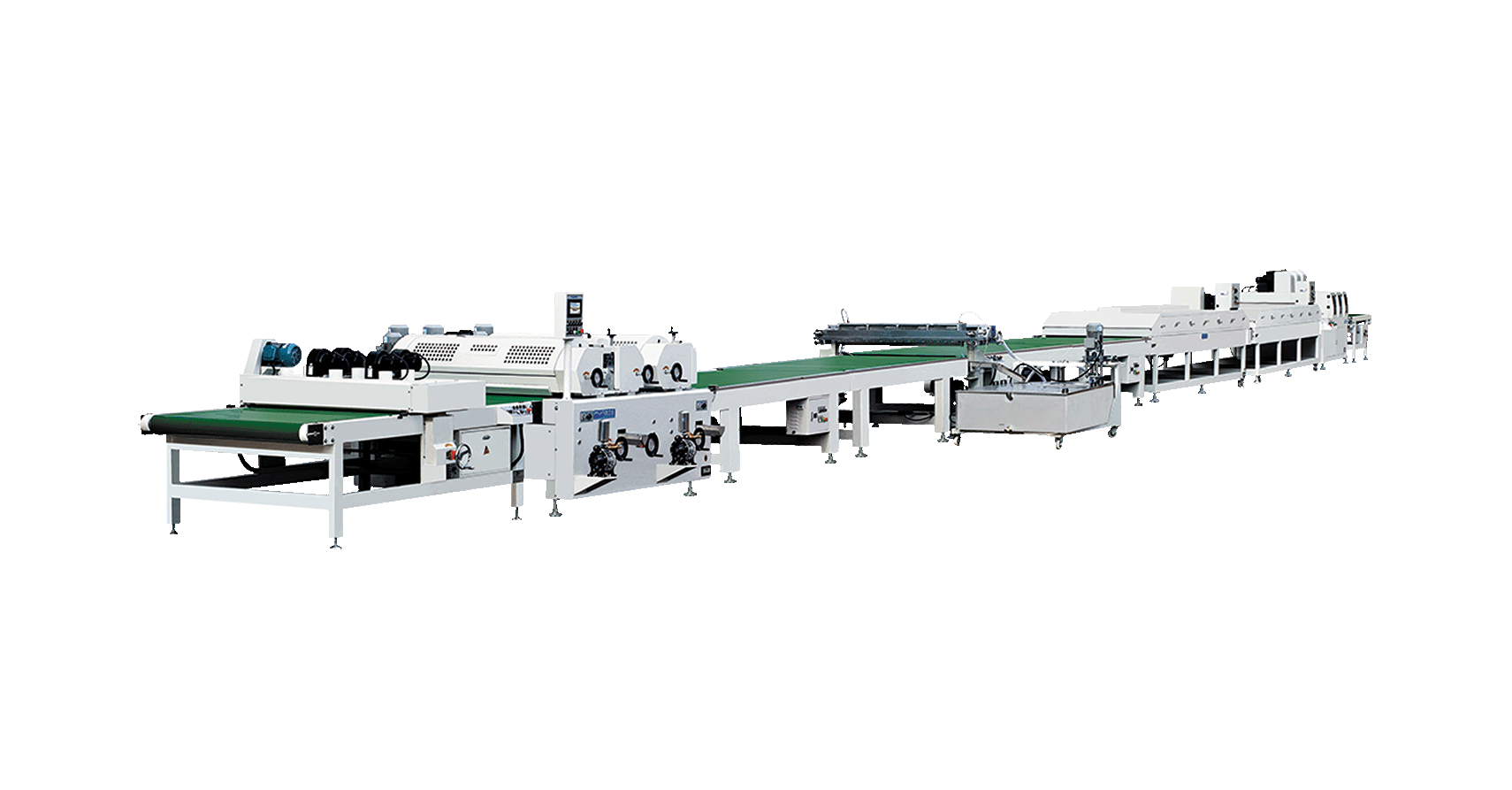
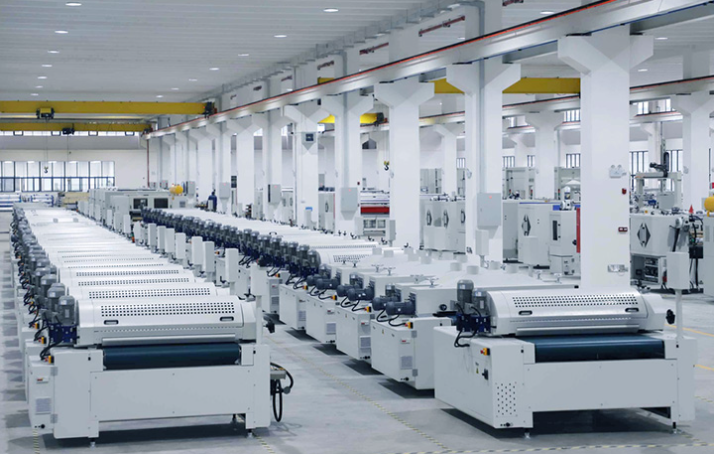
A roller coater applies liquid coating onto a substrate through one or more rotating rollers. It is commonly used in flat-surface finishing, where repeatability, transfer efficiency, and stable film thickness are important.

How does a roller coater work?
The basic working logic includes:
- Coating is supplied to a transfer roller or application roller
- The roller makes controlled contact with the substrate
- A measured amount of coating is deposited on the surface
- Film thickness is adjusted through roller settings and process parameters
Because roller coating depends on direct contact, it usually performs best when the substrate is:
- Flat
- Dimensionally consistent
- Suitable for contact coating
- Processed in repeated or continuous runs
Typical applications of a roller coater
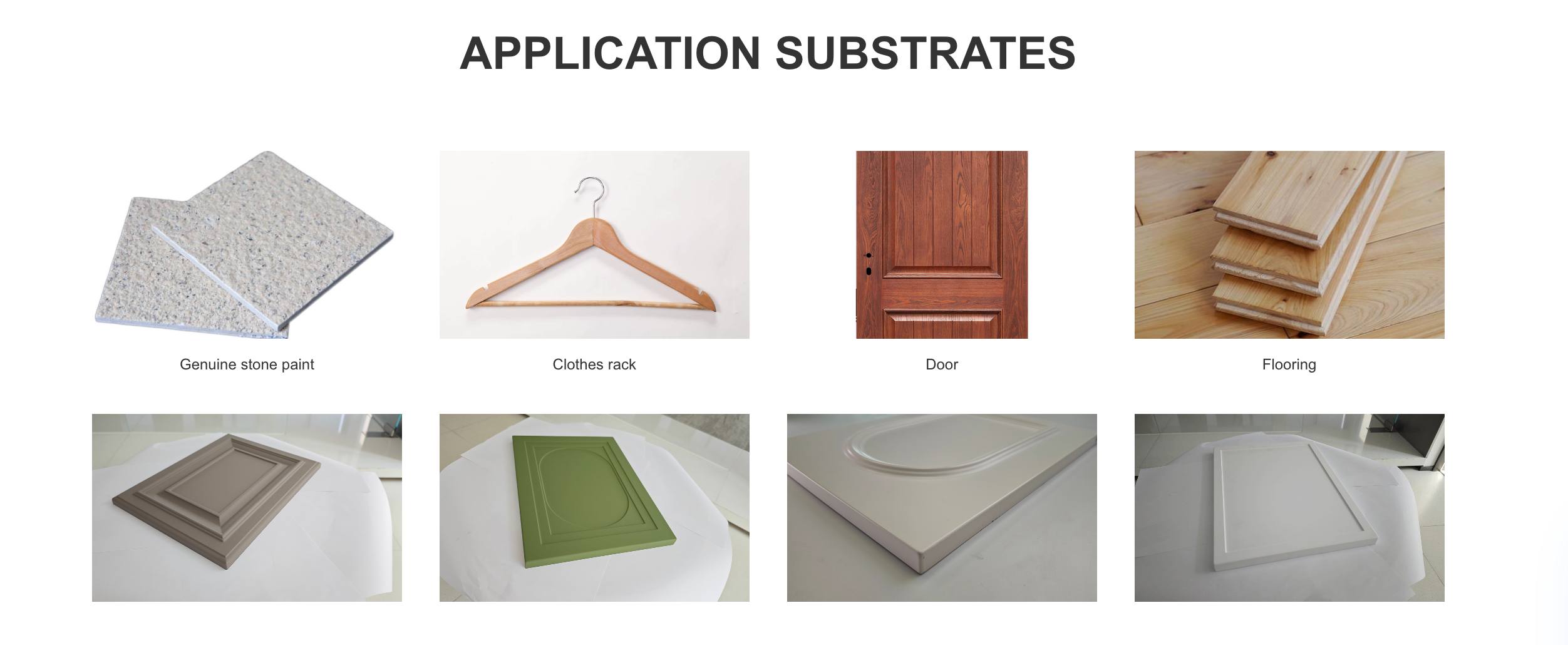
- Decorative panels
- MDF boards
- Furniture boards
- Flat laminated boards
- Engineered board products
- Continuous panel finishing lines
For many flat board applications, roller coating is often preferred because it can provide good film thickness control, repeatability, and efficient coating transfer. This is also consistent with Purete’s article on why roller coating lines are ideal for MDF finishing, where MDF’s flatness and uniformity are highlighted as key advantages.
For UV-cured flat-board production, Purete also has a dedicated page on UV roller coating machine technology for MDF, which is highly relevant for manufacturers focused on fast curing and durable surface finishing.
What Is a Spray Coating Machine and How Does It Work?
A spray coating machine applies coating by atomizing liquid material into fine droplets and projecting it onto the product surface. It is widely used where products have irregular geometry or where non-contact application is preferred.

How does a spray coating machine work?
A typical spray process includes:
- Coating is delivered to a spray gun or atomization device
- The liquid coating is broken into fine particles
- The coating is sprayed onto the substrate
- Overspray may be captured, filtered, or treated depending on system design
Spray systems may include:
- Automatic spray machines
- Reciprocating spray systems
- Conveyorized spray lines
- Robotic spray cells
Because the coating is sprayed rather than transferred through direct contact, this method is often more adaptable to products with:
- Profiles
- Grooves
- Edges
- Raised or recessed sections
- Curved or shaped surfaces
Typical applications of a spray coating machine
- Shaped furniture parts
- Mouldings and profiles
- Decorative components
- Surface finishing on irregular parts
- Products requiring contour-following coverage
- Production environments with varied product geometry
Spray coating can also be used on flat products in some cases, especially where process flexibility, finish variety, or broader coverage logic is required. Purete’s existing comparison of curtain coating vs spray painting for MDF boards also reflects this point: spray methods are often chosen when shape complexity or finish variation matters more than pure throughput.
What Are the Key Differences Between Roller Coating and Spray Coating?
The most useful comparison is not which method is better overall, but which method performs better under specific production conditions.
1. Surface compatibility
A roller coater is generally more suitable when:
- The surface is flat
- The substrate dimensions are consistent
- Contact coating is acceptable
- The process is standardized
A spray coating machine is generally more suitable when:
- The product has irregular geometry
- Surface contours need to be covered
- Edges, grooves, or profiles are important
- Non-contact coating is preferred
2. Coating consistency
This point needs nuance, because “consistency” can mean different things.
Roller coating is often stronger in:
- Film build consistency on flat surfaces
- Repeatable coating thickness in standardized runs
- Process stability in continuous board production
Spray coating is often stronger in:
- Coverage uniformity on irregular geometry
- Contour-following finish continuity
- Visual finish consistency across shaped or profiled surfaces
3. Coating utilization
In many flat-panel applications, roller coating usually has a higher coating utilization rate because coating is transferred directly to the substrate with less waste. Spray coating typically involves overspray, recovery systems, and more material loss outside the target surface.
4. Production speed
In standardized flat-panel production, roller coating is often better suited to higher line speed, continuous flow, and stable repeated output. Spray systems can also be highly automated, but productivity is more influenced by geometry, finish requirements, and cleaning frequency.
5. Automation and integration
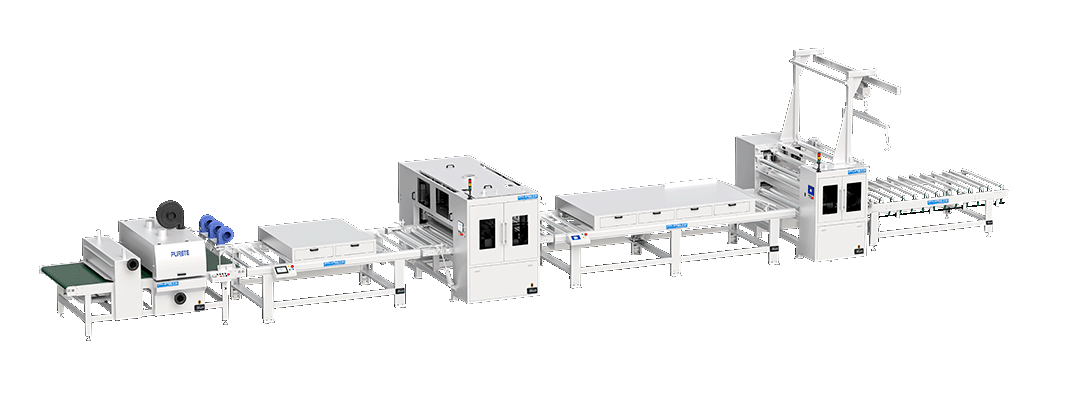
Roller coaters are often easier to integrate into flat panel lines, linked sanding systems, UV/IR curing sections, and automated stacking lines. Spray systems fit well into spray booths, reciprocating units, and robotic finishing cells, but usually require more coordination around airflow and overspray control.
6. Maintenance focus
Roller coating maintenance usually centers on rollers, alignment, cleaning, and transfer stability. Spray system maintenance usually centers on guns, nozzles, filters, hoses, booth cleaning, and overspray handling.
Which Applications Are Better for Roller Coating and Which Are Better for Spray Coating?
The best way to answer this is by matching the method to the production scenario.
Roller coating is often better for flat decorative panels and MDF boards
For many flat decorative panel and MDF board applications, roller coating is often preferred when the factory needs:
- Stable process rhythm
- Repeatable film build
- Good coating transfer efficiency
- Better fit for continuous production
- Consistent output on standardized substrates
This aligns closely with Purete’s content about roller coating for MDF finishing and UV roller coating lines for MDF, especially for furniture boards, cabinetry panels, wall panels, and continuous finishing lines.

Spray coating is often better for shaped parts and profile components
Spray coating is often more suitable when products include:
- Profiles
- Grooves
- Raised or recessed details
- Contours
- Irregular shapes
- Surfaces that are difficult to reach by contact coating
When contour coverage and non-contact finishing are important, spray coating is often the more practical option.
For mixed production, a combined setup may be worth considering
In practice, some factories use roller coating for flat surfaces and spray coating for edges, profiles, or special product families. This kind of setup is especially useful when a factory needs to balance throughput on flat boards with flexibility for shaped products.
Buyer Checklist Before Choosing Roller or Spray Coating
For industrial buyers, the equipment decision becomes clearer when the right questions are asked first.
- Is the product mainly flat, profiled, or mixed?
- Is coating utilization a major cost concern?
- Is edge coverage critical for the finished product?
- Is continuous production planned?
- How often will color or coating changes happen?
- What level of finish quality is required?
- Will the line use UV curing, IR drying, or another finishing process?
- Is the project focused on MDF, plywood, particle board, or more than one substrate?
For substrate-related planning, Purete’s article on MDF, plywood, and particle board coating technologies is a useful supporting reference because it explains how different board materials affect process selection.
Common Mistakes When Comparing Roller Coating and Spray Coating
Many buying decisions go wrong not because the equipment is bad, but because the comparison logic is incomplete.
- Assuming roller coating is always cheaper without considering full line configuration
- Assuming spray coating is only for shaped parts and cannot be used for flat products
- Comparing machine price without considering overspray, filters, cleaning, and operating cost
- Ignoring product geometry and focusing only on throughput
- Failing to match coating method with final finish target
- Choosing based on a single product category when the factory handles mixed production
Roller Coater vs Spray Coating Machine vs Combined Setup: Comparison Table
The table below gives a practical comparison for buyers evaluating the main options.
| Item | Roller Coater | Spray Coating Machine | Combined Setup |
|---|---|---|---|
| Best suited for | Flat panels and standardized boards | Shaped parts and irregular surfaces | Mixed product types or mixed finish needs |
| Surface compatibility | Best on flat surfaces | Best on contours, profiles, grooves, and edges | Broadest compatibility |
| Main strength | Film build control and transfer efficiency | Coverage on complex geometry | Efficiency plus flexibility |
| Coating utilization | Usually high in flat-panel production | Usually lower due to overspray | Depends on line design |
| Production speed | Often higher in standardized board lines | Depends on geometry and finish demands | Depends on process flow |
| Maintenance focus | Rollers, alignment, transfer stability, cleaning | Guns, nozzles, filters, airflow, booth cleaning | Requires both sets of maintenance planning |
| Typical applications | MDF boards, decorative panels, furniture boards | Profiles, mouldings, shaped parts | Factories processing both flat and shaped products |
For most buyers, the key question remains simple: are you mainly coating flat panels, complex shapes, or both?
Final Recommendation: Which Method Is More Suitable for Your Factory?
A roller coater and a spray coating machine are not competing solutions to exactly the same coating problem. They solve different production needs.
If your factory is focused on flat decorative panels, MDF boards, or other standardized board products, a roller coater is often the more efficient choice, especially where throughput, repeatability, and coating utilization are important.
If your factory produces profiles, shaped parts, or irregular components, a spray coating machine is often more suitable because it can better handle contour coverage and non-contact application needs.
If your production includes both flat products and complex geometry, or if your finishing requirements vary across product families, a combined setup may be the most practical long-term solution.
The smartest decision usually starts with a clear review of product geometry, surface finish target, coating system, production volume, changeover frequency, cleaning demands, and automation planning.
Related Reading
FAQ
1. Is roller coating better than spray coating for MDF boards?
For many flat MDF board applications, yes. Roller coating is often preferred because it can provide better film build control on flat surfaces, higher coating utilization, and better fit for repeated or continuous production. However, the final choice still depends on the coating system and finish requirement.
2. Which method offers better coating consistency?
It depends on what kind of consistency is required. Roller coating is often better for film thickness consistency on flat surfaces, while spray coating is often better for coverage uniformity and visual continuity on shaped or irregular products.
3. Which one is easier to maintain?
In standardized flat-board production, roller coating is often easier to manage from a routine maintenance perspective. Spray systems may require more frequent cleaning of guns, nozzles, filters, and booth areas, especially when the product mix or coating type changes often.
4. Is spray coating more flexible than roller coating?
In many cases, yes, especially when flexibility refers to handling irregular geometry or varied product shapes. However, higher flexibility in product coverage does not always mean lower cleaning effort or simpler operation.
5. Can a factory use both roller coating and spray coating in one production system?
Yes. In practice, some factories use a combined setup, such as roller coating for flat sections and spray coating for edges, profiles, or shaped products. The exact configuration depends on the project scope and production needs.
Need Help Choosing the Right Coating Solution?
If your factory is evaluating a roller coater, spray coating machine, UV finishing line, or a combined coating setup for MDF boards, decorative panels, or shaped components, the first step is to define your product geometry, finish target, output, and line integration needs.
What Is the Principle of Auto Coating Machine?

Advantages of Short-Cycle Presses in Panel Processing
Application of Soft-Touch (Excimer) Coating in Furniture and Decorative Materials
Which Industries Benefit Most from PUR Laminating?
What Is the Principle of Roller Coating Machine?
How Does PUR Laminating Compare to Solvent-Based Lamination in Terms of Cost?
Global Surface Finishing Market Analysis and Development Trends


