

Complete Guide to Industrial Coating: Everything You Need to Know
 October 30, 2026
 Hits:4second
Industrial coatings protect manufactured products while providing the appearance and surface properties needed for use. Machine components may need resistance to corrosion or wear, while furniture and building panels may call for consistent color, gloss, or texture. Some products need protection and a specified appearance at the same time.
Coating material is one part of the result. Substrate condition, surface preparation, application method, and drying or curing conditions affect the film that forms on each workpiece. Together, these choices need to suit the product’s use and manufacturing conditions.
1. What Is Industrial Coating?
Industrial coating applies a coating material to a manufactured product and forms a finished layer on its surface.
Coating Materials, Coating Films, and the Coating Process
A coating material is a liquid or powder applied to a product. Formulation influences the properties a finished surface can achieve. A coating film is the layer left on a substrate after application and any required drying or curing. The coating process covers work needed to apply material and form a film.
What Industrial Coating Does
A coating may serve more than one purpose.
- Protection. A suitable coating system can help protect a metal machine housing against corrosion during use.
- Appearance. Coating can give furniture panels a specified color, gloss, or texture and help maintain a consistent finish across parts.
- Surface function. A formulation designed for a specific use can change how a surface behaves. An industrial floor coating, for example, may be designed to provide slip resistance.
2. Industrial Coating Substrates and Applications
Common Substrates
Metals may carry oil, oxidation, or rust. Such conditions need attention before coating because they can interfere with contact between coating and substrate. Preparation varies with the metal’s condition and the required finish.
Wood and engineered wood panels may absorb coating unevenly, particularly where faces and edges differ in density. Sanding and dust removal help prepare the surface. Exposed grain, panel faces, and edges may need different attention during application. PURETE’s comparison of coating technologies for MDF, plywood, and particleboard examines those board differences in more detail.
Plastics and composites vary widely in surface characteristics. Low surface energy or residual release agents can make coating difficult. Heat-sensitive parts may also limit the drying or curing conditions available.
Glass has a smooth, nonporous surface, making adhesion an important consideration. Even when both are flat, metal and glass panels can require different preparation and handling, as described in PURETE’s metal and glass roller coating guide.
Cement-based materials and mineral boards may have pores or surface irregularities that affect coverage and the appearance of the finished film.
Typical Applications
- Furniture and interior products. Cabinet panels, wardrobe components, doors, and office or hotel furniture may be coated for a specified color, gloss, or texture.
- Building and decorative materials. Wall panels, decorative boards, and flooring may need a consistent finish together with surface properties suited to their use.
- Machinery and metal products. Equipment housings, frames, and metal components may need protection on exposed surfaces.
- Products made from other materials. Plastic sheets, glass panels, and cement-based boards may also receive coatings for appearance or a particular surface requirement.
Some components used in new energy and other specialized industries have coating requirements as well. Material, surfaces to be coated, and acceptance criteria need to be specified for the actual workpiece.
3. Types of Industrial Coatings and Coating Systems
Coatings can be classified by chemistry, by liquid or powder form, and by the number and function of layers in the finished system. Each classification describes a different aspect of material choice or layer structure.
Common Coating Chemistries
Epoxy coatings are often used as primers or protective layers where adhesion and resistance to corrosion or chemical contact matter. Conventional formulations may lose gloss or change color after prolonged UV exposure. An exposed outdoor surface may therefore need a compatible finish coat.
Polyurethane coatings are often used for exposed finish coats. Suitable formulations can provide a durable surface while meeting color and gloss requirements for outdoor products. Curing conditions and compatibility with underlying layers still need to be checked for the selected material.
Acrylic coatings provide a range of appearance options for furniture panels, metal parts, and plastic components. Water based formulations are available. Resistance to wear, moisture, or chemicals varies by product, so the acrylic label alone does not establish suitability.
Alkyd coatings are used in some general industrial and wood finishes where a smooth, glossy appearance is wanted. Drying time and resistance to the expected exposure should be considered, particularly when production speed or service conditions place greater demands on the finish.
Liquid and Powder Coatings
Liquid coatings can be transferred onto a workpiece by different application methods. After application, they dry or cure according to the material’s requirements. Equipment selection needs to account for material supply, transfer to the surface, and handling of excess coating.
Powder coatings are applied as dry particles, commonly by electrostatic application to metal parts. The coated workpiece is typically heated to form a continuous film. Powder application requires different equipment, and the part needs to tolerate the process conditions.
Single-Coat and Multilayer Systems
A single-coat system uses one coating to provide the required finish and protection. It may suit a product whose requirements can be met without separate primer and finish layers.
A multilayer system assigns different tasks to different coats. A primer may promote adhesion between the prepared substrate and later coats. An intermediate layer may add film build or protection, while a finish coat provides the exposed appearance and surface properties. Two layers, three layers, and other arrangements are possible. Compatibility needs checking between substrate and coating, and between adjacent coats.
4. Industrial Coating Application Methods
Spray, roll, curtain, and dip coating offer different ways to apply liquid materials. Workpiece shape and finish requirements help determine where each method fits.
Spray coating uses a spray gun to atomize liquid coating and apply it without touching the workpiece. This makes it useful for curved parts, edges, and components with varied shapes. Covering recesses requires attention to gun direction and part orientation. Depending on the setup, masking or other controls may be needed to keep coating off surfaces that should remain uncoated.
Roll coating transfers liquid coating from a rotating roller to the surface touching it. It suits flat panels that can pass through the coating station at a consistent height. Continuous transfer is useful for repeated panel production. Deep recesses and surfaces beyond the roller’s reach require another approach.
Curtain coating applies liquid coating to flat workpieces as they move through a continuous falling curtain on a production line. It supports continuous panel coating when the curtain remains stable. Sides, recesses, and pronounced changes in height are difficult to coat by this method.
Dip coating immerses a workpiece in a coating bath, then lifts it out and allows excess material to drain. It is useful when several surfaces need coating in one operation, including some that are difficult to reach by spraying from one direction. Bath dimensions also limit workpiece size. Recesses may trap air during immersion or retain excess coating as the part is withdrawn.
For a closer comparison of spray and roll coating for different workpiece shapes and production needs, see PURETE’s roller coating and spray coating comparison.
5. The Industrial Coating Process, Step by Step

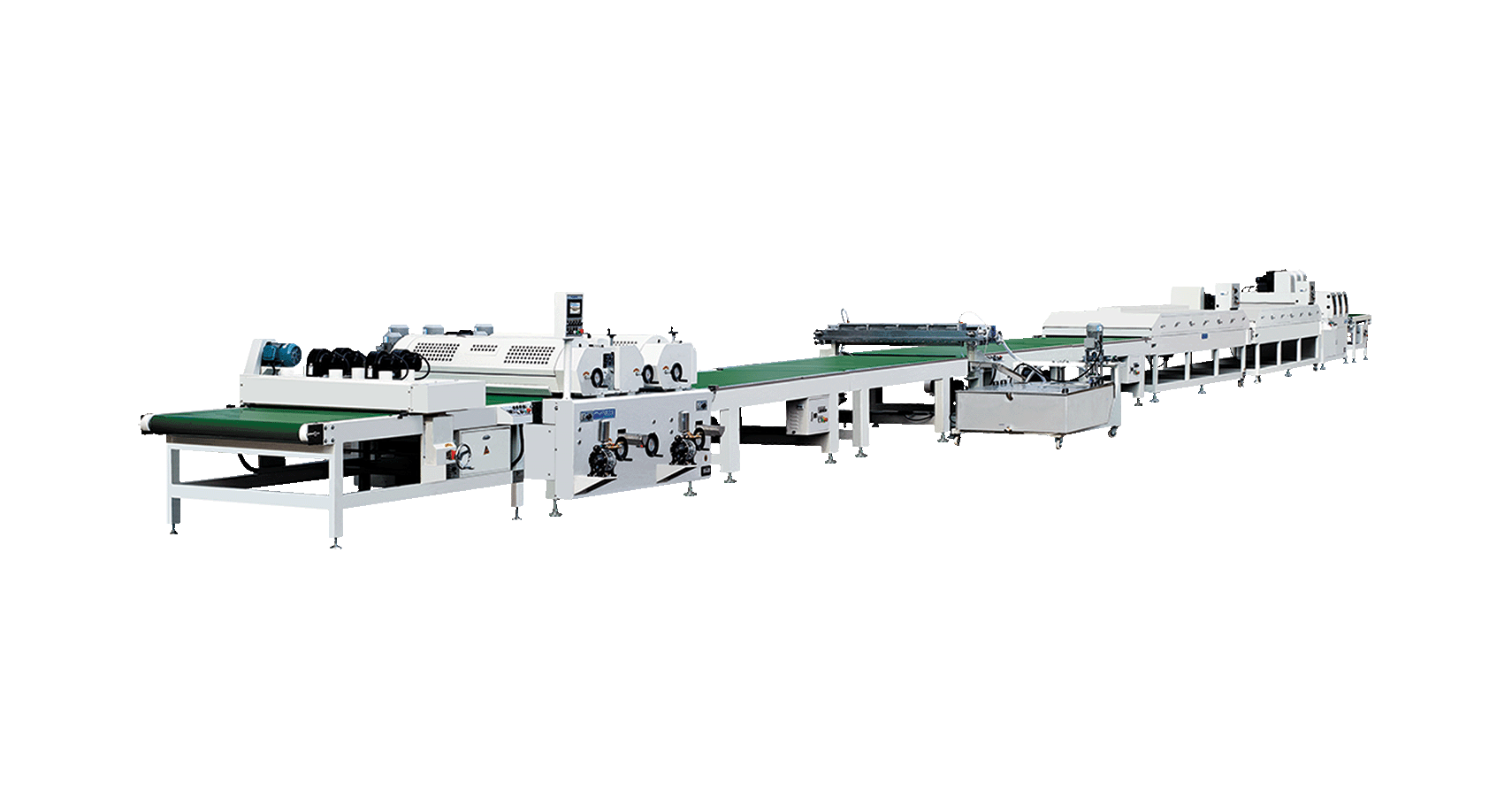
PURETE roller coating production lines
Process planning starts with workpiece characteristics and the required finish. These steps provide a general sequence. Actual order and repeated stages depend on substrate, coating material, and layer structure.
Step 1: Record the Workpiece and Production Requirements
Identify the workpiece material, size, shape, and existing surface condition. Note edges, recesses, and any areas that must remain uncoated. These features affect handling, positioning, and access during application.
Next, specify the finish and performance required of the coating. Consider the product’s service environment, required color and texture, and any specified protection or surface function. Confirm which characteristics will be checked at acceptance, such as appearance, coating thickness, or adhesion where relevant. A requirement to coat a panel face differs from one that also includes edges, grooves, or selected functional areas. Clarifying those boundaries before production helps prevent an apparently good finish from leaving required areas untreated.
Step 2: Prepare the Surface
Remove dust, oil, and other contamination that could interfere with the coating. Depending on the substrate and coating system, preparation may also involve sanding or another suitable surface treatment. Work should address the actual condition of the part rather than follow one preparation sequence for every material.
Inspect the surface before application. Dust left on a panel, contamination on a metal part, or damage introduced during handling can remain visible or interfere with the finished film. Checking at this stage allows the issue to be addressed before material is applied over it. PURETE’s UV roller coating process for calcium silicate boards gives a specific example of how surface preparation connects with later coating stages for a mineral board product.
Step 3: Prepare the Material, Equipment, and Workpiece
Prepare coating material according to its product instructions. Confirm that supply and application equipment are ready, then position the workpiece so required surfaces can be reached. Conveying, hanging, supporting, or masking may be needed according to the part and application method.
Material preparation and part handling should be considered together. A coating that is ready for application will still produce an incomplete result if the workpiece is poorly supported or a required face remains inaccessible. Confirm the intended material supply route, workpiece orientation, and movement through the coating area before production begins.
Working conditions and ventilation need to suit the selected material and process. Production personnel should have access to the material’s safety information and specified application conditions.
Step 4: Apply the Coating
Use the selected method to cover required surfaces and control the amount deposited. Workpiece position, material flow, and application settings influence consistency. The relevant control point depends on the method. For example, roller contact with a panel and spray access to a recess present different coverage questions.
Check the applied result against the intended coating area before the part moves to the next stage, where the process allows. Look for missed areas, visibly uneven application, or material on surfaces that should remain uncoated. If a final film thickness has been specified, check it after the relevant drying or curing stage rather than treating the amount applied as proof of final thickness.
Step 5: Complete Any Required Intercoat Treatment
A multilayer system may require a waiting period, drying or curing, cleaning, or sanding before another coat. Follow the material instructions and confirm that the preceding layer is ready to receive the next one. Applying another layer too early or after an unsuitable surface condition has developed can affect the result.
Some systems repeat preparation and application for each additional layer. The sequence should identify surfaces to receive each coat and the condition required before work continues. A primer, intermediate layer, and finish coat need not follow an identical handling route simply because they are applied to the same part. PURETE’s solid-color MDF UV roller coating process shows how filling, sanding, primer, color coating, and curing stages can be arranged for a particular panel product.
Step 6: Level, Dry, or Cure the Coating
Some liquid coatings need time to level after application. Drying commonly involves evaporation of water or solvent. During curing, a reaction or other change hardens the applied coating and develops its intended properties. Conditions depend on the material, and drying and curing may overlap.
Match the required time and conditions to both coating material and workpiece. Temperature may be limited by a heat-sensitive substrate; a UV route requires the coated areas to receive the required exposure. Equipment capacity and workpiece movement also matter. A coating station can apply material consistently while a poorly matched downstream stage leaves the finished film below its required condition.
Step 7: Inspect and Handle the Finished Parts
Inspect the finished coating against agreed requirements before parts move on. Handle, stack, and package accepted parts in a way that protects the finish from damage. Inspection criteria and common quality problems are discussed in Section 7.
6. How to Choose the Right Coating System and Application Method
Choose coating layers and an application method together. Start with essential requirements, rule out options that do not meet them, and compare remaining processes on representative workpieces.
Service Environment and Finish Requirements
Separate essential properties from preferences. A product exposed to moisture, wear, or chemicals needs a coating specified for those conditions. Color or gloss alone cannot establish suitability. Where appearance is the main requirement, compare samples against the agreed color, gloss, and texture standard.
Required properties also help determine the layer structure. One coating may satisfy a modest set of appearance and protection requirements. A product with distinct protective and exposed-finish requirements may call for separate coats. The choice should follow the product specification rather than a fixed rule about the number of layers.
Part Geometry and Coating Coverage
Rule out methods that leave required surfaces uncoated. A roller may suit a flat panel face but cannot coat a deep recess it does not contact. Spray coating provides access to more shaped surfaces, although repositioning may be needed to reach all sides.
Check coverage against the actual product range, not just one convenient sample. A family of parts may include different widths, edge profiles, or recessed features. If the proposed method cannot reach a required area on one of those parts, either the process needs another application step or a different method should be considered.
Process Compatibility
Assess each remaining option as a complete sequence. Material must suit the prepared substrate, work with the chosen application method, and dry or cure under conditions the workpiece can withstand. For multilayer systems, confirm that each subsequent coat can be applied over the preceding layer.
Review the interfaces between stages as well. A coating may transfer well at the application station but require a leveling period that the proposed line does not provide. Another may need curing conditions unsuitable for the substrate or available equipment. A process is unsuitable if a required stage cannot be carried out reliably.
Production Requirements
Check whether a feasible process also fits routine production. Consider the full range of part sizes and shapes, output requirements, available space, and drying or curing capacity. Frequent changes in product or color add setup and cleaning work.
Handling deserves attention during this comparison. Parts need to enter the coating area in a repeatable position and leave it without damaging the applied material. A successful sample establishes that a result is possible on that workpiece; it does not establish that the factory can reproduce it across the intended product mix and production pace.
Cost and Sample Validation
Compare options against the same quality and production requirements. Account for the complete process rather than coating price alone. Test representative substrates and workpieces with difficult features such as edges or recesses, then inspect results against agreed acceptance criteria.
Samples should represent the parts the factory actually expects to make. Include variation in size, shape, and surface condition where it matters. Record which requirements each trial meets and where additional work is needed. Prefer an option that reaches the required result consistently under realistic production conditions, with costs assessed on that same basis.
For manufacturers evaluating a complete line for one product group, PURETE’s decorative panel coating line selection guide addresses the additional equipment and production decisions.
7. Coating Quality: Inspection and Common Problems
How Coating Quality Is Evaluated
Visual inspection checks color, gloss, texture, and coverage across required surfaces. Where specified, film thickness is measured after drying or curing. Adhesion, cure, or other performance checks may also be needed for the product’s intended use. Acceptance criteria and test methods belong to the particular coating system. Acceptance criteria therefore need to reflect the specific product and coating system.
Common Problems and What to Investigate
- Uneven coverage or film thickness. Check whether the method reaches the affected area. Then review workpiece position, material supply, and application settings.
- Particles or surface defects. Review substrate and material condition, cleanliness, work area, and handling between application and curing.
- Poor adhesion. Examine substrate condition, preparation, and compatibility with any underlying layer. A visible adhesion problem does not identify one cause on its own.
- Incomplete drying or curing. Compare actual processing time and conditions with material requirements. Relevant checks may include temperature, airflow, humidity, or UV curing conditions.
Compare affected parts with acceptable ones, then review material and process records to narrow the investigation. For flat-panel roller coating problems, PURETE’s roll coating defects diagnosis guide provides a more focused approach.
8. What Affects Industrial Coating Costs?
Coating cost depends on the resources needed to produce an accepted part. Compare process options at the same finish standard and production volume. A lower material price does not necessarily mean a lower overall cost.
Material consumption includes coating deposited on the part, material that cannot be recovered or reused, and material required for rework. Part shape, application method, and number of coats affect how much is needed for an acceptable finish.
Surface preparation and labor add work before application and between coats. Cleaning, sanding, masking, and intercoat treatment take time and may consume other materials. Complex parts or stricter finish requirements can increase that work.
Equipment, drying, and curing involve investment and operating costs. Process choice determines the equipment required. Drying or curing may consume energy and production time, while maintenance adds to the cost of running the line.
Changeovers and rework affect the cost of accepted output. Switching colors or products may require cleaning and setup. Parts needing rework consume more material, labor, and equipment time. Parts that cannot be recovered create a separate loss.
Conclusion
Coating material, substrate preparation, application method, and drying or curing conditions need to suit both product use and factory conditions. The result needs to meet appearance and performance requirements on actual workpieces.
To discuss a coating process with PURETE, provide workpiece material, dimensions and shape, service environment, target finish, and production requirements. Those details help identify a process to test on representative parts.
Discuss Your Coating Project
PURETE develops coating lines around the workpiece and target finish, coordinating preparation, application, and curing as one production process. Contact PURETE to discuss a suitable approach for your project.
What Is the Principle of Auto Coating Machine?

Advantages of Short-Cycle Presses in Panel Processing
Application of Soft-Touch (Excimer) Coating in Furniture and Decorative Materials
Which Industries Benefit Most from PUR Laminating?
What Is the Principle of Roller Coating Machine?
How Does PUR Laminating Compare to Solvent-Based Lamination in Terms of Cost?
Global Surface Finishing Market Analysis and Development Trends


